Community Corner
Lakewood Student's Essay Selected For New York Times Contest
Sara Jarecke, a Lakewood High School student, was picked for the contest.

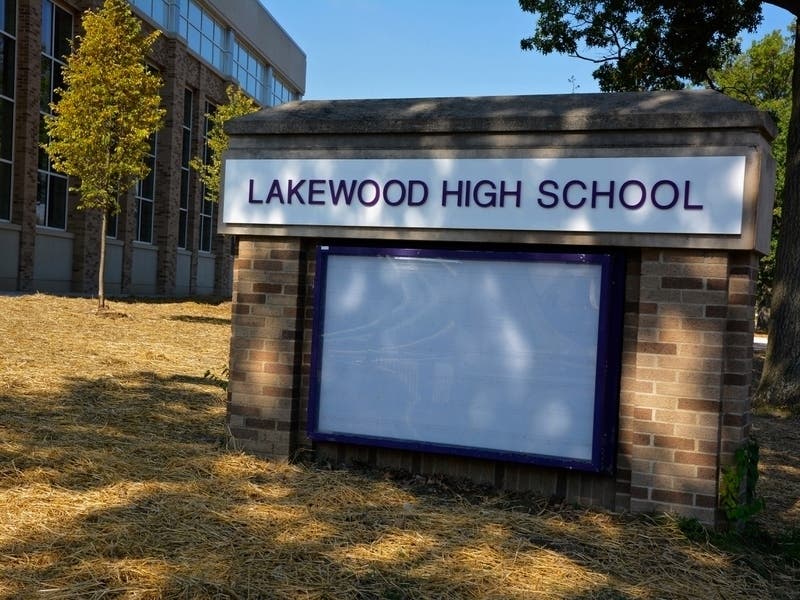
Sara Jarecke, Lakewood High School, Lakewood, Ohio: Study of rhetoric and “We Learned to Write the Way We Talk”
Speak
Anastrophe you say,
Yoda I think.
Last year they told me that in AP Language and Composition, I would find my writer’s voice. After five years of nothing but annotating works of fiction, however, I was a little skeptical.
In entering AP Lang, I immediately found it consisted of a lot more than just writing essays. I was introduced to something new: rhetorical strategies and the striking impact that they could have on our written words. I stumbled my way through foreign terms — epizeuxis, amplification, anastrophe — and learned their meanings and sound.
The New York Times article titled “We Learned to Write the Way We Talk” by Gretchen McCulloch shone a light on what I’ve been learning about strategies, but for so long failed to see. McCulloch discusses the new occurrences and patterns in our written word, observing how we’ve shifted from a formal way of writing to an informal and even messier way of writing. However, despite the growingly consistent “likes” and “ums” in our works, McCulloch came to a conclusion: no matter how we write, either informally or a breath away from perfection, we write to connect with others.
Writing is all about communication. Writing is used to convey a message — your thoughts, your ideas, your opinions. It is used to tell a story, to share your point of view, to ask questions; on the contrary, it can also form an ironic double meaning that is usually found to be delightfully humorous. But most of all, writing is used to connect deeply with other people in a state of vulnerability achieved by nothing else.
As McCulloch said, “We’ve been learning to write not for power, but for love.”
I’ve found this vulnerable voice in each of our rhetorical devices. When we see epizeuxis, we hear the voice of any great leader or powerful person. When we see amplification, we hear a voice full of emotion. When we see anastrophe, we think, of course, of Yoda.
I’m sure that it’s rarely thought that rhetorical strategies are a way of writing the way that we talk, but this is the way that I see it. Even while our writing world is changing due to things such as tablets, texting, and Twitter, our voices remain unique and distinct through the written word.
We’ve learned to write the way we talk in more ways than one. While our written works are not always going to be full of “likes,” “ums,” or “wowwwws,” we are still able to communicate our voices with the use of rhetorical strategies. Even with our written word, we can expose our feelings for what they are, creating deeper and more vulnerable connections with others.
This press release was produced by Lakewood City Schools. The views expressed here are the author's own.