Neighbor News
Plantain, the Wonder Plant
Plantain, one of the most easily identifiable and useful herbs to know in the garden.

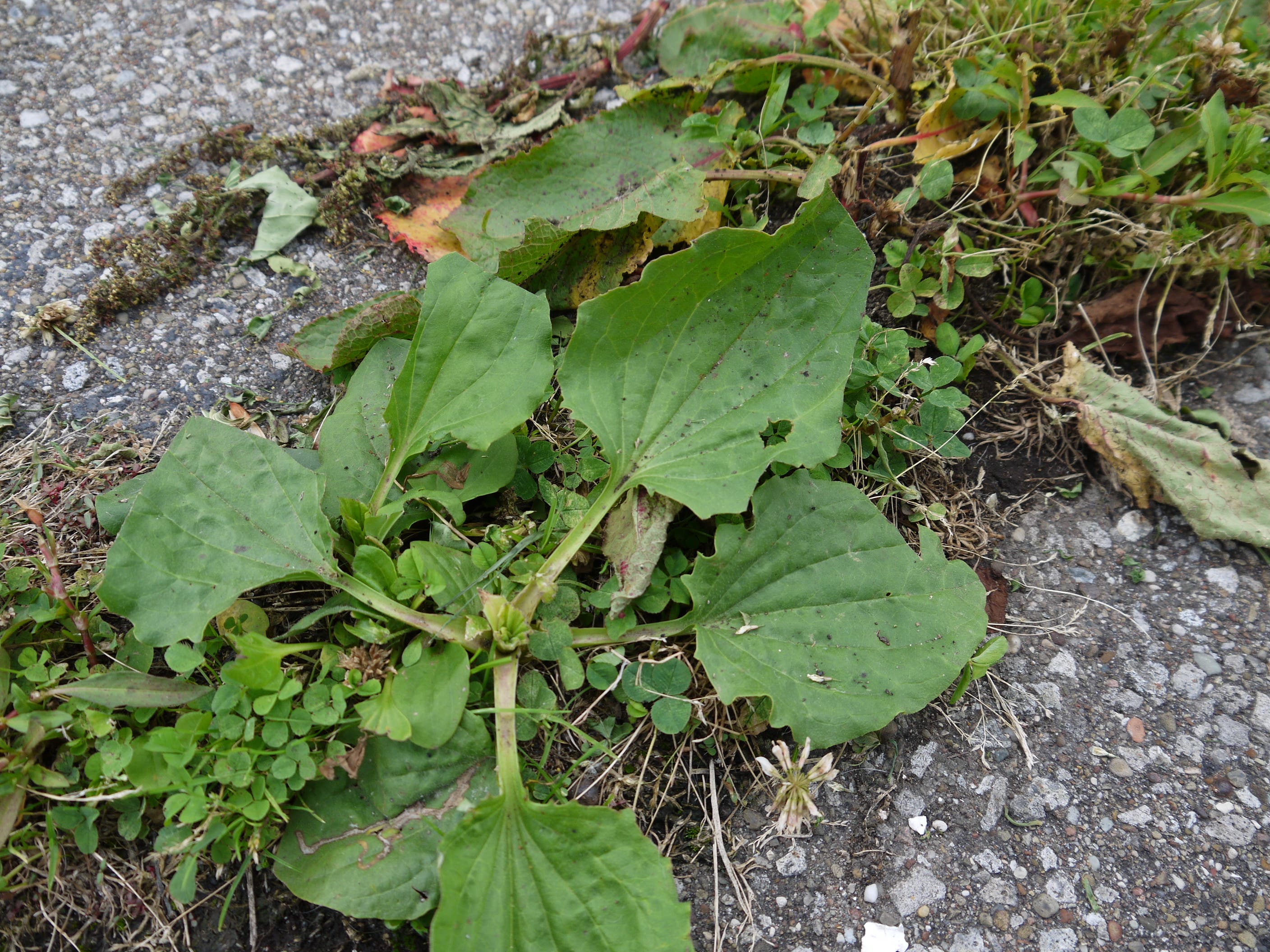

Plantain is one of my favorite plants. If there is only one plant you are going to learn this year, this should be it. Here in Lakewood, we have two species of Plantain, Plantago major (broad-leaf) and Plantago lanceolata (Lance or Narrow-Leaf plantain.) Both can be used interchangeably. When you are done reading this article, head to your backyard, driveway, alley next to your apartment or even the sidewalk out front. A quick cursory look will more than likely locate numerous plantain plants for your use. Plantain is a plant that likes to be near people. It wants to be used and it wants to be used often.
Traditionally, plantain is used for its soothing, cooling and healing effect it has on wounds, burns, insect bites and stings. It also has a magical (not fully understood) drawing effect that actually enables it to draw out splinters, bee stingers and other debris that has become embedded in the skin. Any time you are working in the garden and find yourself in need of a band aid, reach for plantain. The easiest and most effective way to use this plant is as a spit poultice. Essentially you grab a leaf (that your dog hasn’t peed on!), chew it up and then put the chewed up, spitty plant material on your wound, then cover it with a band aid. I like to change out the poultice every couple of hours for at least a day. I’ve healed many a cut and bee sting with this marvelous plant.
In addition to being great for the skin, it’s also a wonderful kidney tonic. It not only nourishes the entire urinary tract, but it’s great for UTI’s and other irritations.
Find out what's happening in Lakewoodfor free with the latest updates from Patch.
It’s also a great topical anti-inflammatory, which I used as a mouth rinse when I had my wisdom teeth out a few years back. I’m also working with Plantain to treat plantar fasciitis. I’m taking plantain daily as an infusion as well as applying an infused sunflower seed oil to my heels. I’m in the early stages, so I haven’t noticed much improvement thus far, but I have high hopes!
Similar to it’s European cousin, P. psyllium, you can save the abundant seeds in the fall to sprinkle on your oatmeal or add to your baking to incorporate extra fiber into your diet. You can also add some water to a table spoon of seeds in order to add bulk to a sluggish or irritable bowel.
Find out what's happening in Lakewoodfor free with the latest updates from Patch.
In the springtime the young leaves make a marvelous addition to salads and soups as well as a hearty stand-in for kale chips. As the plant matures, the leaves become quite stringy and not very palatable. Grab a leaf and try to pull it apart. What happens? Those fibers were once used for weaving and sewing they are so strong!
To quote one of my favorite herbalists, Gail Faith Edwards, ”plantain simply heals and heals simply. It has a be here now, I am what I am, philosophy”.