Local Voices
War Stories From My Grandpa
I interviewed my grandfather, a World War II veteran, 4 years ago. It's only fitting I honor him today by publishing it.

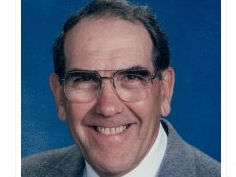


MARIETTA, OH — My grandfather, Henry Schmitt, was probably the most honorable man I’ve ever known. He fought in World War II, was a fireman for 20-years, raised 5 kids, and went on to be a maintenance man at a college to help his kids continue with higher education.
I interviewed him in Saint Clairsville, Ohio on 4/28/17, he died on 12/15/18 in Wheeling, WV at the age of 93. I found out after his death that he had been hoping I was going to publish his story, but at the time I worked at a national news wire and wasn’t able to share his story there. I had only planned on interviewing him to make sure his stories didn’t die with him and could be shared with the family.
But since today is Memorial Day I can think of no better way of honoring him than to dust off the old interview and tell his war stories. This article is dedicated to him and all those who gave their lives or were willing to give their lives, in pursuit of defending the greatest nation in the world, the United States of America.
Find out what's happening in Mariettafor free with the latest updates from Patch.
I’ll start the story right before he started talking about the Army, he had been discussing being a fireman.
Henry: I never was too much afraid to die. Like right now, if the good Lord said your number’s up tonight that’d be okay with me. (Laughs)
Find out what's happening in Mariettafor free with the latest updates from Patch.
Me: Well yeah, I guess you’d have to make peace with it.
Henry: Yeah, you have to realize when that bell rings and you go out you don’t know what you’re getting into. It might be a kitchen fire, it might be a whole house is on fire, you don’t know. Most of my firefighting experiences are long gone out of my mind now.
Me: Do you think being in the Army helped prepare you for that at all?
Henry: Oh yeah, sure.
Me: Real quick, before you get into that, how did you get into the Army, did you enlist?
Henry: No I was drafted.
Me: Could you tell me about that?
Henry: I was a senior in high school and when I turned 18 the draft board sent me a notice right away. I had to go down to Clarksburg where they had a center for that, they swore me in, they gave me a furlough for that until after school was out. So after school was out, a couple weeks, I was in the Army. They didn’t give you any choice about that.
Me: How did you feel about that?
Henry: Well, everyone had to go so…
Me: Were you upset about that or did you resent it?
Henry: No, I accepted the fact that the country was in a war so somebody had to do it. So after that, they sent me to Biloxi, Mississippi, and that’s where we did our basic training. I remember it was the 4th of July when we got off the train for basic training.
Me: Wait, 4th of July in Mississippi for basic training? Well, that must’ve been fun. (laughs)
Henry: It’s a hot hot place.
Me: No air conditioning I imagine.
Henry: No, the train coming down, no air conditioning at all. We lived some of the time in tents, and when there was room in the barracks they’d move you into the barracks. After basic training they give you all kinds of tests and stuff. They thought I’d be best qualified to be a radioman on a B-17 in the Air Force. I went to Scott Field Airfield in Illinois. (He coughed and looked distressed)
Me: If you need to take a break we can.
Henry: No, it’s fine. We went to Scott Field in Illinois, after graduation. The war was going pretty well for us and they didn’t need more radiomen for the B-17. So they took me and the other guys out. At that time the Air Force was part of the Army, it was the Army Air Force. So they just sent us to England as replacements. They’d give us this job or that job.
Me: Was this when England was still being bombed by Germany?
Henry: (Laughs) Oh yeah.
Me: Did you ever have to see any of that?
Henry: Yeah, the Germans used to send those buzz bombs we called them. It was just a cylinder that had a propeller on them, loaded with explosives. And when they ran out of gas that’s where it came down. You could’ve been in church and boom over there.
Me: Just indiscriminately bombing all of England.
Henry: I saw most of that when I was close to London, I think. So after they put me in a replacement depot they said I see you can type, can you weld? I said no I can’t weld. Can you drive a truck? I said yeah I can drive a truck, I can drive a pickup truck. (Laughs) So for a while, they made me a truck driver so that’s the way it went. We went over to France on the Queen Elizabeth. We didn’t know where we were going. Some of these other sailors came out on motorboats. We were in Scotland. So them guys we could hardly understand them. Because the way we speak English is very different. Turned out they wanted cigarettes. We stayed in England for a while, and when the invasion of France, they put our vehicles on like a big barge, the front end went down. I don’t know if you could fit 4 or 6 on there. Anyhow one morning they lifted our truck onto a tank, that thing is made for tanks. That thing is rocking and everyone’s getting seasick. After dark, they said okay we can take care of you now. The combat troops had already secured the beach.
Me: Is this like D-Day?
Henry: No not D-Day. Probably a couple weeks after they secured it. I remember when that thing went down, my truck was in the front. I don’t know if you’ve ever seen a bridge where you can see through the metal? Well, that’s the kind of ramp they had going into the shore. They said okay you can go ahead now. I said where the hell is the road? He said it’s okay, there’s a bridge underneath there. See that little light down there on the shore, just drive toward that. I thought holy hell. So I opened the door and stood on the running board with my foot on the gas and my hand on the steering wheel. I thought if this thing goes down I’m swimming away from it. But it didn’t. He was right, so I headed toward that light, it was a German airfield.
So they assigned us to the 43rd Air Depot Group. They had warehouses there, so if any of the planes went over Germany and got shot up and lost an engine or something they’d come back and land at any airfield they could find. So sometimes they’d put a new engine on the truck. So we’d go where they could find a place to land. The one plane came down on a British thing so… They treated us real well, gave us a bed, we were allowed in the officer’s club. I had to stay there with that guy until the engine got there. So that’s what we did for part of the war.
At one time we were part of a convoy hauling 250-pound bombs.
Me: Do you remember if those bombs were used? Like, did you see them loaded onto a plane headed for a specific location? Or just transport.
Henry: Just transport. So one time we got off and we didn’t have much to do. Well, the mechanic was in there installing a new engine so. One time they needed more bombs. So they were 250-pound bombs. They load your truck up with them, and you drive to a destination.
Me: So you’re driving around with a truck loaded full of bombs?
Henry: Oh yeah, they might have 6 bombs on a truck or something like that. For some reason, I don’t know why, there was an ammunition guy with me. The truck ahead of us, I don’t know if the guy fell asleep or what the hell, anyway he went into a ditch, the truck went on its side, and those bombs just rolled out in a field. And that guy, I can still hear him screaming Jesus Christ Oh My God!!! None of them went off.
Me: If one of those bombs went off it would set off the other bombs right?
Henry: Oh yeah.
Me: And how much damage… I don’t know what kind of damage a 250-pound bomb would do. Like if you dropped it on a house would it destroy the house, or the houses around it too?
Henry: I don’t know.
Me: Okay.
Henry: They’re maybe so big around (gestures about the size of a bowling ball) and about 5 feet long. That’s what the smaller planes, that’s what they drop.
Me: So it’s safe to say if they went off, you wouldn’t have made it.
Henry: Oh no, that would have been the end of everything. That guy was scared to death. I was too dumb to be scared, or as scared as he was.
Me: What do you think it is that makes some people react like that guy, and others react like you did?
Henry: I don’t know. Some people are fast on their feet. I knew it was bad news when I saw those bombs roll out on the field. I was like oh $#!# and kept going, nothing I could do, I drove around him. Didn’t hear no bangs or booms, I guess you have to have a fuse in them before they’ll…
Me: Did it put anything into perspective? Like did your life flash before your eyes?
Henry: Uh-uh, no.
Me: Sounds like you’re pretty cool under pressure.
Henry: Well, I guess. When the Germans were sending those buzz bombs over, you hear him coming, and you know he’s coming straight down. And the closer he comes to you, you hear him (rrrr rrrr rrrr) it sounded like that.
Me: They use the term PTSD a lot today. They called it shell shock then. Did you ever experience that?
Henry: No. I tell you one time I stayed in a Red Cross in London, they had cots for us then. I came back about a week later. The building was rubble. If I’d been there I would’ve been gone. So the good Lord was with me.
Me: Absolutely. I can’t imagine the amount of near misses you’ve had.
Henry: Yeah, with being in the service and being a firefighter.
Me: Yeah it’s amazing. All you’ve been through. And here you are, 92.
Henry: Yeah, I don’t think there are any of the guys left I was in the service with or not, I doubt it. I went in when I was 18 and a month or so, and all these other guys were 20s or 30s some of them. I was always the youngest, whatever outfit I was in.
We went on to talk about his family, regrets, and his philosophy.
One piece of wisdom he left me with, he said never go to bed mad. If you had a problem with somebody, iron it out before bedtime or it will eat at you. He suffered from depression because he felt like he hadn’t accomplished as much as his brothers. For years it affected him, he beat it. He went on to become an expert fly fisher and an even better grandpa.
He met Virginia, my grandmother, shortly after returning from the war. He lived with her until she passed away in 2015. He continued to live in the house by himself until the last year of his life. He went to live in a Catholic assisted living home. Me and my daughter Leah went to visit him as much as we could. We saw him about a week before he passed. He had a near-death experience and saw his family. He was very upset that he had to come back to the land of the living, he said almost passing on was so nice.
After he passed, the family came together for his funeral. He received a 21 gun salute. We kept the shells. Outside the chapel where his service was, we noticed a small rainbow, high in the sky, directly above the chapel. Our grandmother’s favorite movie was The Wizard of Oz, her favorite song was Somewhere Over The Rainbow. There was no rain that day, and while many people would flippantly dismiss that or explain it away, I can’t, it was too perfect, too fitting. Thank you, grandpa, thank you for your service, thank you for everything.
Live in Marietta? Click here to subscribe to our free breaking news alerts delivered to your inbox and mobile devices. Follow Marietta Patch on Facebook and Twitter, and download our free Patch mobile app on Android or iPhone
Have a news tip or suggestion on how I can improve Marietta Patch? Maybe you're interested in having your business become one of our latest sponsors? Email any and all inquiries to me at christopher.schmitt@patch.com