Business & Tech
Geauga Rehabilitation Engineering Expands in Mentor
Company opens new Mentor Avenue location in anticipation of growth of patients who need orthotic and prosthetic devices
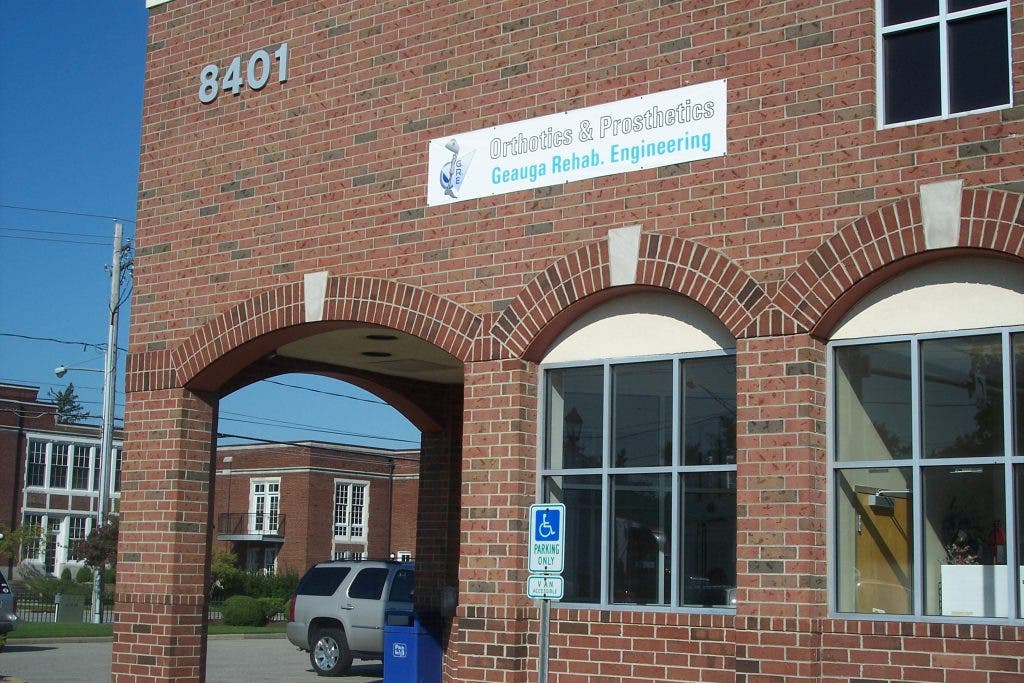


Fifteen years ago, Vince Baroni was one of the first employees to be hired by Jonathan Naft, founder of Chardon-based Geauga Rehabilitation Engineering Inc., G.R.E O & P, which makes and supplies orthotic and prosthetic devices.
Over the years, Baroni has seen the company expand with office locations in Ashtabula and Mentor.
“We used to be located on Center Street and too often we would hear from patients that they didn’t know we were here,” said Baroni, who is director of Clinical Services for G.R.E. O&P’s Mentor office. “This new location (8401 Mentor Avenue) is good for us because it will improve our visibility.”
Find out what's happening in Mentorfor free with the latest updates from Patch.
Baroni said the company is anticipating continued business growth and the new Mentor office provides more room and a better office configuration to treat patients with orthotic or prosthetic devices. What’s more, G.R.E O&P recently hired two new employees, increasing its total workforce from 12 to 14.
Global Industry Analysts, a research market group, expects the orthotic and prosthetic market in the U.S. and the around the world to grow more than 8 percent over the next four years and reach revenues of nearly $20 billion industry by 2015. The research group says the industry growth is being driven by an aging population, an increase in degenerative joint diseases such as osteoporosis and arthritis, and active lifestyles of senior citizens.
Find out what's happening in Mentorfor free with the latest updates from Patch.
G.R.E. O&P works closely with physicians and other health care professionals to provide state-of-the-art orthotic and prosthetic devices for patients with various types of ailments, diseases or conditions.
For example, G.R.E. O&P designs orthotic devices or braces to treat patients with foot deformities, diabetics with foot ulcerations or patients whose limbs have been affected by a stroke. The braces are designed to support or correct the function of limbs. Orthotic devices also are used by athletes.
“Technology is huge in our field and it has allowed us to make big advances in orthotics and prosthetics,” said Baroni.
Not less than 10 years ago, a rehabilitating stroke patients would have been fitted with a knee, ankle and foot orthotic device or brace. The brace enabled the patient to stand and walk but it wasn’t ideal because the patient would walk with a limp and need a cane.
Baroni said G.R.E O&P was one of the first companies to design a knee, ankle and foot orthotic device with computerized sensors. The sensors detect when the patient’s knee needs to lock and unlock, which improves the patient’s walking stability.
Although offering patients with technologically advanced orthotic and prosthetic devices is important, G.R.E. O&P also believes it’s important to deliver patients with personalized service by closely working with their physicians and physical therapists during follow-up care visits.
“Getting our (prosthetic) patients up and walking is probably the most rewarding aspects of what I do,” said Baroni.