Community Corner
Blind student lawsuit that forced consent decree shines light on MU students with disabilities
Officials: MU was making accommodations before last month's consent decree was announced

RACHEL TRACY
Miami University Journalism Student
The recent consent decree between Miami University and the federal government, which will force the school to improve technology for disabled students, has shined a light on a population on campus often unknown or overlooked.
Find out what's happening in Oxford-Miami Universityfor free with the latest updates from Patch.
While negotiations between campus lawyers and the federal office of civil rights were not public before they reached the decree, the attention to the needs of disabled students may have quickened some other changes that will unfurl as early as this spring, officials said.
In the spring of 2017, the Student Disabilities Services Office is hiring an Accessible Technology Specialist -- a new role at the school.
Find out what's happening in Oxford-Miami Universityfor free with the latest updates from Patch.
“That person's responsibility will be meeting with students who use any kind of accessible technology, determining what they will need in their courses, and ensuring that it's there,” said Director of Student Disability Services Andrew Zeisler.
The consent decree, which is pending court approval, will resolve allegations that Miami violated the federal Americans with Disabilities Act by using inaccessible technologies in the classroom. Those charges were outlined in a lawsuit against the university by former blind student Aleeha Dudley in 2014.
In the suit, Dudley alleged her course materials did not work with her text-to-speech software. She further alleged that she hadn't received material in Braille or other forms she could use without help. The school settled her suit in February, agreeing to pay up to $108,000 over five years for her tuition, books, room and board at Ohio State University, where she is working toward an undergraduate degree.
The decree relates to students with various disabilities who study at Miami, including deaf students.
While there are currently no fully deaf students on campus, there are hard-of-hearing students who use resources provided by the Student Disability Services Office.
Zeisler said a major part in working toward more accessibility on campus will be the introduction of a new space in the Shriver Center called the Access MU Center in January 2017.
"They will be able to train faculty, they'll be able to caption videos, they'll be able to have all of these processes in place that are being defined, that will be a one-stop shop,” said Zeisler.
Professors and other faculty can also take documents or videos to the Access MU Center to see if their resources and tools for their classroom are disability accessible. This space will be right next to the new Student Disability Services Office after they move out of the Campus Avenue Building.
Capital “D” and lowercase ‘d”
The hearing impaired community consists of those who are fully deaf and use American Sign Language to communicate and others who are hard-of-hearing.
Currently, there are no students at Miami who use sign language, but there are 13 hard-of-hearing students attending Miami.
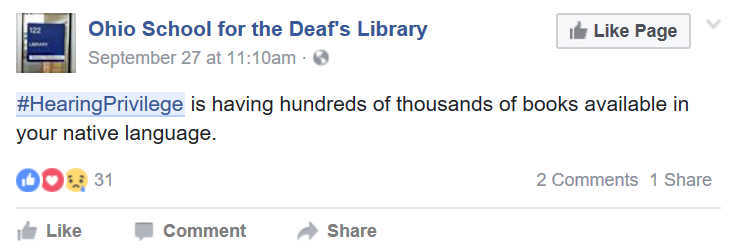
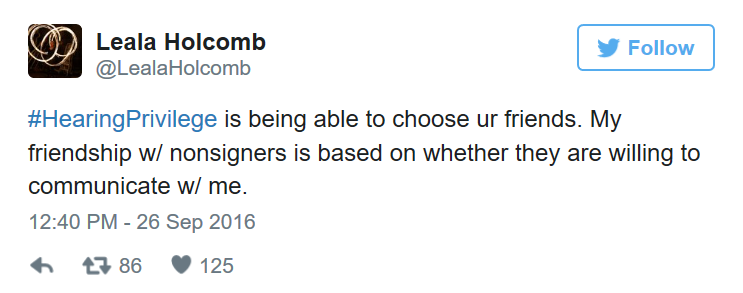
#HearingPrivilege
Deaf Awareness Week was recognized on campus from Sept. 19-25 and many used social media to discuss what the hearing do not understand about their community and the challenges they face on and off campus.


"I wish people were more aware. Because people don't really know what that's like,” said Megan Zahneis, a sophomore at Miami with hearing loss caused by a rare neurological disorder that keeps her from feeling pain, temperature and touch.
"And it's the reason why I don't go to bars, I don't go to parties, I don't even really go to the movies. I never went swimming as a kid; I never did because I would have to take out my hearing aids because they are not water proof, and then I couldn’t hear and then it was no fun because I couldn’t communicate,” she said.
Like any community or class, there are differences within the community, said Megan Gross, the coordinator of the Miami University ASL program.
“Some will lip read, some won't. Some use hearing aids or cochlear implants, some don't. Just knowing that there are differences even within the community, and just being deaf isn't a uniform thing across all people,” she said.
Deaf Club on Campus
The Sign Language and Deaf Culture Awareness Club at Miami was formed to help each other learn sign language. Now that Miami teaches ASL, the club has become more social, sponsoring events to highlight their community.
"It's kind of difficult, being in the middle of a corn field, having access to deaf culture and everything,” said President of the club Danielle Georgeoff.
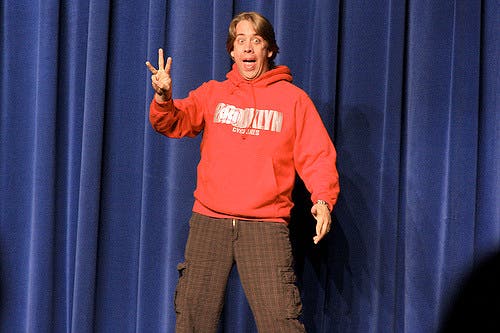
The club recently invited Keith Wann, a deaf comedian to campus as a way to shed light on the challenges faced by those who can't hear or are hearing impaired.
University Accommodations
Several tools and resources are available to students who are hearing impaired, said Accommodations Coordinator for Student Disability Services Cindy Steidle.
The three main accommodations offered are C.A.R.T (Communication Access Real-time Translation), SuperNotes/C-print, and the Roger Pen. There are three students who use C.A.R.T, four students who use SuperNotes/C-print, and six students who use the Roger Pen.
- Roger Pen is a mic worn by a professor that is hooked up via Bluetooth to a detachable ear piece that a student wears. Use of the tool makes the professor more understandable to the student.
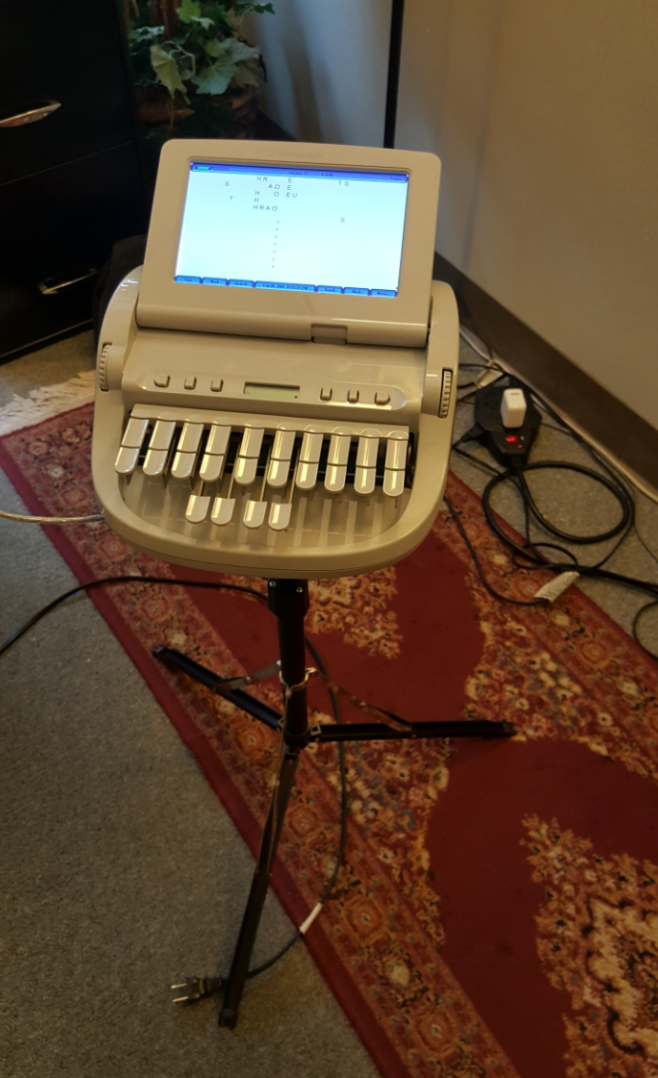
- C.A.R.T or SuperNotes/C-print is more manual. This service uses a trained university employee, who sits in a classroom and types out a lecture and other discussions using a stenotype machine. That transcription is sent to a student’s laptop for them to read.
“A 50-minute class usually will translate to about 18 pages of transcript when using C.A.R.T,” said Steidle. “And that’s a lot to read, and the energy that it takes to lip read, and hear what you can hear, and then read, and then try and comprehend what’s being spoken...it’s a lot to take in."
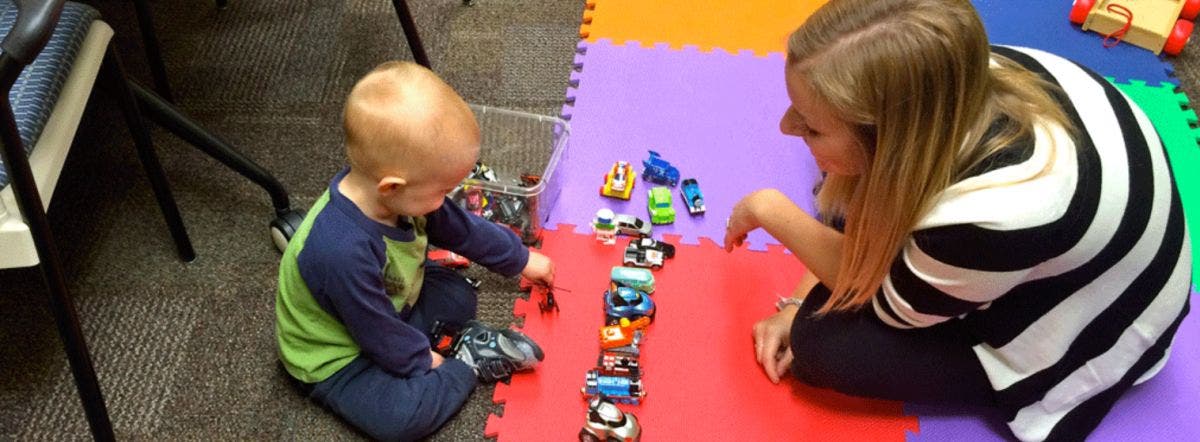
Photo cutline #1: Student in the Speech Pathology and Audiology department works with kid with hearing loss.
Photo credit line #1: Miami University ASL Home Page http://www.miamioh.edu/cas/aca...