Neighbor News
A Deeper Look At Political Engagement At Miami
Students interested in becoming politically active while at Miami have a number of options to choose from.
By Hannah Fierle
Miami University journalism student
While universities in general have typically been seen as more liberal spaces, Miami University has a long-established reputation as being a conservative campus.
Find out what's happening in Oxford-Miami Universityfor free with the latest updates from Patch.
This can be attributed to factors such as its rural location, the large population of business students, and the socioeconomic status of students that may not be present at other universities.
There are a number of clubs and organizations which provide students the chance to become politically engaged -- no matter what their political leanings.
Find out what's happening in Oxford-Miami Universityfor free with the latest updates from Patch.
“The great thing about Miami is that if you are interested in politics, it gives you so many opportunities and resources to explore that passion and find others who share it,” says Alexander Cary, Chairman of College Republicans.
However, students don't necessarily take advantage of these opportunities.

"Certainly, we have a significant number of our Political Science majors involved in politics through internships, employment, and personal interest," says Mark Morris, a political science professor at Miami. "However, I am not sure this transfers to large numbers of students across the university.”
Engaged Or Underground?
Despite the perceived conservative lean of the campus, the College Democrats feel they've made considerable headway on campus.
“I think the majority of the campus might lean Republican based on the socioeconomics and location,” says Charles Kennick, President of College Democrats. “But I don’t think the university is quite as conservative as it’s stereotyped to be.”
However, for some people who lean more to the left, there is still a sense that much of this liberal population is repressed, or even "underground."
During the 2016 election season, a conversation on popular large group messaging app, GroupMe, was created. Called "Underground Miami Liberals," its purpose was to give Miami’s leftist population a forum for discussion and organization.
The group now contains more than 400 members.
“I think that says something about the campus climate if these people feel that they are underground,” says Kennick. “But if there’s so many of us, why are we hiding?”
Hidden or not, both the College Democrats and the College Republicans make space for a diversity of perspectives within their membership.
“College Republicans has introduced me to and allowed me to explore fiscal conservative ideals that I believe lead to a strong and thriving economy,” said Addie Fries, a senior at Miami. “It’s important to collaborate with people who share ideals and thoughts for a greater cause.”
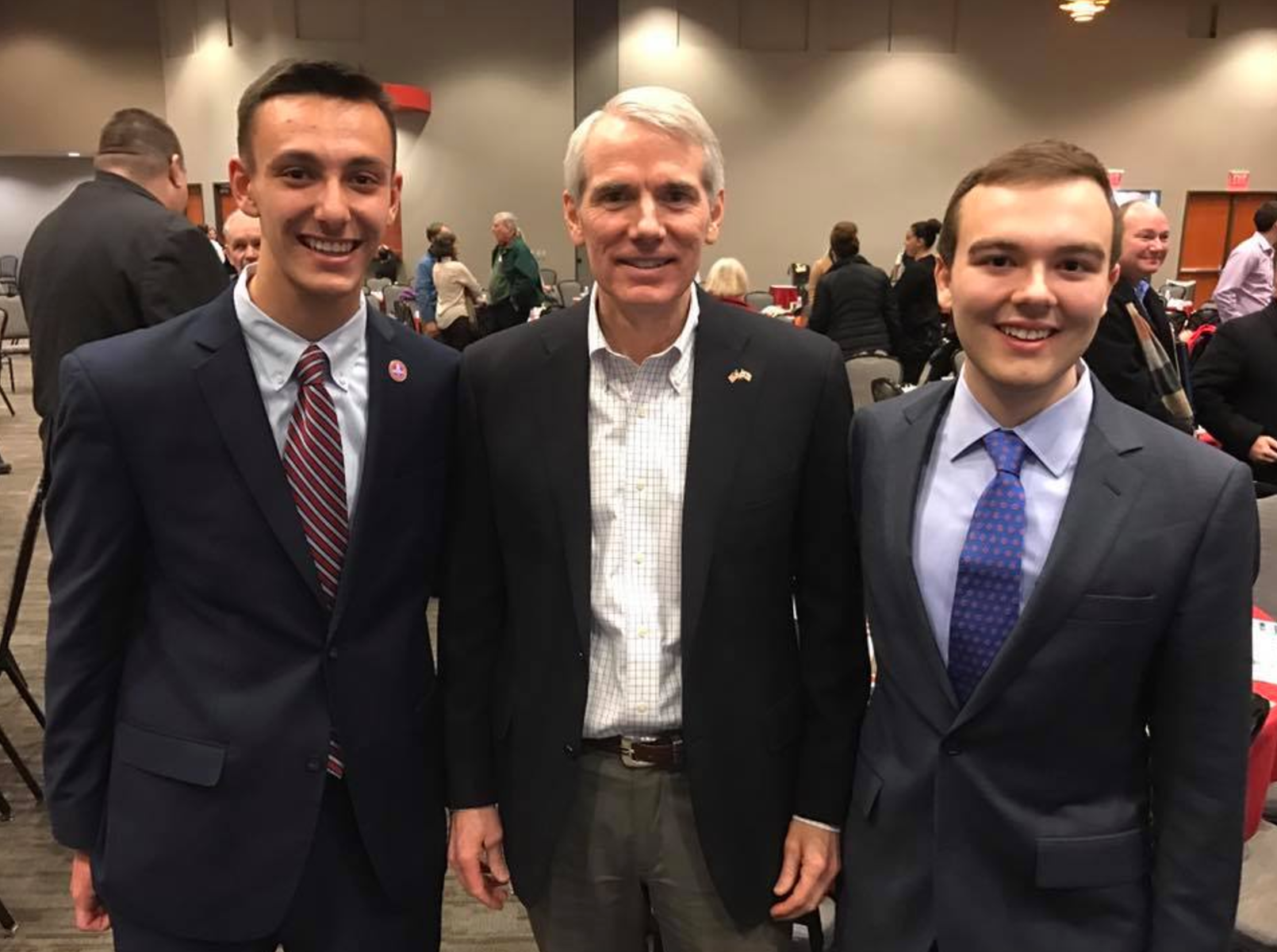
While most of the College Republicans ultimately supported now President Donald Trump during the most recent election, the majority of the organization's efforts centered around advocacy for more traditional conservatives, such as Senator Rob Portman.
Within College Dems, a majority of the group identified as far left on the political spectrum, but also supported more moderate Democratic positions.
Activism Peaks During Election Year
Both groups are trying to make sense of the 2016 election and how it changed American politics as well as their organizations.
“During the primaries, we were more or less a Bernie Sanders fan club,” says Kennick. “But I think that made us a little further left than we should have been as an organization in the interest of inclusivity.”
Once Sanders was eliminated, the organization regrouped and rallied around Secretary Hillary Clinton’s candidacy, with a notable uptick in the group's meeting attendance. While the College Dems did not formally endorse Clinton, they took part in many activities that promoted her campaign and also protested Donald Trump’s candidacy.
For the College Republicans, the election season included campaigning for Ohio Senator Rob Portman’s reelection through phone banks and door-to-door canvasing in the Butler County area.
“Rather than protest, we prefer activities that engage us with the community and make a difference,” says Cary.
Some members of the organization also chose to engage in volunteer activity for Donald Trump’s campaign, as well. The group’s status as a 501(c)(3) also made them unable to formally endorse a candidate.
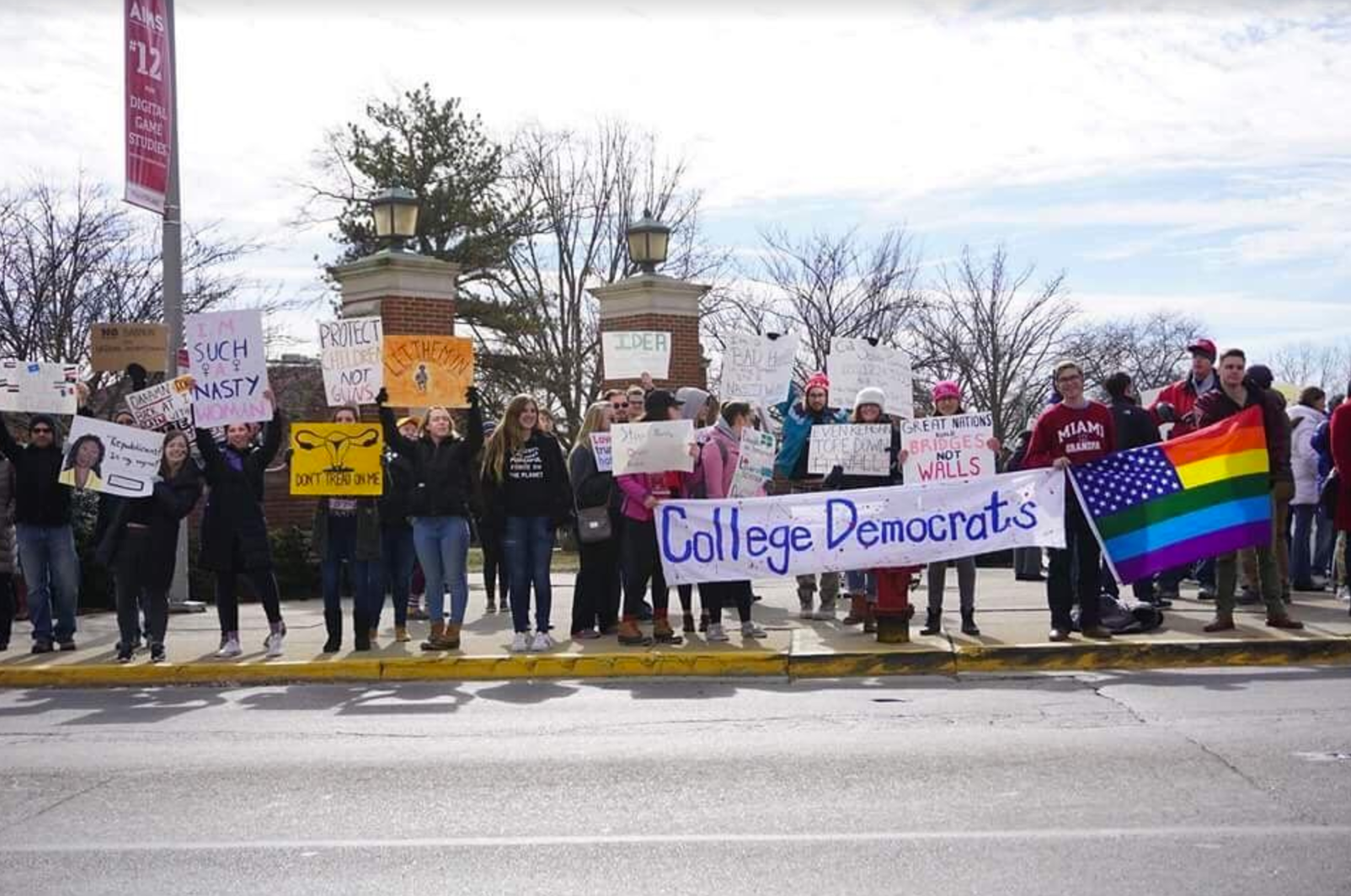
In response to Trump’s unconventional candidacy, many protests occurred on a local level. When Donald Trump Jr. came to speak at Brick Street in October, a protest quickly formed Uptown across from the venue.
Other protests occurred at the Phi Delt Gates after Trump’s inauguration, as well as local Oxford efforts at LaRosa's Restaurant, advocating for the Affordable Care Act.
A key component of both organizations’ activism was voter registration efforts for Election Day. Students were able to register to vote and a precinct in the Shriver Center was established as a voting location for busy students.
“As a campus, we were very successful in our campaign efforts this year,” says Alex Dahl, who interned for Clinton’s campaign on campus. “We were able to register more new voters than any other college or university in the state.”
Making A Difference Year Round
Aside from the activism spurred by the election, the organizations look for ways to engage with the community year round.
“We like to do a mix of fun things at our meetings each week,” says Cary. “Sometimes we have trivia nights or maybe a discussion-based format if something big and newsworthy is going on that week.”
Kennick described the College Democrats meetings as laid-back and discussion-based, allowing members to come as often or infrequently as they wish.
“We just want to offer a space to share ideas and learn from each other,” said Kennick. “Even within the club there’s a huge variety of viewpoints so we have a lot to gain from discussion.”
Each year, the Political Science department's Janus Forum sponsors a debate between the two organizations. This is one of the few events in which the groups are able to collaborate, discuss current issues, and establish common ground through debate. Members of both organizations expressed a desire for more programming that brought the groups together.
An annual tradition for the College Republicans is attending the Conservative Political Action Conference in Washington, D.C. At this year’s conference, which took place February 21-24, attendees saw President Trump, Vice President Mike Pence, and Chief of Staff Reince Priebus speak.
At last year’s conference, they were able to visit the office of Speaker of the House, and Miami alum, Paul Ryan.
“I have had the opportunity to meet and speak with conservative government leaders, journalists, and other officials during meetings, at CPAC for the past three years,” said Fries. “I’m grateful for CPAC allow me meet College Republicans from all over the country who support free speech, limited government, and conservative policy.”
For many, getting involved in political efforts while at Miami has helped to shape a lifelong ideology.
“The shaping of my activism by the College Democrats will occur more in the future,” said Justin Macke, a member of the group. “I grew up in a small town, with little to no opportunities for political engagement, especially for a liberal, so I personally did not have the knowledge on how to get involved until my time at Miami.”
For more information about these groups and others offered at Miami, visit The Hub.
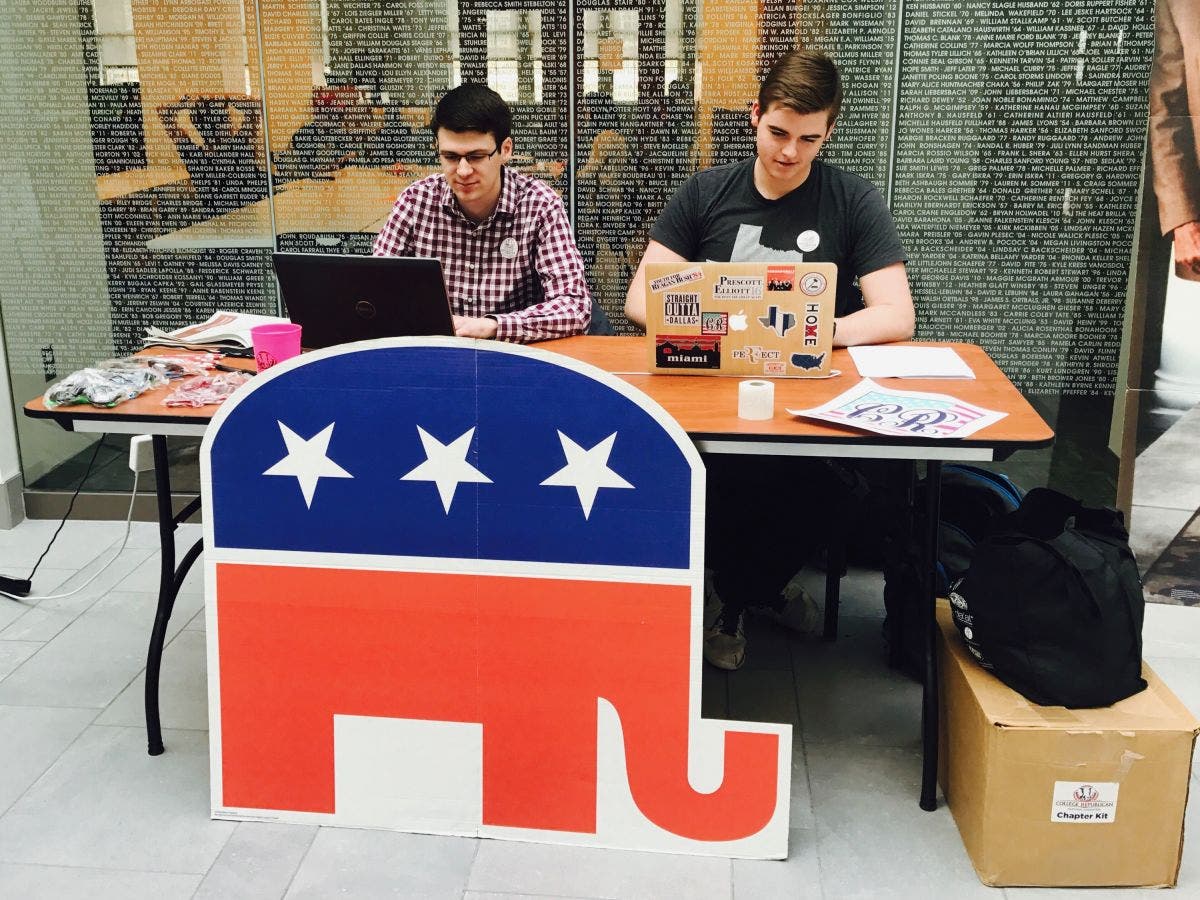
Photo: Exec members of College Republicans man their booth in Armstrong Student Center-- Photo by Hannah Fierle