Schools
Diversity, Dorm Life Need Attention, Miami Administrators Say
Administrators present 'Student Success Report' to Board of Trustees committee.
BY ELISABETH DODD
Miami University student journalist
Miami University is looking at diversity initiatives to stay competitive and changes in residential life to match student lifestyles.
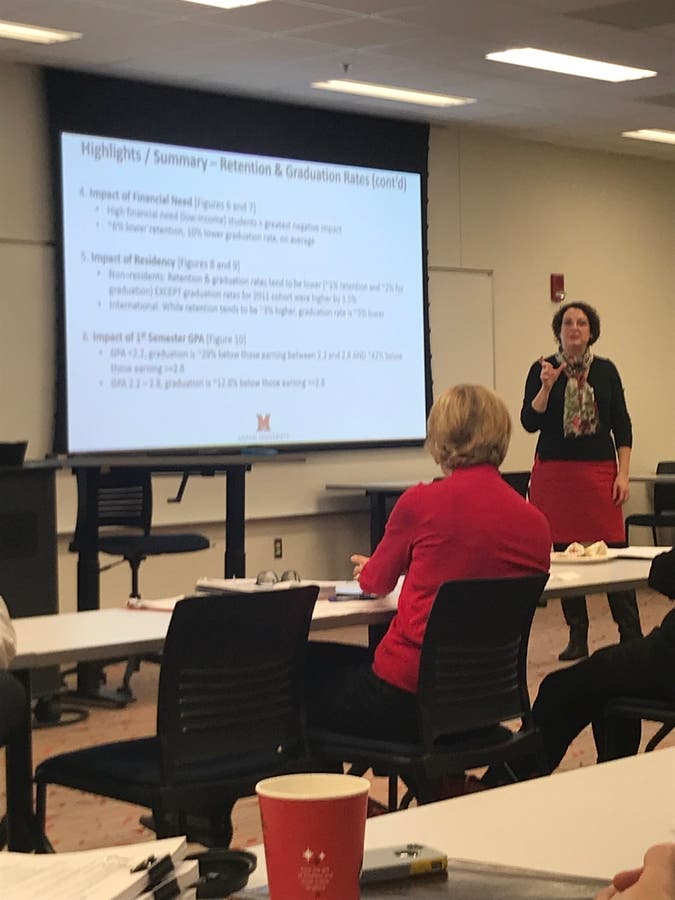
That was the takeaway from the Student Success Report that three administrators -- Jayne Brownell, vice president of student affairs; Michael Kabbaz, senior vice president of enrollment management and student success; and Phyllis Callahan, provost and executive vice president for student affairs -- presented at a Thursday meeting of the Miami Board of Trustees Academic and Student Affairs Committee.
Find out what's happening in Oxford-Miami Universityfor free with the latest updates from Patch.
A big key to student success is diversity, they told committee members.
"Now more than ever before, we are focused on leveling the playing field. We know that employers want diverse employees," said Kabbaz.
Find out what's happening in Oxford-Miami Universityfor free with the latest updates from Patch.
Miami is aiming to have 20 percent of students from diverse backgrounds by 2030.
"There will be no institution by 2030 that isn't diverse. That is something we really, really have to press hard. We are in rural Ohio; the demographics aren't helping us in number or nature. You can be a diverse place, but you can't be inclusive unless you are diverse. It is ethnic, racial, and it has to be brought to Oxford," said Kabbaz.
Miami will focus on racial, ethnic, and socioeconomic diversity.
"The single most cited factor for students to feel they belong at Miami was socioeconomic. Not all diverse students have socioeconomic need, but what is so difficult is that identities are all interconnected," said Brownell.
Residence life also key
The other key to student success outside of the classroom is dorm life.
Brownell said she she has been analyzing shortcomings in residence life since the summer.
"I am struck by how people are 24/7 students and we are not a 24/7 campus. We could do more to think of how students live and providing opportunities for them the whole time," said Brownell.
She noted that university dining halls close at 8 p.m. on weekdays and are closed on weekends. When students can't go to the gym or dining halls they go uptown. This is what leads to drinking and feeling disconnected from the university itself.
In order for students to feel higher satisfaction with Miami, all identities need to feel accepted and supported, and campus life should reflect students' real schedules, she told the committee.
The committee's agenda also included news about applications to attend Miami beginning in fall of 2018. A report from Susan Schauer, director of admissions, shows 19,238 students had applied as of Nov. 27, up nearly 3 percent from the same time a year earlier.
The report also shows Miami is seeking 31,000 applications for 3,750 spots. Last year, it received 30,255 applications, offered admission to 4,069 students and enrolled 3,817.
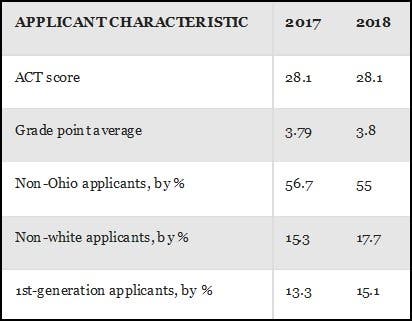
Schauer's report provides a profile of applicants to date:
The agenda also included a report from Associate Provost Carolyn Haynes on Miami's remedial education efforts. The report -- newly required by the Ohio Department of Higher Education -- shows Miami devoted $1.2 million to remedial education in fiscal year 2017. All of those dollars were spent at Miami's regional campuses, where 66 percent of students require remedial work.
Top photo: Jayne Brownell speaks to a committee of the Board of Trustees on Thursday. -- Photo by Elisabeth Dodd