Neighbor News
Dutiful Dogs: 4 Paws For Ability Continues to Grow
After five years on campus, 4 Paws for Ability Miami offers students the chance to help foster service dogs and gain important experiences.


BY JAKE STANLEY
Miami University journalism student
On a quiet Thursday afternoon, the Shade Family Room at Miami University’s Armstrong Student Center is populated with long faces and glazed eyes, as exams and projects hit students at midterm.
Standing out amongst the tired humans is Starfire, a five-month-old golden retriever who calmy sits in the corner of the room with an alert gaze. Wearing a bright red vest that is a little too large for her, she is one of 14 SDITS -- "service dogs in training" -- who will one day be assisting with humans in need.
Find out what's happening in Oxford-Miami Universityfor free with the latest updates from Patch.
In just five years, Starfire and her canine companions have become fixtures at Armstrong and beyond. Thanks to 4 Paws for Ability, Miami is now one of the busiest homes of service dogs in training in the country.
Helping those in need
Find out what's happening in Oxford-Miami Universityfor free with the latest updates from Patch.
4 Paws for Ability was founded in 1998 by Karen Shirk, a young woman who had been forced to use a ventilator due to a neuromuscular disease called myasthenia gravis. Shirk’s attempts to obtain a service dog had been denied by multiple agencies, leading her to train her own dog and start an agency. The Xenia, Ohio-based organization now places more than 100 dogs per year, servicing individuals throughout the world dealing with autism, hearing loss, mobility assistance and seizures.
The Miami branch of the organization began in 2011 as the brainchild of then-junior Kristin McNamara, a special education major from Centerville, Ohio. McNamara had been working with 4 Paws in fostering a dog and was inspired by a friend named Anna MacConnell, who had dealt with deafness, blindness and a heart defect before passing away. McNamara asked Molly Kelly, a clinical faculty member in educational psychology, to serve as faculty adviser to the club and began to familiarize herself with regulations concerning service dogs.
“Kristin researched the law regarding the Americans with Disabilities Act and she was very knowledgeable about what was permissible and what wasn’t,” recalled Kelly. “She also reviewed the Ohio Revised Code and saw that service dogs who are in training are eligible to the same rights as those who are working.”
At the time, Wittenberg University and the University of Kentucky were the only academic institutions that had student-led 4 Paws chapters. That number has grown in recent years to nine, including clubs at Ohio State and Wright State among others.
During its five years, the Miami club's membership has expanded to 90 students, including 46 who are trained to handle the dogs. The club meets monthly and has a four-member executive board, led by current president Christian Dunn.
The club includes four committees, which are currently tasked with raising the group’s profile beyond the recognizable dogs on campus. The club’s awareness committee walked in the procession last week at Miami President Greg Crawford’s inauguration, while the public relations committee is building a larger social media presence and holding a sticker sale on Redbubble. A volunteer committee was recently instituted that will give members the chance to assist at the Xenia location.
“[The committee] is an awesome way for our members who are not currently puppy sitters or fosters, but hope to hold one of those roles in the future,” says sophomore Tori Maurer, the club’s treasurer.
A Huge Time Commitment
This fall, 4 Paws welcomed 14 dogs to Oxford, including Addi, another 5-month-old golden retriever, who is being co-fostered by junior Madeline Burke. Along with her friend Brandon Fogel, Burke walks Addi around campus and helps develop her as a service dog.
As a result, Addi is always by Burke’s side, escorting her to class, dining halls and to restaurants on High Street. The only places where the dog cannot enter are residence halls, keeping Burke from housing the dog due to her position as a resident assistant. Due to this restriction, all fosters are juniors and seniors who live off-campus or work with a co-foster who does.
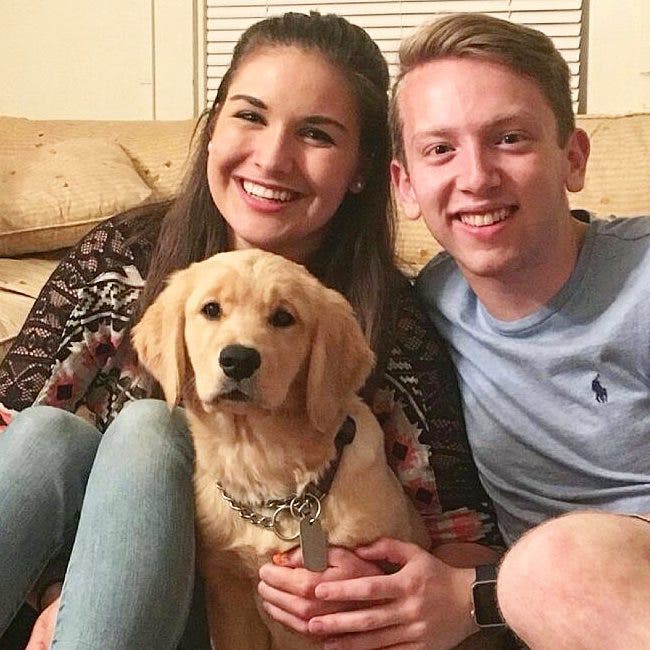
Burke says she had wanted to be a foster since finding out about the organization at Mega Fair during her freshman year. The process for becoming a foster is long and involved, reflecting both the gravity and competitiveness of the position. After applying last November, Burke and Fogel teamed up to be co-fosters and were interviewed in December, before finally being tapped in April. All applicants must have a GPA of at least 2.5 points, pass a house safety inspection, get the approval of roommates and have no other pets.
Although the pair gave their breed preferences, they did not find out about the identity of their dog until one hour before meeting her. 4 Paws currently has seven breeds on campus, including Labrador retrievers, golden retrievers, goldendoodles and papillons. Each dog is bred by 4 Paws at its Xenia headquarters, with each litter being given a theme. Addi is a member of the Aristocats litter, named for the 1970 Disney animated film, while Starfire came from the Air Force litter. Due to the in-house breeding, the dogs walking around campus this semester are descendants of puppies from previous years.
Burke and Fogel applied as co-fosters, although some pairs were put together later in the process. Burke is pleased to share the responsibility with someone she already knew.
“It’s interesting when two people who haven’t met are now in charge of parenting the dog,” Burke remarks.
Once accepted, fosters are subject to a rigorous set of rules in caring for 4 Paws dogs. They must adhere to food standards and ban table food. They must keep their SDITs away from non-service dogs and keep them on a leash while they are wearing their red vests. The fosters and dogs are required to visit the Xenia location once a month, and local elementary schools and senior centers each week. And fosters are encouraged to find time for SDIT playdates at local parks, allowing the dogs to relax and play.
Puppy Sitters
Prior to reaching Miami, the SDITs have already been through early training at local prisons. After leaving their birthplace in Xenia, the newborn puppies are assigned to qualified inmates who help them learn basic functions, such as potty-training and nurturing.
“It’s convenient. There’s a giant audience from which to choose and it’s incentivizing to prisoners,” says Kelly.
Once they reach four-to-six months, the puppies are assigned to their fosters who help them learn working behavior, commands, wearing vests and most importantly, socializing with the thousands of people on Miami’s campus.
In order to build experience for underclassmen, 4 Paws offers a puppy sitting program that allows students to care for the dogs when the fosters are not available. Last spring, before she became a foster, Burke sat for 17 dogs and became accustomed to the responsibility.
Sophomore Jess Arling, hoping to be a foster next year, is currently a sitter, primarily for Starfire. When Starfire’s owner is busy, the self-professed “crazy animal lover” fulfills the regular duties of a foster, even taking the dog to a Cincinnati Reds game earlier this semester.
“She was really obedient,” says Arling. “She is definitely aware of her surroundings.”
The sitter experience is critical for members wanting to become a foster. It also gives the student a glimpse into the routine changes warranted by walking around campus with an adorable puppy.
“You have to leave at least 10 minutes before class is over,” Arling says about the time needed to allow the dog to perform its bodily functions and provide time for affection from fawning students.
“I get ready every morning with the idea of not coming back between classes to relax or switch out my backpack,” seconds Maurer.
One of the main lessons 4 Paws is trying to teach the public about is the need to ask the foster for permission to pet the dog, an important step in preparing SDITs for life as a working animal. Burke says she has been able to get the point across to students, although it can sometimes be difficult.
“It’s really frustrating sometimes,” she says. “I like to make people aware, but everyone thinks they are the first person to touch the dog that day.”
Looking forward to the future
During their semester with their SDIT, fosters take copious notes in order to determine the progress of the dog and its potential skills as a service dog. Following their time at Miami, the dogs go back to Xenia for skills training. While most graduate into becoming full-time service dogs, there are some that make it know they prefer to not continue in the field. Accordingly, 4 Paws for Ability finds the best possible home for these dogs to be placed in.
Different breeds have different skills once in service. Retrievers perform physical tasks such as turning on light switches, while papillons have proven to be excellent in dealing with seizures. A dog that likes to cuddle will work well with an autistic child and a playful puppy is often best for a disabled individual. In all, the amount of resources devoted to the dog gives it a value reaching up to $22,000 by the time it is ready to graduate from the program.
Addi was marked as a potential breeder dog, meaning she may produce future 4 Paws puppies rather than work as a service dog. Regardless of the future, Burke says the end of the semester will be bittersweet, but she and Fogel will look forward to updates on Addi.
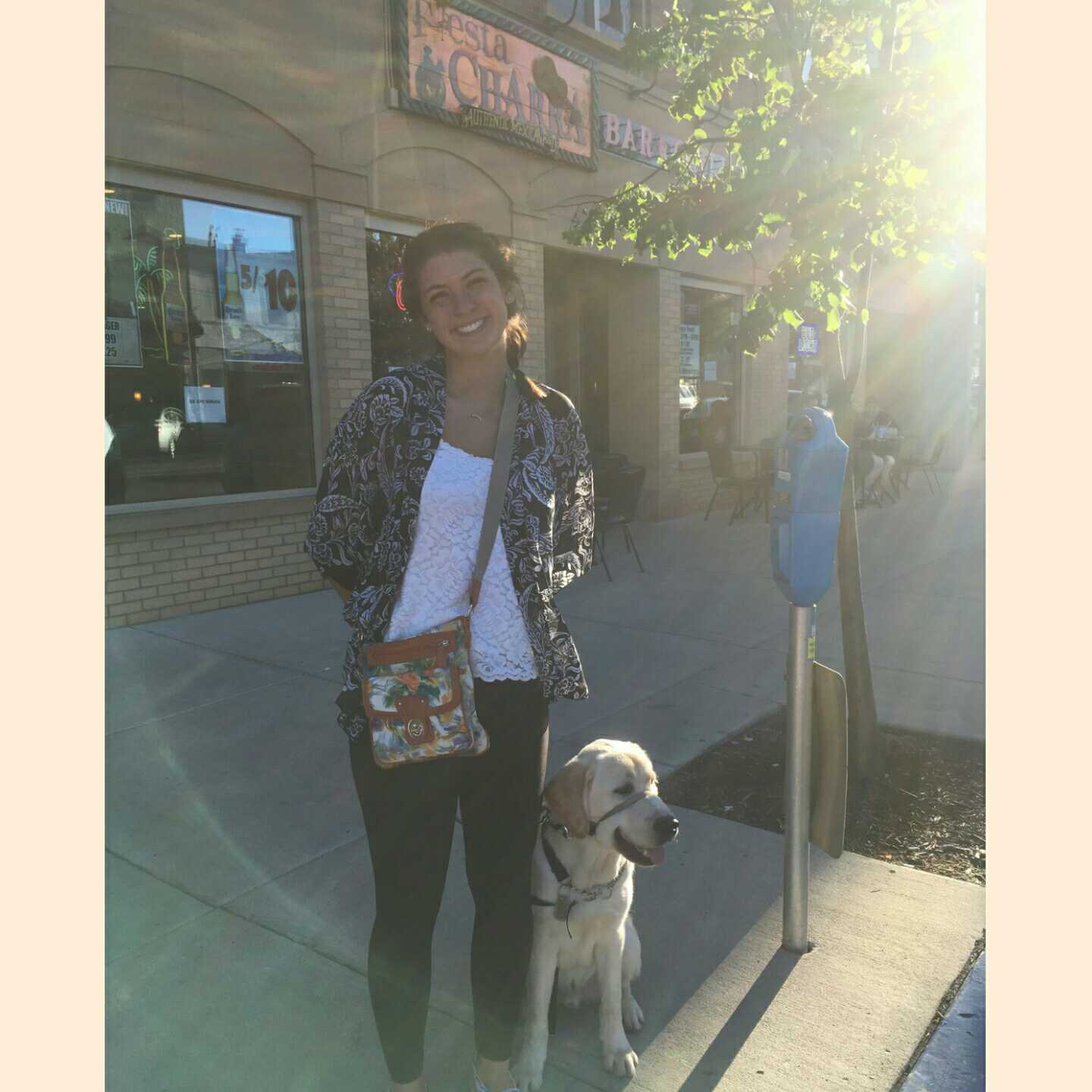
In their differing roles, Burke, Arling and Maurer all say the program has been a benefit to them and their puppy pals. Earlier in the semester, Maurer took over as a co-foster with Dunn for Manchas, a 10-month-old golden labrador.
“The semester as a whole has been filled with so much excitement and happiness," she said. "Seeing our pup learn a new trick, socialize with children, and make students on campus happy is a feeling like no other.”
Photo: Last year's 4 Paws for Ability Miami included "fosters" and "puppy sitters." -- Contributed photo
Note: This story has been edited from its original version.