Community Corner
Oxford Police Creates Response Team, Works With Talawanda Schools On Heroin Epidemic
Butler County Coroner says the most common cause of death in Butler County is related to opioid and heroin overdose.

BY RACHEL TRACY
Miami University journalism student
Over the last three years, Butler County has seen a five-fold increase in the number of heroin-related deaths and that has sparked an education effort by Oxford police and Talawanda schools to begin working together on the issue.
In 2012, there were 103 deaths with 30 related to heroin use. In 2015, there were 189 deaths caused by overdosing, with 149 involving heroin. This surpassed the number of natural deaths in 2015.
Find out what's happening in Oxford-Miami Universityfor free with the latest updates from Patch.
“Since 2012, when I became coroner, the number of drug overdose deaths, specifically heroin deaths, has exploded,” Butler County Coroner Lisa Mannix wrote in a JournalNews article column in March. The column is part of the ongoing education effort.
OPD leading local efforts
Find out what's happening in Oxford-Miami Universityfor free with the latest updates from Patch.
Oxford Police Chief John Jones says he has seen heroin use rise in Oxford and that OPD is taking a comprehensive, four-part approach in tackling the issue. This includes education, prevention, treatment and enforcement.
“The current epidemic of opioid addiction in part has risen from the medical community,” said Jones. “Doctors overprescribing pain killers have contributed to opioid addiction.”
Mannix said the introduction of fentanyl has coincided with the increase in heroin overdoses, because sellers are mixing this drug with heroin, which can be 50 times more potent than heroin itself.
“Neither the seller nor the user knows the exact ‘dose’ of heroin they have or the amount, if any, of fentanyl in the product,” Mannix said.
School district concerned
OPD is partnering with Oxford's Talawanda School District to educate students about drugs. It is also working with the Oxford Coalition for a Healthy Community, and has created a Quick Response Team to get people into treatment.
The Quick Response Team was created three months ago, and modeled after a similar team in Colerain Township.
OPD's patrol commander, Lt. Lara Fening, heads the team. When she is notified of an overdose, she sends a police officer, a firefighter and drug counselor to the individual's doorstep within three to eight days of the incident.
"I am still trying to vet out our personnel,” said Fening. “I think it takes a unique person who is approachable, who is empathetic, who is knowledgeable, and who is out there with the people so that they know him or her --the officer."
So far this response team has handled three incidents, with one resulting in treatment. Fening said her team is not fronting an investigative effort, but an intervention effort.
“The overdose counselor is the most critical part in that trio of people. And the overdose counselor kind of makes an assessment of the situation, and gets a feel for where the person is in their addiction,” said Fening. “If they're not interested, it's really hard to help them. They have to want it, and I know that is so cliché, but they do have to want it for it to work."
Awareness needed
On the educational front of fighting the opioid and heroin epidemic is Health and Wellness Coordinator for Talawanda School District Amy Macechko.
Macechko brings together staff, faculty, and members of the community to help increase the health and wellness of students. Substance abuse is an issue that some students and families are facing, said Macechko.
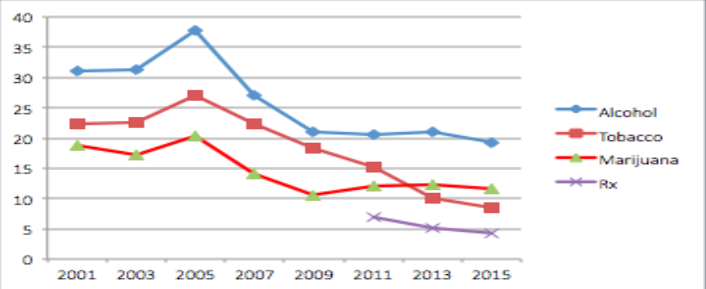
At an Oct. 24 Talawanda School Board meeting, Macechko gave a presentation about the district and community plan to “address the critical health issue” of drugs. The goal is to create awareness of the risk and harm of drug use and give students the opportunity to understand the issue.
“It is not one sector of the community's sole responsibility. We can't solely say, 'Law enforcement, you can solve this problem,’ ‘Education, you've got to solve this problem,’ ‘Parents, you've got to solve this problem,’ ” said Macechko. “It truly takes all of us, looking at what role can we play in addressing that--and that's where we get into multiple strategies."
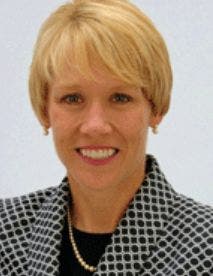
Photo: Butler County Coroner Lisa Mannix is concerned about the recent rise in heroin overdose deaths. -- Contributed photo.