Schools
Jeff Pegues, Wil Haygood To Return To Ohio To Discuss 'Race In America'
The two professional journalists, and Miami University alumni, celebrate Freedom Summer at an important time for diversity at Miami.
BY KERRY McFADDEN
Miami University journalism student
Since graduating from Miami University, Wil Haygood and Jeff Pegues have traveled the country reporting hard news, telling stories and exploring the timely and testy issue of race.
Now they’re returning to southwest Ohio, to the banks of the river that separated the slave South from the free North, to sit down and talk about it.
Find out what's happening in Oxford-Miami Universityfor free with the latest updates from Patch.
“I think it’s gonna be wonderful for the folks that attend,” Haygood said. “Jeff and I both have national backgrounds in the media and in covering the most contentious stories of our time.”
Haygood's and Pegues’ conversation will happen at 10 a.m. on Oct. 28, at the National Underground Railroad Freedom Center in Cincinnati. The event is titled “Spirit of ’64: Miami University and the Enduring Legacy of Freedom Summer.”
Find out what's happening in Oxford-Miami Universityfor free with the latest updates from Patch.
Freedom Summer refers to the summer of 1964, when students from several universities gathered on the campus of the Western College for Women in Oxford, Ohio, and trained, under the tutelage of Miami professors and civil rights activists, to travel south and register African-Americans to vote in Mississippi.
Three Freedom Summer volunteers -- Michael Schwerner, James Chaney and Andrew Goodman -- disappeared the day after their arrival in Meridian, Mississippi, a small town 90 miles east of Jackson. They were murdered by the Ku Klux Klan.
Racial divide lives on
Fifty-three years later, the United States still sees a racial divide. Pegues, a CBS News justice and homeland security correspondent, and Haygood, a much-published author and journalism professor, have experience covering the topic. The two journalists have both released books within recent years that discuss race in America, in historical and contemporary contexts.
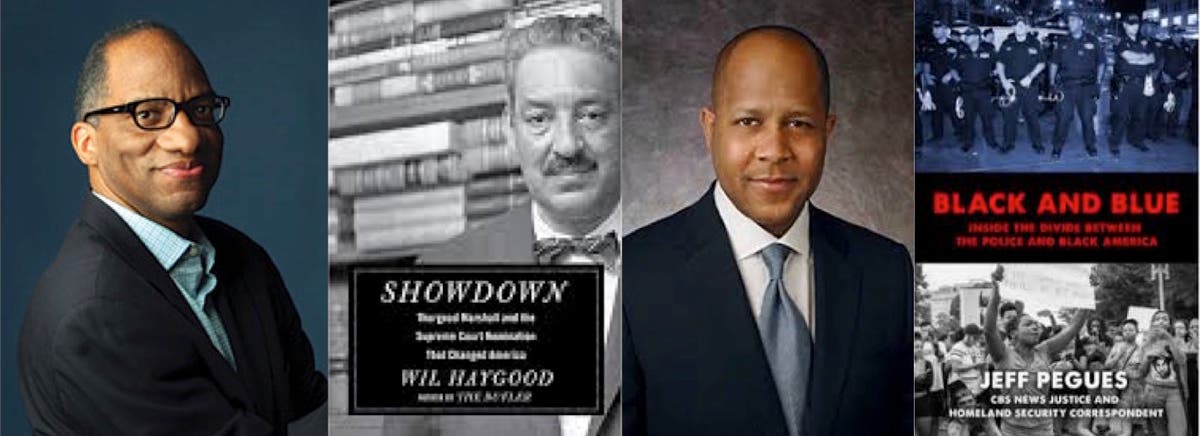
Haygood’s most recent release, Showdown: Thurgood Marshall and the Supreme Court Nomination that Changed America, explores the five-day hearing that led to Marshall’s induction to the U.S. Supreme Court, and the downfall of the separate-but-equal tenet that had governed America for years prior.
Haygood’s other works also delve into the stories of historical figures and events with racial themes, including Jackie Robinson, Sammy Davis Jr., and an African-American White House butler who served white commanders-in-chief for 50 years before finally witnessing the inauguration of President Barack Obama.
“I think that my life has been spent finding that intersection of biography, international reporting and human profile -- finding stories that other people haven’t written about," Haygood said. "Yes there is that zone of race inside of those stories, but they serve as a 'spokeswheel' for me to tell the greater stories of this nation.”
Pegues calls Haygood’s writing “another window into the soul of black America.”
Pegues tackles more contemporary racial issues in his new book, Black and Blue: Inside the Divide Between Police and Black America. Covering justice and security news has given him friends in law enforcement, and access to top officials. But the topic is personal.
Pegues’ parents grew up in Alabama during the civil rights movement. Both were involved in protests and sit- ins, and his father was arrested in Georgia. The judge told him to be out by sundown and never come back.
The intersection of his relationships with law enforcement and the black community, plus his experience as a news reporter put him in the perfect position to address the questions from both sides, and to destroy the myths and confirm the truths that whirled through race-related debates everyday.
“I felt the need to inject facts into the debate,” said Pegues. “I wanted to write it right down the middle.”
Racial tensions on and off campus
Haygood’s and Pegues’ conversation about race and climate comes at an opportune time for the Miami community.
The event was organized by Miami’s Office for Diversity and Inclusion with university’s alumni office. The Alumni Association often puts together programming for alumni to learn from faculty members, but partnered with the diversity office to create a program consistent with the university’s current goals.
Michelle Rosecrans, director of alumni events, worked with Ron Scott, the associate vice president for institutional diversity, to bring in Haygood and Pegues because of their immersion in diversity topics.
“They’re both journalists, they’re both engaged in activities that are important to the nation, they fit what we’re concerned about with conversations about diversity and inclusion. It’s an easy choice,” Scott said.
In the past year, Miami administration has put heavy focus on the recruitment and retention of minority students and faculty, but also on the campus climate and the unquantifiable aspects of creating a diverse learning environment.
“Social justice, diversity and inclusion are always important,” said Rosecrans, “but especially with (Miami President Gregory) Crawford’s main pillars.”
Miami diversity increasing
Crawford has demonstrated a commitment to diversity since his arrival in July of 2016. In his first year as president, Miami saw the most diverse freshman class in the university’s history move to campus. Less than one month after move-in day, many members of the Miami and Oxford communities mobilized to organize a march against white supremacy. The crowd of participants stretched nearly 100 yards.
But despite progress at Miami and elsewhere, Haygood and Pegues, both African-American, are sitting to discuss race because racial tensions in the United States are back at the forefront of culture and politics – much like they were during the civil rights movement.
“I’m heartbroken that the nation has not moved farther ahead on the race issue. We take steps forward and a huge step back,” said Haygood, highlighting recent events in Charlottesville, Virginia, the presence of nooses and instances of cotton being hidden around college campuses.
“In the moment, it’s urgent,” he continued. “We have the kind of racial fears circulating in this country that we haven’t seen since the late '60s. Now is more important than ever to know what’s going on.”
Pegues, although younger than Haygood, also recognizes the similarities between today’s racial politics and the racial conflicts that defined the nation throughout its history.
“I talk to people now and they look at the world and say, ‘Yeah, we’ve been here before,’ ” he said.
Hope lives on
But they’re both hopeful.
And they both agree that the path to a peaceful, equal and mutually respectful society is paved by candid, and sometimes uncomfortable discourse.
“I think the lesson is that you have to be honest about it,” Pegues said about what he learned from writing a book about an explicit and contemporary racial issue. “I really believe in fighting for truth and transparency. I believe that this generation has to stand up and recognize injustice."
Haygood is looking forward to sharing the stage with Pegues. “I want to impart some hope and direction,” he said. “We don’t talk about race enough in this country. We run from it.
“I firmly believe we can get through this,” he added, “but it’s gonna take a lot of work.”
The Office of Diversity and Inclusion plans to make this the first of a series of events, held both on campus and off, that celebrates the memory of Freedom Summer.
Tickets for the event, at $20, can be purchased online. Patricia Gallagher Newberry, area director of journalism at Miami and co-editor of this Patch page, will moderate the discussion.
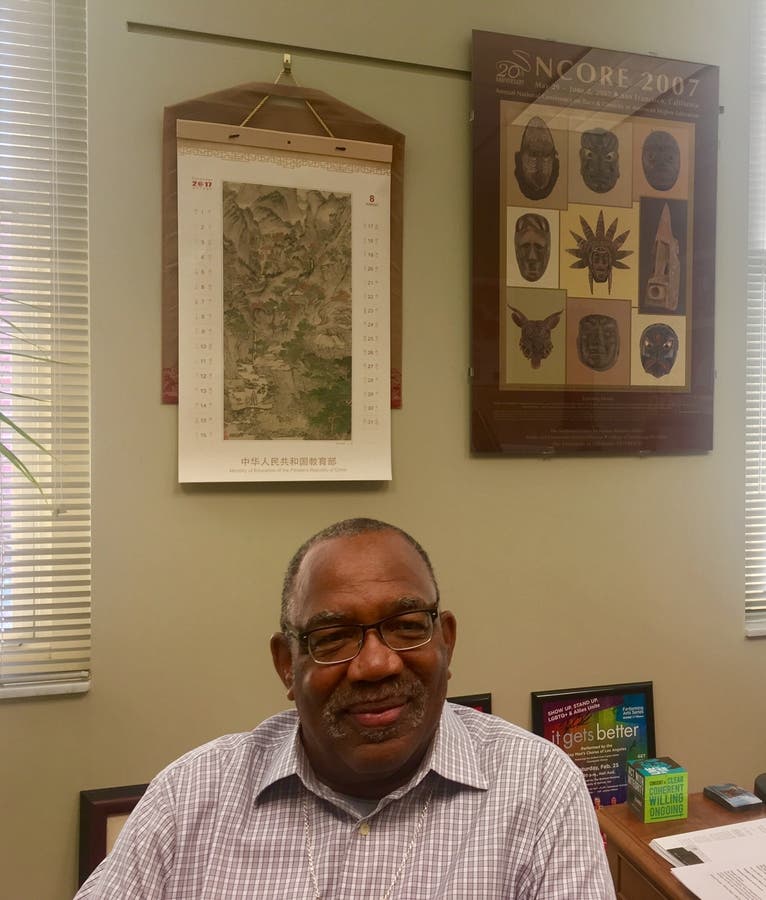
Top photos: Ron Scott, surrounded by artwork from around the world, said alums Jeff Pegues and Wil Haygood were easy choices for the Freedom Center event. -- Photo by Kerry McFadden