Neighbor News
Late-Night Patrol At The Armstrong Student Center
Having police presence at the Armstrong Student Center is a must-have for both students and employees.
By Tyler Pistor
Miami University journalism student
Crowds of students block hallways, the buzz of idle chatter filling up the space with such intensity that people have to practically yell to be heard. A giant line snakes out from Pulley Diner, stretching from the restaurant all the way to the end of the seating by the study rooms.
Find out what's happening in Oxford-Miami Universityfor free with the latest updates from Patch.
It’s 2:30 in the morning at the Armstrong Student Center, and the late-night rush is at full speed, the Pulley Diner employees cranking out food as fast as they can.
Some students stumble up to the counter and some can make it up without any trouble. Women are dressed up for their weekend of partying while many of the men wear jeans and T-shirts -- neither are wearing jackets, despite the crisp cold air on this early Sunday morning.
Find out what's happening in Oxford-Miami Universityfor free with the latest updates from Patch.
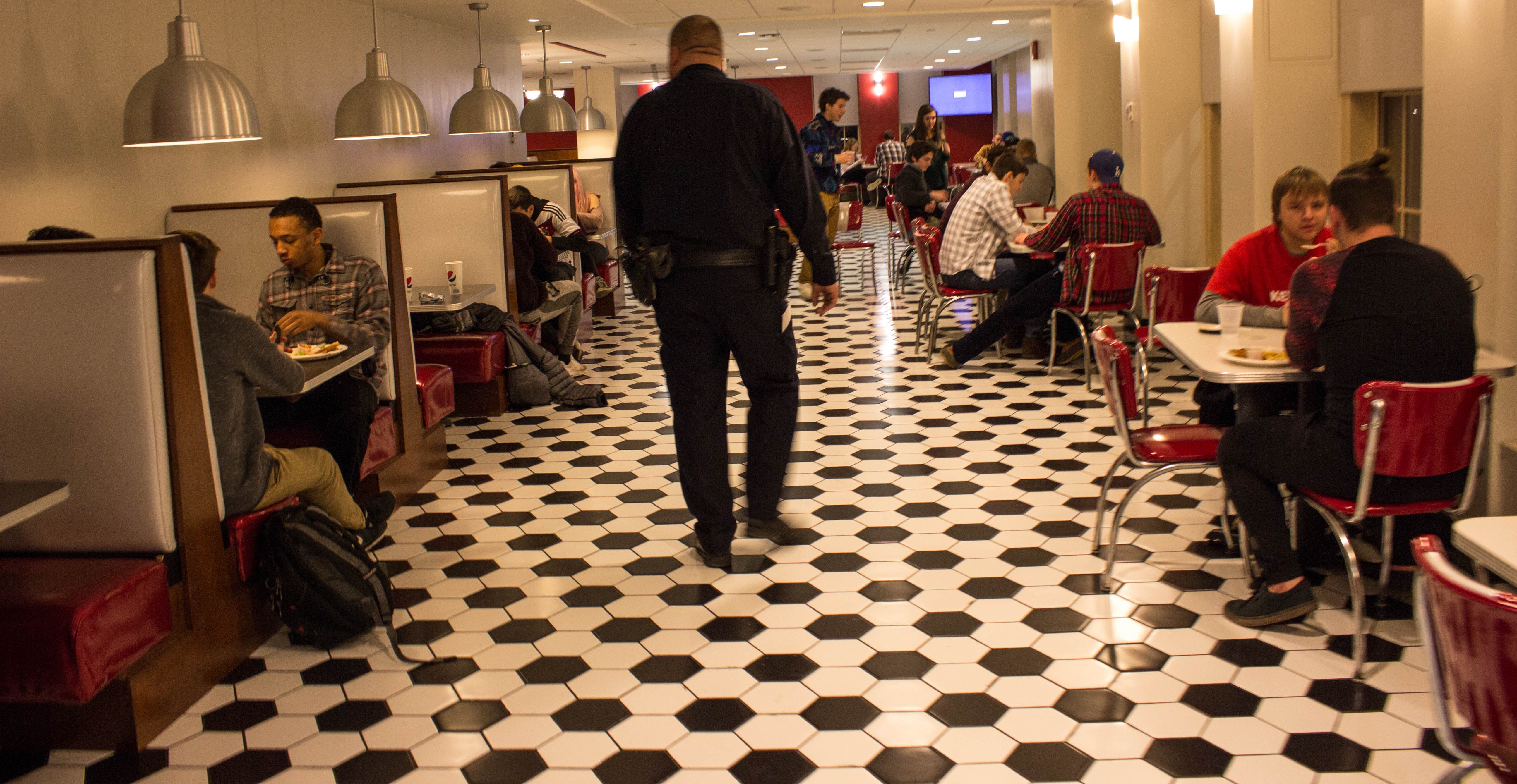
Detective Walt Schneider walks along the hallways of the restaurant, checking for students with their heads on the tables, or students that are otherwise asleep. He stops at tables with students that appear to be passed out and asks if they’re alright.
That night, Detective Schneider was lucky -- he didn’t have to take any passed out students to the hospital.
Why Officers Are In Armstrong
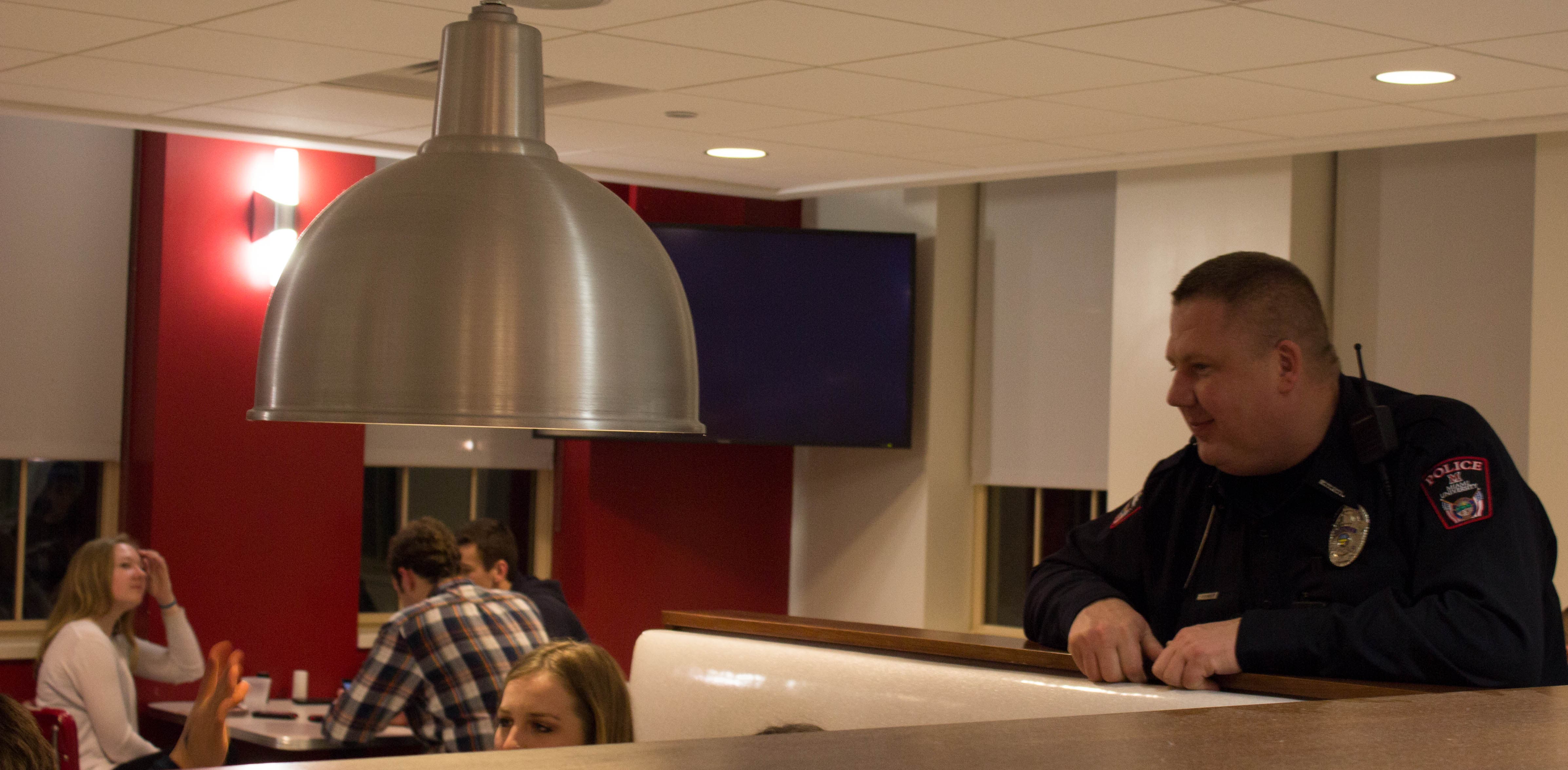
"The whole idea is for the safety of the students but it’s also to watch the property here, because it is a 24-hour building, so we want to make sure that everything stays," Schneider says. "We’ve had to chase down stolen cushions, things like that from the sofas and stuff like that in the past, so the whole idea is to be a deterrent so nobody’s doing stupid stuff."
Some concerned students wonder where one of their friends has gone, thinking that he might’ve passed out in the bathroom. As he’s done several times in the past, Detective Schneider walks to the second-floor bathroom to check for a passed out student on the toilet. This time, there’s no one there.
Schneider walks back to Pulley Diner, still keeping an eye out for students in need of help or for students causing trouble.
"If someone’s really incapacitated and intoxicated, the enforcement thing is a secondary thing for us, we want to get them McCullough-Hyde," says Miami Police Chief John McCandless.
McCullough-Hyde is the nearest hospital to Miami University, located uptown in Oxford on North Poplar Street.
From Jan. 1 to March 28 of this year, MUPD logged eight incidents at Armstrong where students were either taken to the hospital or arrested for intoxication.
"It does feel safe knowing that there are people there to look out for us, even that late, even when people are that intoxicated. I know the officers aren’t out to get people, but people still need help time to time," says Josh Beuerlein, a freshman and Management and Leadership major at Miami University.
"Kids don’t act the same when they’re on alcohol, and that’s just the facts."
The Origins
Protecting restaurants didn’t originate in Armstrong Student Center, it actually had its debut at the food court that used to be in the Shriver building.
"We did it for several years at Shriver, and that started after there was an incident where some drunk students assaulted the clerks working," Schneider says.
Police presence was requested for Shriver "for the safety of the students and the safety of workers, and to also make sure the students were taken care of, not really get them in trouble or anything like that, just basically health issues," says Diane Hoeffer, the Customer Services Coordinator at the Armstrong Student Center.
"I want to say that it was around 2008 when they started coming in more, and it was mainly just weekends because that’s when we would get hit the most. It was just kind of to keep people in line, and make sure people weren’t stealing or tearing things up," Hoeffer says.
The problems at the food court in Shriver informed the planning of the Armstrong Student Center.
"When they first did the design to build the Armstrong Center, we had conversations about security needs and having people up there, and the feeling kind of was that because it’s the only 24/7 business on campus that’s open, that they thought there would be a critical mass of people in there, particularly in the evenings when the bars close," Chief McCandless says.
The Armstrong Student Center also has a substation for the police, so officers drop by to check out the area during the weekdays when they’re not being paid to be there for the late-night shift.
"Housing and Dining pays for them to be in the area, we pay for them to be in our area on the weekends," Hoeffer adds.
The Housing, Dining, Recreation and Business Services department, or HDRBS, pays one officer for the late-night shift, bringing officers up to the Armstrong Student Center on Thursday, Friday, and Saturday nights every week.
Hoeffer says that at one point, HDRBS considered not having the officers at the Armstrong Student Center, but they ultimately decided that wouldn’t be a good idea.
"The officers interact, and some of the students realize they’re not here to get them in trouble. They’re able to check on them and make sure they get home safe," says Hoeffer.
The Night Winds Down
Detective Schneider's shift began at midnight, when the soft murmur of a handful of people talking could be heard in Armstrong, mostly composed of students that are studying for midterms. It’s quiet enough that you can hear someone across the table from you talking.
The faint sound of music rises from downstairs in the dishwashing room, mixing with the tune that the cooks at Pulley Diner are playing while they work -- Bring Me to Life by Evanescence. The cocktail of sounds is nothing compared to what it sounds like when Pulley gets busy.
According to Hoeffer, the previous night at Pulley had crowds of students coming through all the way to five o’clock in the morning. On the late-night shift on Saturday, however, the waves of students began to dwindle around 3:30 a.m., the sounds of Armstrong beginning to rewind back to when Detective Schneider’s shift began.
There’s no music wafting through the air, nor the sound of whatever the TV monitors are broadcasting downstairs -- they’re all shut off, resting until the morning comes.
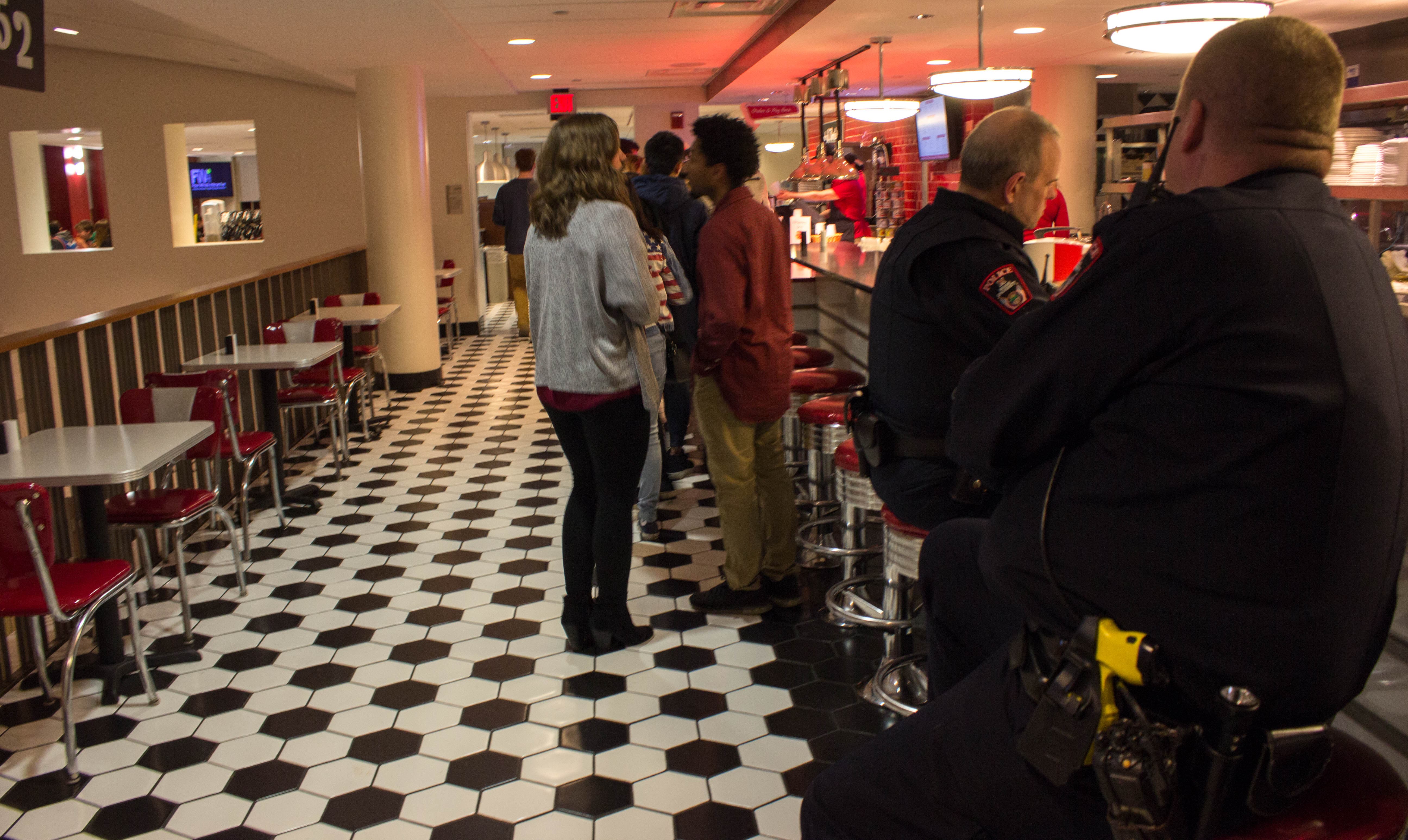
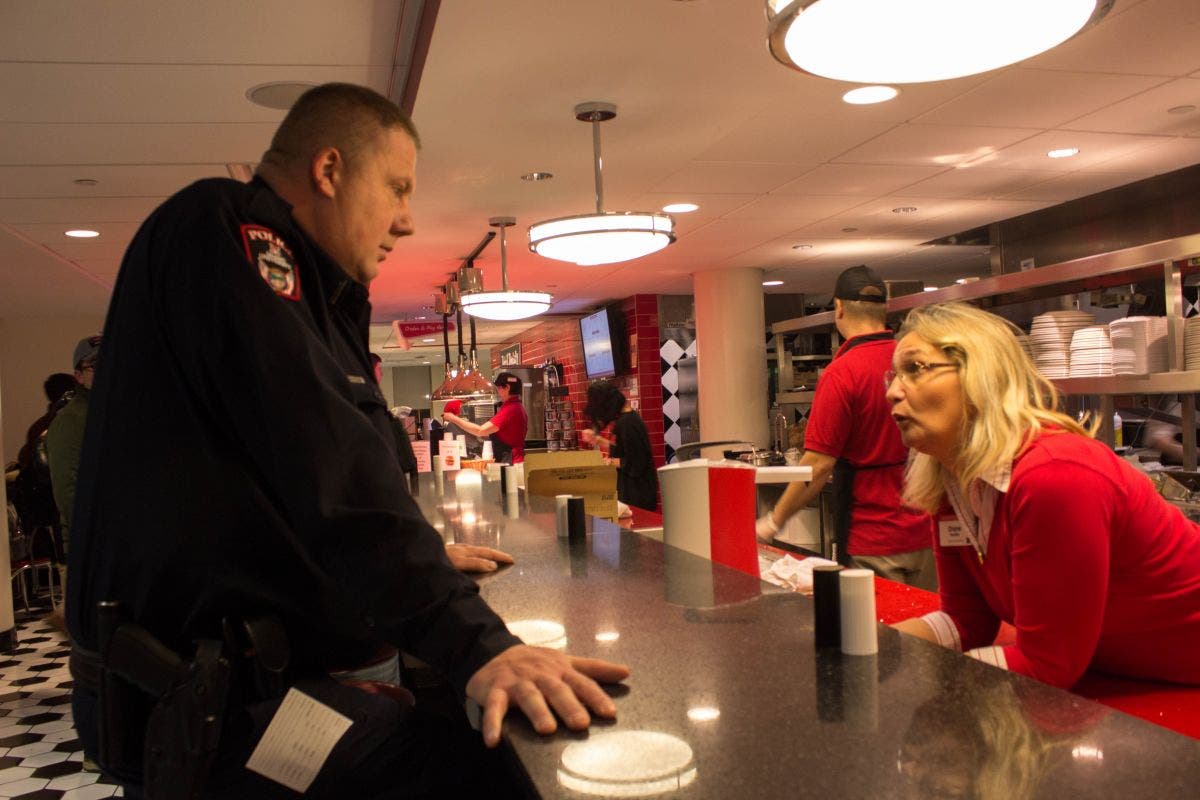
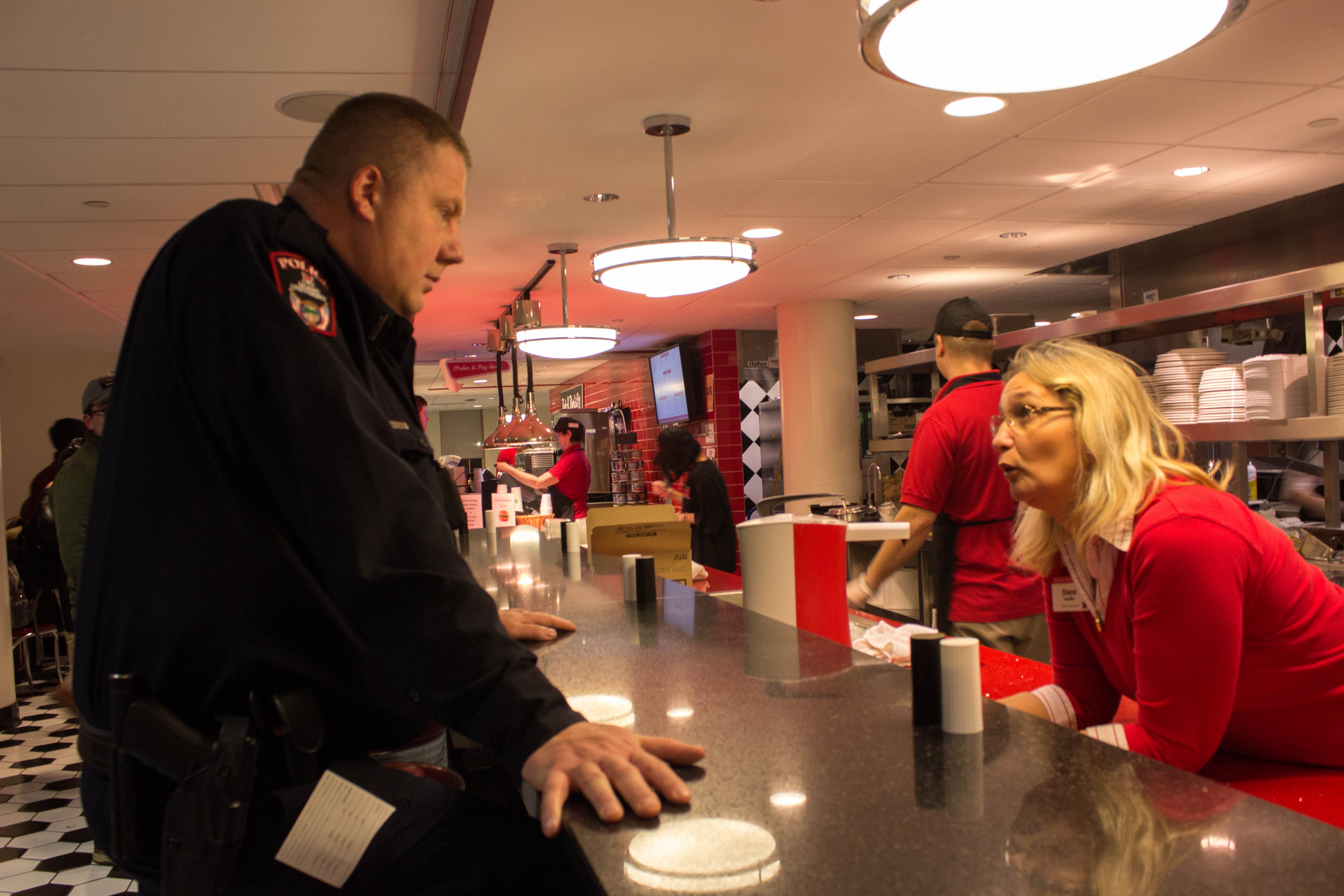
Cover Photo: Diane Hoeffer, the Customer Services Coordinator at the Armstrong Student Center, talks to Detective Schneider from across the table during his shift there. --Photo by Tyler Pistor