Neighbor News
Marathon, Not Sprint, To Address Drinking At Miami
After the death of a student in January related to high-risk consumption, the university ponders how to tackle the problem of binge drinking

By Elise St. Esprit
Miami University journalism student
Spring semester at Miami University often begins with what some students call the "syllabooze." Returning from winter break, reuniting with friends, seemingly easy class work, and drink specials at the bars every night of the first week lead to an almost non-stop party for some.
Find out what's happening in Oxford-Miami Universityfor free with the latest updates from Patch.
This year the party was overshadowed by the death of freshman student Erica Buschick the Saturday before classes began. An official toxicology report linked Buschick's death to alcohol and according to police reports, Buschick's friends said they had been drinking heavily the night before her death.
In a written statement to students and parents after Buschick's death, Miami President Gregory Crawford said that "High-risk alcohol consumption among college students is of concern to every university president and I am determined and committed to doing all that we can to help ensure the well-being of all of our students."
Find out what's happening in Oxford-Miami Universityfor free with the latest updates from Patch.
"Drinking Culture" At Miami
Less than three weeks after Buschick's death, 21 students were hospitalized in Oxford's McCullough-Hyde Memorial Hospital. Of the 21, 19 students were underage.
While it is unclear how many of the students are members of Greek organizations, the hospitalizations did coincide with the end of the sorority and fraternity rush period. During rush students affiliated with Greek life are expected to consume no alcohol. Some referred to the first night out after rush as "blackout Thursday."
The next morning President Crawford called an emergency meeting with all sorority and fraternity presidents as well as leaders from the Interfraternity Council and the national Pan-Hellenic Council to discuss the issue of binge drinking in the Greek communities on campus.
Oxford Police Sergeant Jon Varley says he has never seen the drinking problem at Miami this bad in the 20 years he has served on the force.
"It becomes concerning to us that so many people are getting to that level of intoxication that they need help," Varley says.
The high-risk consumption affects the community of Oxford, as well as the university. Oxford police reports regularly feature a variety of crimes related to alcohol consumption, such as underage consumption, possession of fake ID's, public intoxication, and disorderly conduct.
Ideas For Change
So what has Miami been doing to curb risking drinking behavior?
On Feb. 24, Miami's Dean of Students Mike Curme held a town hall style meeting at Shriver Center for students and community members, including police officers and bar owners, to come together and discuss the problem.
Less than 75 people showed up for the discussion.
Curme began the Friday evening meeting by saying it had been an emotional few weeks at Miami, but he would make it quick, because he knew there were other things he knew the audience would rather be doing on a Friday night.
"It's probably not a problem that can be met with a solution," Curme told attendees. "It's more trying to create the best community possible for our students to live in. This is a marathon, not a sprint."
Sergeant Varley agrees.
"It’s going to have to be a grassroots change and the change of the culture of Miami," he says.
Looking For Long-Term Solutions
In 2014, former Miami President David Hodge called for a task force to look into high-risk alcohol consumption on campus. In turn, they set up a committee dedicated to reducing binge and underage drinking, as well as creating a better image for Miami, a school with a reputation for partying.
Many students come to college with a perceived notion of alcohol consumption and how they are "expected" to behave, from movies, television and even older friends and siblings.
According to Curme, these expectations are only further cemented when new students see two of the largest drinking establishments in Oxford barely a block off campus as well as the frequent parties held in the Mile Square of student housing.
What's Happening Now
Miami offers "late night" activities, free for students, such as movies, craft nights, and snacks to encourage more students to say on campus instead of venturing to the party scene Uptown. However, some students have noted that they haven't really noticed the advertisements.
"I've seen a few flyers for the late-night activities around campus" says sophomore student Marisa Hillard. "I've never really thought about going, I don't really know where they are or anything. If I wanted to stay in an watch a movie, I have Netflix."
Another solution that Curme suggested at the meeting was to make changes to the way alcohol violations are treated. If a student is found drinking in a dorm, they are automatically cited and must go through the university's judicial system, usually ending with a fine and the student in question taking a class on the dangers of drinking.
However, the task force found that the most high-risk consumption was coming from hard liquor such as tequila or vodka. The university has proposed that the punishment be harsher if this type of alcohol is found, versus beer or wine.
To take on the problem of fake ID's, Oxford Police Department is working closely with Oxford bars to make sure that underaged students aren't being let in. Since most bars require two forms of identification, Miami will also be printing student ID's with names, birthdays, and state of residence to make spotting false ID's easier.
Is Miami's Problem Unique?
According to Curme, 60 percent of students who enter Miami as freshman are non-drinkers. That number significantly drops by the end of their first semester.
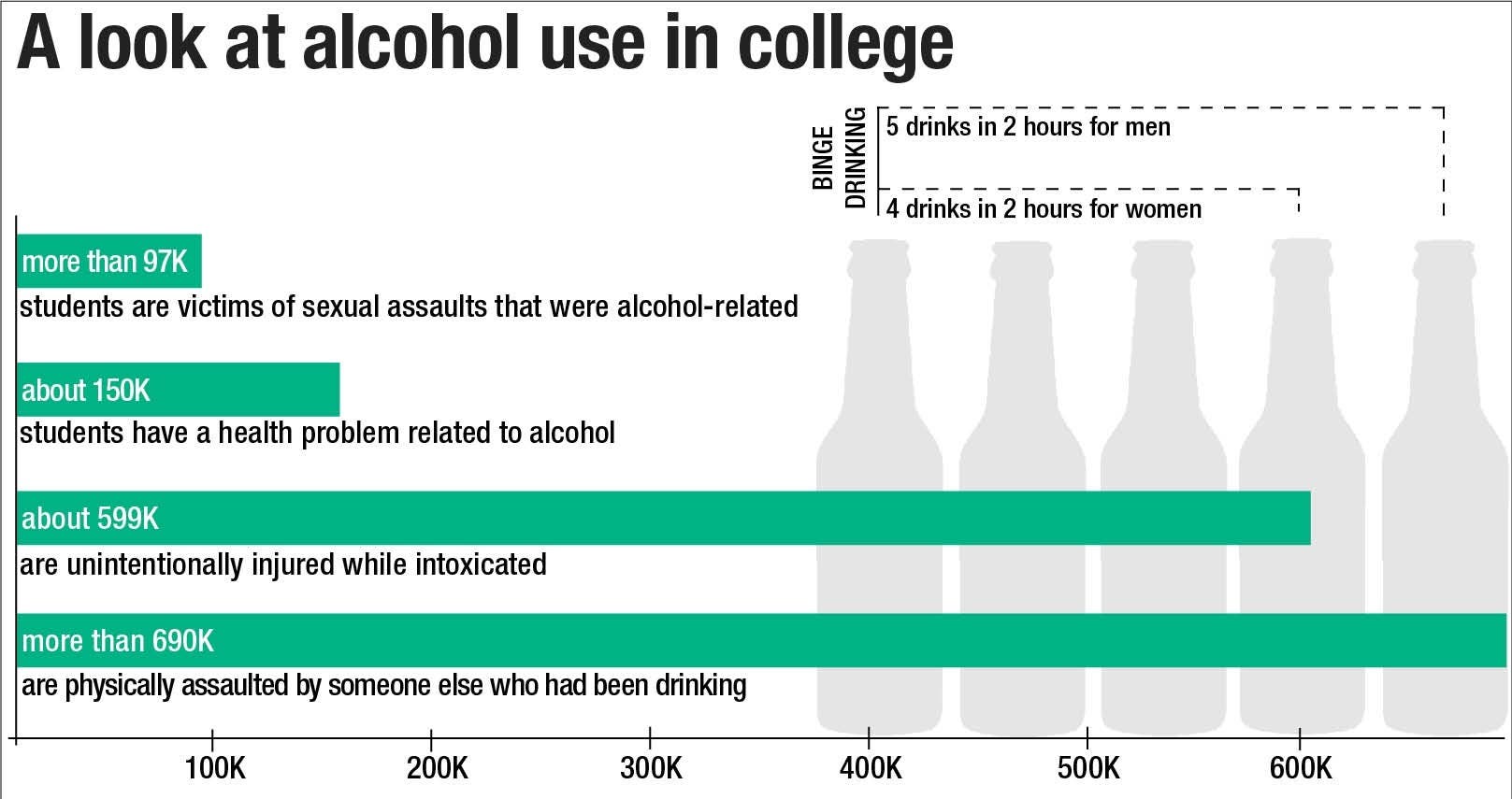
A study by Rose Marie Ward, a professor of public health at Miami, of several hundred students from the 2016-2017 academic year found approximately 60 percent of students reported binge drinking. That number is significantly higher than the national average of 38 percent, according to the National Institutes of Health.
"I will not let this issue define Miami students," Curme says. "Miami students are about the values this university holds dear -- love and honor. Miami students are both smart and pre-disposed to leadership. They are the first to step up and say that something is wrong. We will overcome this."
Photo: Long lines can often be seen outside Brick Street in Oxford on weekends. The bar and music venue is popular with Miami students. -- Photo by Elise St. Esprit