Health & Fitness
McCullough-Hyde Memorial Hospital’s New Partner Brings New Amenities, Enhanced Services
Under TriHealth, Oxford's community hospital gets a renovated emergency department and additional surgical suites.


BY BLAIR DONOVAN
Miami University journalism student
When McCullough-Hyde Memorial Hospital opened the doors to its new emergency room in July, it was the culmination of years of planning and a relationship with a new mega-force.
As the hospital, located at 110 N. Poplar St., puts the finishing touches on the ER and moves on to its next big project—upgrades of the surgical suites—officials say that the nearly two-year-old relationship with TriHealth has brought improved clinical services to Oxford and Miami University students looking for quality care.
Find out what's happening in Oxford-Miami Universityfor free with the latest updates from Patch.
"We're upgrading some capabilities within the hospital, and we're looking at what services can be upgraded," said Richard Norman, a member of McCullough-Hyde’s Board of Trust and former chair of the Board of Directors. "We have a wide array of consumers. We have older consumers so we have to have geriatric services, and services for the student population, as well as the normal folks here in town."
McCullough-Hyde officially affiliated with TriHealth, a Cincinnati-based healthcare powerhouse, on Jan. 1, 2015, and changed its name to McCullough-Hyde Memorial Hospital-TriHealth. Under the deal, TriHealth owns 60 percent of the hospital, and the Board of Trust retains 40 percent ownership.
Find out what's happening in Oxford-Miami Universityfor free with the latest updates from Patch.

The Board of Trust, which controlled the operations of Oxford's McCullough-Hyde since sisters Daisy McCullough and Elizabeth McCullough-Health founded the hospital in 1957, started looking for a business partner in 2013.
According to Norman, local hospital officials wanted to affiliate for economic reasons and to keep up with the changing healthcare system. Under the Affordable Care Act (also known as Obamacare) healthcare providers must use an electronic medical records system, a steep investment for small hospitals.
“We knew there were some things we needed to do, and we needed a new IT system,” said Norman, former vice president of finance at Miami. “We knew that we could merge and get a better system. Healthcare is changing dramatically in the way that it compensates hospitals and doctors for the healthcare they provide. We have to go to a system that rewards providers for keeping people healthy, and we needed a new electronic data system for this.”
The Board of Trust met with four healthcare systems in southwest Ohio and eventually chose to affiliate with TriHealth.
Affiliation funding
In the year before the affiliation, the economic pressures became clearer. McCullough-Hyde treated 11 percent fewer in-patient clients in 2014 compared to 2013, the hospital's 2014 report shows. Also hurting the financial picture: rising costs for treating patients covered by Medicaid; the loss of Miami's Student Health Center's contract mid-year; higher claims under its self-insured health plan; and one-time costs related to affiliating with TriHealth. Total revenue, at $54.9 million, was down 1.6 percent in 2014 vs. 2013, with expenses exceeding revenue by $1.4 million.
According to Alan Oak, a member of the McCullough-Hyde Board of Trust, the board knew a lot of other small hospitals had either closed or been acquired by larger systems because of similar financial outcomes.
“The Board of Trust felt that its top priority was to continue to have a high-quality, full-service acute care hospital in Oxford as part of the quality of living and as a foundation for economic growth,” said Oak, also a retired Miami administrator. “We felt that we needed to do something.”
Very few clinical positions at McCullough-Hyde were affected after the partnership, according to Oak.
“In all cases, if a person who was with McCullough-Hyde had their position eliminated, they were offered a position with TriHealth,” said Oak. “There may be a few exceptions, but that’s how it was approached. We worked hard to try to accommodate as many people as possible who wanted to stay employed within the new system. Our expectation is that we will grow on the clinical side, so in the future there will be additional jobs in the region.”
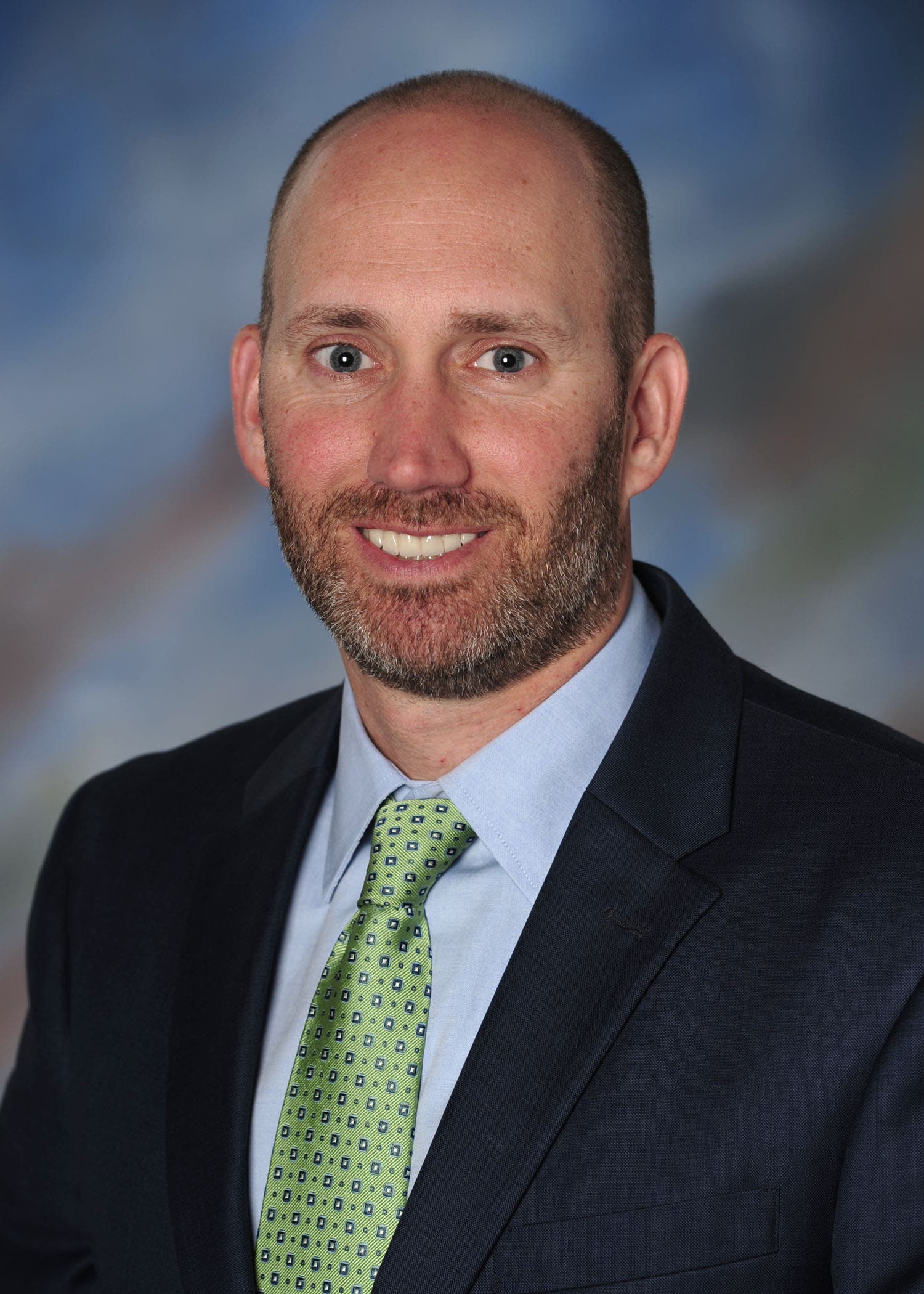
After the affiliation, TriHealth named Brett Kirkpatrick, formerly TriHealth's executive director of ambulatory services, as executive director of operations at McCullough-Hyde. In April of this year, he replaced Bryan Hehemann, who had been chief executive officer of the hospital since Sept. 1, 2008. Hehemann resigned in March, but said he still remains very supportive of the hospital, and thinks there's a much brighter future for McCullough-Hyde after the affiliation. He recently accepted a job as chief operating officer with the Lindner Center of Hope in Mason, an affiliate of University of Cincinnati Health that specializes in mental health and addiction services.
Emergency department renovation
Plans to update the McCullough-Hyde emergency department started in 2010.
“It needed to be more efficient and appealing and larger,” said Oak. “We recognized the need, but we were concerned with all the changes going on in the industry that we did not commit to a plan until we had begun the discussions with an affiliation. The active decision to do that occurred in 2014. As we negotiated with TriHealth, we identified the importance of investing in the emergency department.”
Hehemann said the original emergency department was built in the 1970s. The hospital had renovated it several times within its existing walls, but the space was too small and tight for the updates to be efficient, he said. In 2010, the hospital drafted a master plan for updates, which included the emergency department renovation.
At the start of the partnership, TriHealth gave McCullough-Hyde $17 million, with $2.5 million earmarked for ER renovation. The Board of Trust also made a $1 million commitment to the renovation, according to Oak. McCullough-Hyde began with this project first so that the hospital could make room for more surgical suites.
Mary Bennett, chief development officer at McCullough-Hyde, said that as part of the affiliation agreement, McCullough-Hyde spoke with TriHealth about funding several capital projects, and the surgical suites were at the top of the list. Bennett manages the hospital trust, which raises money for equipment, services, and education.
"Most of our funds started as endowments by donors who wanted to establish some type of support for those three areas," said Bennett. "We have a lot of endowments for those purposes."
Construction on the emergency department began June 2015. A new space was built for it, and the former space continued to house patients during the project. The new space went on line in July, and is expected to be fully completed this month when additional emergency room bays are done.
In the new ER space, patients have much more privacy, according to Norman, with walls separating beds instead of curtains. There are also lower beds to make it easier for geriatric patients to get in and out, and the location of the central nurse’s station lets them easily keep track of all the beds in the room. Nurses also have more room to work.

Hehemann added that the department will have a multipurpose area with a room for mental health patients and an isolation room for infectious and hazardous material patients. This area will have a wash-down unit with drains on the floor for easy disinfection. The emergency department will also have a room for sexual assault victims.
Renovation of the McCullough-Hyde's three surgical suites began after the ER reopened and will be finished by next summer. The suites will be located in the former emergency department, according to Oak. Norman said each suite will have state-of-the-art equipment and ventilation systems that provide the required amount of oxygen flow in the room per hour. A fourth suite will also be built.
“It will be large enough to accommodate robotic equipment, which is important in surgeries now,” said Norman. “They’ll have more room and services like air and oxygen will be updated.”
The hospital will also renovate the lobby starting next year, according to Oak.
Clinical and community advancements
As a small community hospital, McCullough-Hyde did not have the resources to offer highly-specialized services before affiliating with TriHealth. Now, the new emergency department and surgical suites will help improve McCullough-Hyde clinically. The TriHealth affiliation has also allowed the hospital to develop increased capabilities in oncology, sleep disorder treatment and cardiac care.
“That’s what it’s all about: to improve the quality of care and depth of services,” said Oak.
To get up to speed on electronic record-keeping, McCullough-Hyde implemented a new electronic data system called Epic on July 1, 2015, using $9.5 million in TriHealth funds. Many large healthcare providers use this well-known system.
“We’ve upgraded the electronic medical records system so that it’s easier for specialists to communicate amongst themselves and with primary care doctors,” said Oak.
Oak joked that the hospital won’t be able to do brain surgery or organ transplants, but will continue to enhance its primary care services. The hospital also now has a seamless ability to refer more acute cases to larger hospitals that have more specialists and sub-specialists.
According to Joe Kelley, TriHealth's manager of media relations, McCullough-Hyde received an "A" grade in patient safety this past spring and fall from the Leapfrog Group, which grades more than 2,500 hospitals in the country. Grades are determined by the Leapfrog Hospital Survey filled out by the hospitals and other publicly available data. In the prior three years, McCullough-Hyde had received "C" and "D" grades in the survey.
The affiliation also created an increased involvement in community wellness. TriHealth provided $50,000 for McCullough-Hyde to invest in local wellness projects. As one example, according to Oak, the Oxford Area Trails are receiving funding as an initiative to reduce obesity. Hehemman added that the hospital has been working with other organizations to host wellness programs that promote healthy living choices, with topics ranging from smoking cessation to child rearing to alcohol consumption.
"We have a renewed commitment to the community," said Kirkpatrick. "We're expanding our infrastructure and services so that exceptional care can be brought into our community with the collaboration of McCullough-Hyde and TriHealth."
Photo: McCullough-Hyde staff now enjoy updated facilities. -- Contributed photo