Neighbor News
Miami University Discusses Revolutions In Modern History
Miami University hosted three guest speakers to discuss the Russian, Mexican, and French revolutions along with their impacts on the world.
By Claire Williams
Miami University journalism student
Miami University hosted three speakers last Thursday to explore revolution throughout history and how it's changed the world.
Find out what's happening in Oxford-Miami Universityfor free with the latest updates from Patch.
The guest speakers were Mark Steinberg, a professor of history at University of Illinois at Urbana-Champaign, David Bell, professor of history at Princeton University, and William Breezley, professor of history at the University of Arizona.
Their visit was sponsored by the McClellan Fund of the Department of History.
Find out what's happening in Oxford-Miami Universityfor free with the latest updates from Patch.
The discussion, Revolutions in Modern History, was co-hosted with the Humanities Center and focused on three modern revolutions. It was scheduled to coincide with Miami University history classes this semester on the Russian, French, and Mexican revolutions.
Steinberg is a specialist in the Russian Revolution, Bell in the French Revolution, and Breezley in the Mexican Revolution.
A Semester Of Work
It was a culminating event for the semester’s curricular theme. The Mexican and Russian classes were both taught this semester to commemorate the centennials of 1917, which were the constitution of Mexico and the start of the Russian Revolution, according to Elena Albarran.
Elena Albarran is a professor in the history department and one of the organizers and moderators of the event. She said the speakers were brought in to give an overview of the global legacy of each revolution and then to discuss, compare, and contrast them.
"Each invited guest came to visit the history class that corresponded to their field, and gave a more intimate class sessions to students specializing in that area."
Albarran and history professors Steve Norris and Will Brown put together the discussion as a way to connect three renowned scholars with international reputations.
Albarran also believes the inclusion of Mexico was "novel."
"It’s often considered a national movement with little international implications," she says. "Dr. Beezley provided some insightful, if controversial, evidence about why Mexico was important on a global scale because of its revolution and the changes it brought."
Revolutionary Importance
Each speaker highlighted why their particular field was so important to the study of society today, and how current political revolutions and acts of protest stem from the past.
All the speakers were in agreement about how the history of past events directly impact what is happening in the world now.
One of the students attending, Kaylie Schunk, a junior history major, thought that the discussions brought to light a lot of similarities between these independent but ultimately powerful revolutions and events in the world happening now.
"It’s interesting because in places like Syria, history like this is being made. In twenty years, we could be talking about today like it was one of these revolutions."
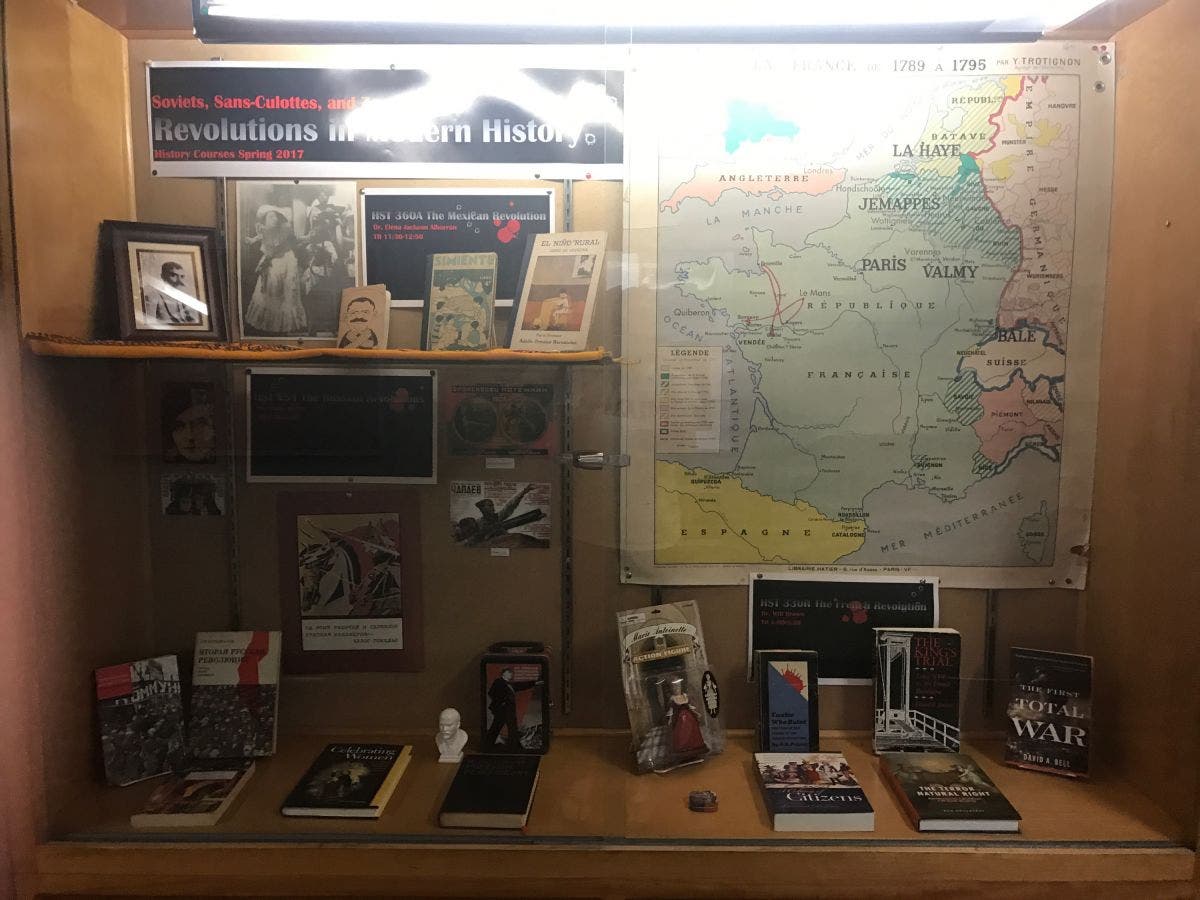
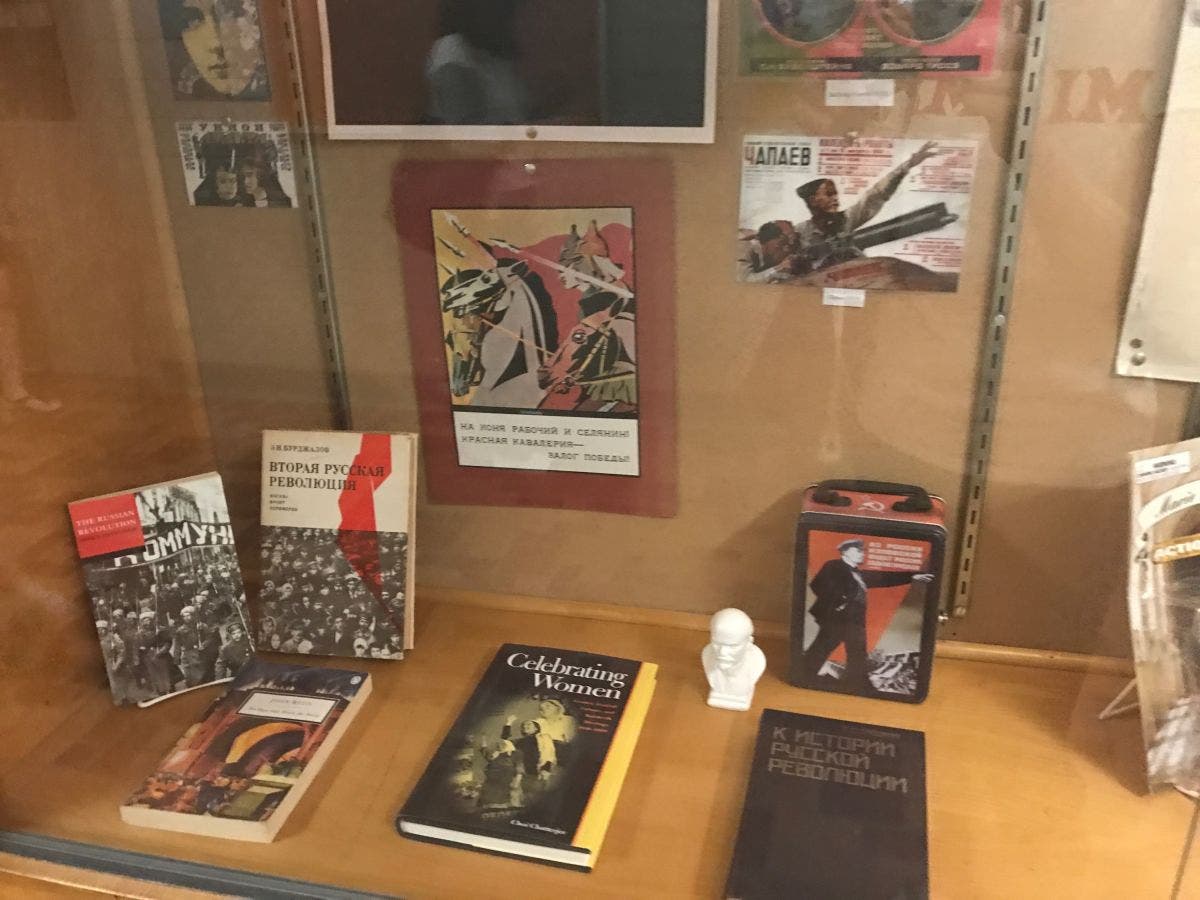
Photo: The display case in the history department showcases books and information about the three revolutions. --Photo by Claire Williams