Schools
Myaamia Center Working Hard To Spread Language And Culture Of Miami Tribe
With MacArthur Award and grant dollars, Miami's center looks to create a distance-learning program in 2017.

BY ALTHEA E. PERLEY
Miami University journalism student
As the semester comes to a close, the Myaamia Center has a lot to celebrate.
This fall, the center’s director, Daryl Baldwin, was one of 23 recipients awarded the prestigious MacArthur Foundation “Genius Grant.”
Find out what's happening in Oxford-Miami Universityfor free with the latest updates from Patch.
Thirty-two Miami University students are currently enrolled in the Myaamia Center -- the most, at once, in the history of the program.
The center landed new funding for its National Breath of Life Archival Institute for Indigenous Languages work -- and Baldwin will be among the leaders of a 2017 workshop for the project.
Find out what's happening in Oxford-Miami Universityfor free with the latest updates from Patch.
And there are lots of exciting student projects propelling the Miami Tribe of Oklahoma -- named after the Miami Valley where the tribe used to live -- to revitalize their language and culture.
The technology plan
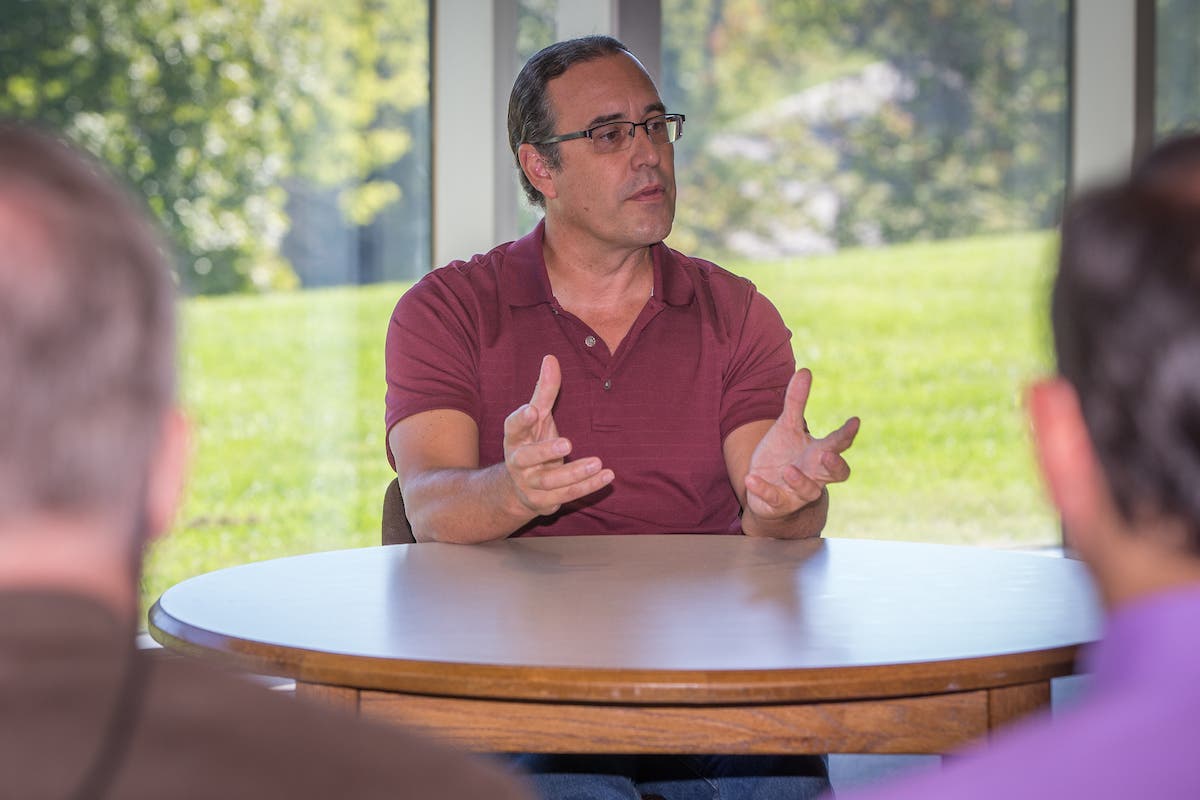
“We have a lot of irons in the fire," Baldwin said during an interview in his office. "We are looking at some grant opportunities, and have several research projects going on."
Currently there are two capstone teams in the computer science department working with the center. One is creating an online ethnobotanical database, the other is working on an iPhone app for the lunar calendar the Miami Tribe uses with the Gregorian calendar. There is also a graduate assistant helping improve the center's digital archives and online dictionary; over the past five years, Baldwin and his son Jarred, who also works with the center, have manually entered every word and how to pronounce them into the dictionary.
Next fall, the center hopes to launch a new long-distance learning project. Center officials envision utilizing apps, online videos and other teaching tools to allow tribe members to learn the Myaami language from their homes. Under the project, the center will hire a new staff member to implement online classes -- all in an effort to share research and language with members of the tribe spread across the country. Baldwin's "Genius Grant" stipend -- $625,000, paid quarterly over five years -- will support this already planned priority.
The Myaamia Center
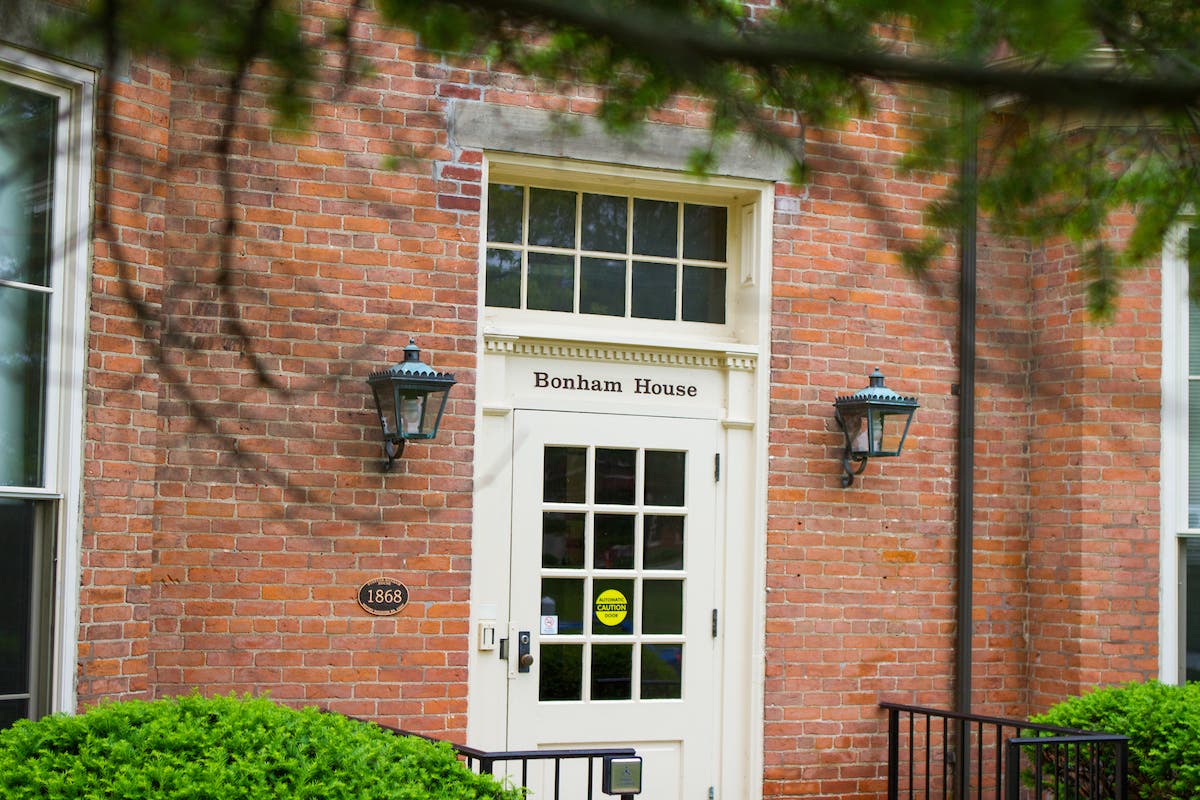
Situated on the corner of Spring and South Oak streets on Miami's Oxford campus, the Bonham House holds the Myaamia Center, its offices, and a big future.
"The challenge is that native people are talked about in the public system as a people of the past, not a living people with a past. What it does is crystalize us in history, but we change like any other nation," said Baldwin.
The first Miami Tribe students enrolled at Miami University in August 1991, and since then 119 students have graduated. The Myaamia Program, which started as the Myaamia Project in 2001, was inspired by the need to complete the necessary research, materials and teacher training to revitalize the language.
“What neither the tribe or the university realized was what the program could become, which is what we are enjoying today,” said Baldwin.
Today the center staff includes Baldwin, who specializes in language revitalization; Assistant Director George Ironstrack, who leads the education and outreach office and directs technology efforts; and Bobbe Burke, Miami Tribe relations coordinator. Next, it hopes to add a staffer to lead environmental projects, along with one for long-distance learning.
"The Myaamia Center has two goals: one is to meet the needs of the Myaamia Tribe, and the other is to educate young people. But the major part of the center is educating any tribal student who enrolls here and teaching them about who they are and what their heritage is," Burke said. "They graduate knowing more about their history, their culture, and some language, and with that develops a huge sense of pride about themselves."
Students in the program take a total of six classes, spanning three topics, over the course of their college career. From their first to third year they all focus on one topic. This year, they are focusing on language and culture; other years they have focused on the tribe's ecological perspective in history, and contemporary issues and sovereignty.
Seniors then work on a project over two semesters, and "take what they learn in the Myaamia course series and the work of their major or minor, hybridizing it into a project that gives back to the tribal community," Ironstack explained.
Student perspectives
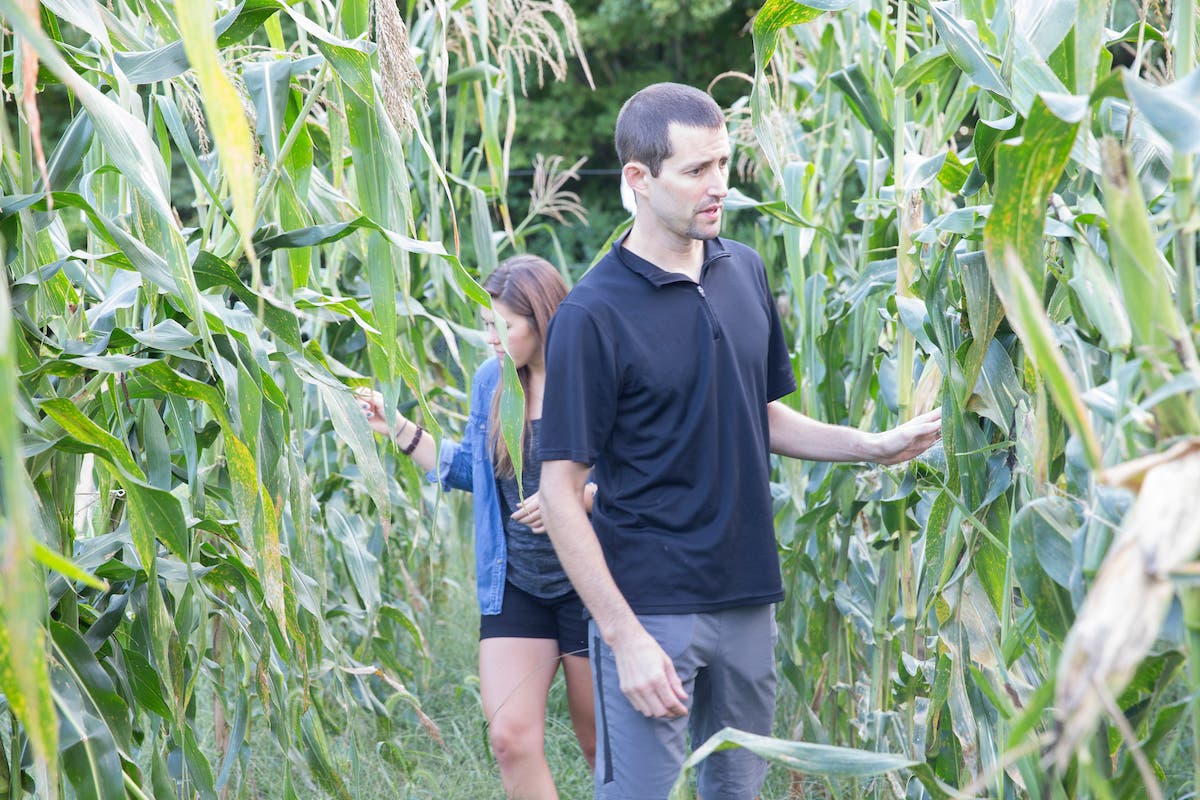
"What people know about the Miami people is usually historical, so we want to focus on the contemporary reality of tribes. We don’t want to push historical stuff because we want people to understand who we are today, and understand our present," Ironstrack said.
Language is a top priority for the center, considering that the tribe's language was silent when it's last native speaker died in 1960. Now, the center teaches the language to current students and offers language lessons for younger tribe members at their Eewansaapita summer youth camp. The camps, for students aged 10 to 16, are in Miami, Okla., in June, and Fort Wayne, Ind., in July, working from the premise that if students begin learning the language when younger every generation will become more proficient at speaking.
When these students get to the Myaamia Center they benefit from a continuum of learning, "producing a whole new generation of tribal parents who are viewing cultural language and development in a new way," Baldwin said.
Two students affiliated with the center said its work can benefit non-tribal students.
Ian Young came to Miami and the Myaamia Center from Crete, Ill., to learn about his heritage, which he didn't know much about until he arrived.
"The work that is done here not only drastically impacts the lives of Myaamia people, but it is totally unparalleled," Young said. "The revitalization of a culture and a language is unprecedented and the accomplishments made through the center are the subjects of conversations all over the world on the maintenance and reawakening of cultural knowledge."
Young graduated last year with majors in physics and philosophy with a minor in Spanish. His senior project ended up being about an ancestor he is named after, who was an accomplished bow maker.
Young is now a legal intern for the Miami Tribe of Oklahoma, researching laws in states where the tribe is active. He hopes to start law school next August and later practice indigenous law.
'Set ignorance aside'
Kara Strass graduated from the University of Notre Dame in 2011 with a bachelor of science degree in general biology. She is now a graduate assistant at the Myaamia Center studying student affairs. Strass grew up in Huntington, Ind., in the middle of traditional homelands of the Miami tribe. She is a descendant of the last chief who lived in that area.
"As a native person, 99 percent of your interactions are going to be with non-tribal people," Strauss said, "and those interactions can be harmful.
"Set ignorance aside. We don’t teach these students about our heritage, our language, our culture, and so most people are not coming from a place of wanting to be harmful, but what we do teach them is that it can be."
She hopes the general Miami population can and will learn about native topics from their Myaamia classmates. When that happens, students "are more likely to say, 'I had this cool experience when I went to school. I understand that there are these tribes out there, and how to communicate with them.' I think that is a great service. If we can promote that, it is something that you are not going to get that at other schools."
'Utter shock' with MacArthur
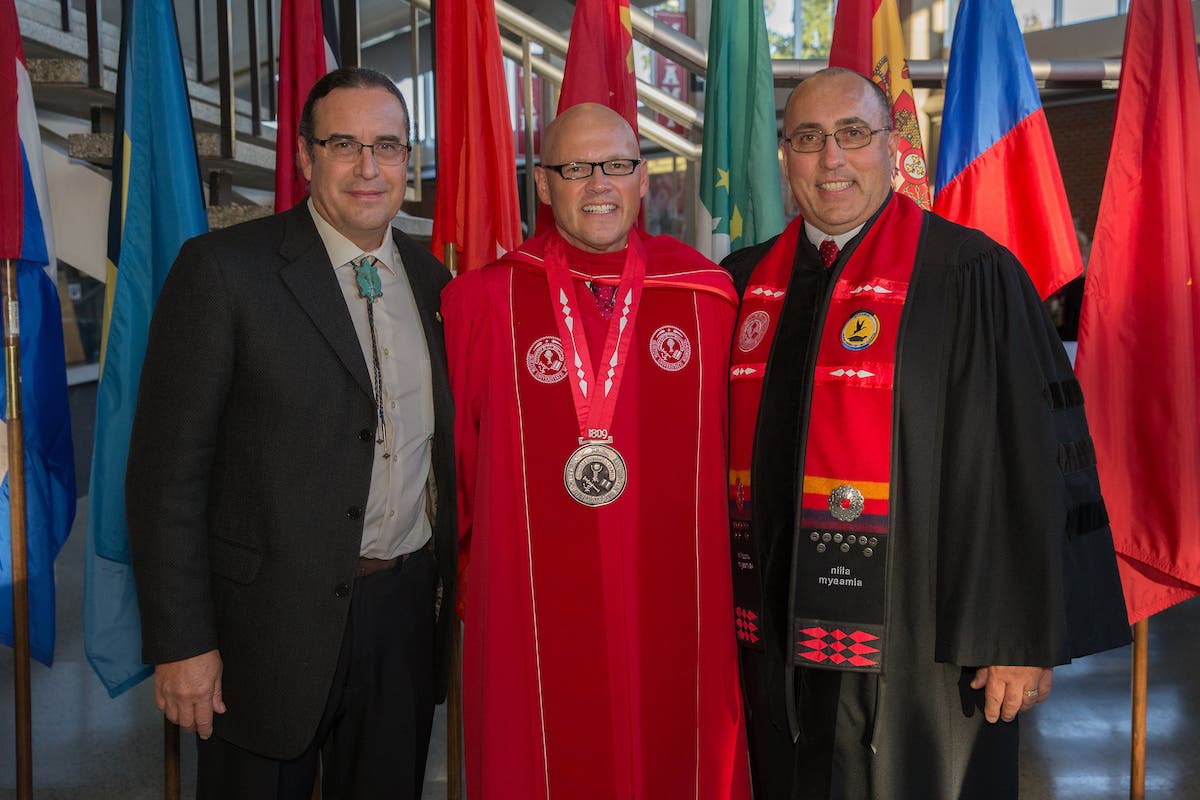
About 80 percent of the center's work supports tribe students at Miami and the needs of Miami Tribe members outside of campus. The balance contributes to the larger national language revitalization. Local needs take priority, Baldwin said, because his staff members can’t be distracted trying to solve the world’s problems before their own revitalization.
When Baldwin received the phone call from the MacArthur Foundation about the Genius Grant in September, it came as a complete and utter shock. "It’s not anything I applied for," he said. "I literally didn’t know it was happening. Someone out there in the world nominated me and it could have been years ago. They called me three weeks before the public announcement and told me I could tell one person, so I told my wife."
Two months hence, he views the MacArthur award as "a wonderful recognition of what this community is capable of doing, and the relationship between the tribe and the university."
As the center looks forward to growing with the help of MacArthur dollars, it also has new funds from the National Science Foundation at its disposal. It won an NSF grant valued at $182,406 in August -- after landing $167,650 from the same source just two years earlier -- to continue its work with the Smithsonian Institution's National Breath of Life Archival Institute for Indigenous Languages. The institute helps endangered language communities find and use archival sources for linguistic revitalization.
Baldwin will be the leading the fourth National Breath of Life workshop along with Gabriela Perez-Baez, curator of linguistics and director of the Recovering Voices initiative at the Smithsonian's National Museum of Natural History, and Leanne Hinton, professor emerita of linguistics at the University of California at Berkeley. It runs May 29-June 9 in Washington, D.C.
“People think that it is one language or another," Baldwin said of the Myaami language. "It’s not. Around the world most people are multilingual and it’s quite natural, so it’s about simply having both.
"Nobody is implying that we shouldn’t speak English. It’s about having English -- and our heritage language. It’s not a language you need to have to get a job or go to school, but it is a language of identity."
Photo: The Myaamia Center is located in the Bonham House on Miami University's campus. -- Photo by Miami University