Crime & Safety
Oxford Police Department Programs Help Strengthen Community Relations
The Citizens Observer Patrol allows residents and students to help the police that regularly protect them in their communities.


By MARIAH SCHLOSSMANN
Miami University journalism student
The Oxford Police Department’s Citizen Observer Patrol (COP) program is an effective way for citizens to give back to the Oxford community and helps local police, officials said.
Find out what's happening in Oxford-Miami Universityfor free with the latest updates from Patch.
“This program provides an invaluable service for us,” said Oxford Police Chief John Jones. “And it’s a great way for citizens to interact with the community and the police.”
The services that COP volunteers provide include: controlling traffic in an accident, checking vacant houses over breaks and vacations, acting as school crossing guards, working at sobriety checkpoints, and others where volunteers can do the work.
Find out what's happening in Oxford-Miami Universityfor free with the latest updates from Patch.
From doing these various services, Jones said that the police department would not be able to function properly without the help of the COP volunteers, which totals to over 100 throughout the program's existence.
“We can’t be everywhere all the time, so we wanted someone who could be another pair of eyes, drive around, and report things they see and also help with other tasks when needed,” said John Buchholz, Assistant to the Chief and head of Community and Business Outreach.
COP History
COP is a volunteer program that began around the late 90s and stemmed from the community policing era. According to the National Bureau of Justice Assistance, the community policing era was a collaboration between the police and its citizens to collectively solve community problems.
“The community era of policing was basically the outreach of the police to the community,” said John Buchholz. “It was a chance for the community to assist the police in maintaining the quality of life.”
COP was established with the intentions of creating a stronger community and a way to offer transparency into the actions of the police and their community relations.
Transparency is achieved most successfully when COPs patrol the streets of Oxford.
"It is important to make the citizens of Oxford aware that we have people out there to track them but also to protect them," said Buchholz.
While on patrol, COPs are not able to do much other than keep their eyes and ears tuned into the streets of Oxford. Having a police presence in neighborhoods is good for everyone to see. COPs often make stops at Kroger or run other errands, so that the people see there is someone among them.
These types of programs are commonplace in larger metropolitan areas, but not as common in smaller departments or those in towns with a large university.
Program Overview
According to the COP application, the program functions for three main purposes:
- To deter criminal activity in our city neighborhoods, and to reduce the amount of criminal activity in our community.
- To increase resident/student respect and cooperation
- To further the Oxford Police Department’s commitment to the community in accordance with our Mission Statement: “The Division of Police shall endeavor to promote a personalized, proactive partnership between the Police and the Oxford community to reduce fear and incidence of crime, and to solve contemporary problems with the goal of improving the quality of life for all.”
In order to be considered for the program, a volunteer must be 18 or older, a resident of Oxford or a student of Miami University, have no criminal record, submit to a background investigation and be available to participate. It is free of charge to volunteer as a COP. The police department pays for training, background checks and uniforms.
The program includes a fair amount of Miami University students that go through the COP program and become citizen observers during their time at Miami.
“There are regularly around a dozen COP volunteers who are citizens of Oxford, while about two to three Miami students cycle throughout the year,” said Buchholz.
The students who do the program are most often informed about it through the Sociology Department at Miami.
For students in the criminology program at Miami, there is an internship required in order to graduate. The students are able to get anywhere from 4-16 credit hours that count towards their internship requirements.
“There are many different internship roles, but COP is the most common for students to do,” said Glenn Muschert, professor of sociology.
The criminology department has been offering COP as an internship for seven years.
“The students who partake in COP are aware of the type of town Oxford is,” said Muschert. “It’s important to realize that it is a small college town with a limited amount of crime.”
Students Gain More Than Experience From COP
Courtney Benner, a Miami junior, said she chose to participate in COP to complete her internship requirement, but also to pursue her interest in law enforcement. She said she hopes to work for the FBI.
Benner majors in psychology and sociology with a minor in criminology, and said she found the skills she’s learned through COP may help. Skills such as decision making, problem solving, conflict management and dealing with ethics are all qualities Benner was able to enhance of her own throughout her time in the COP program.
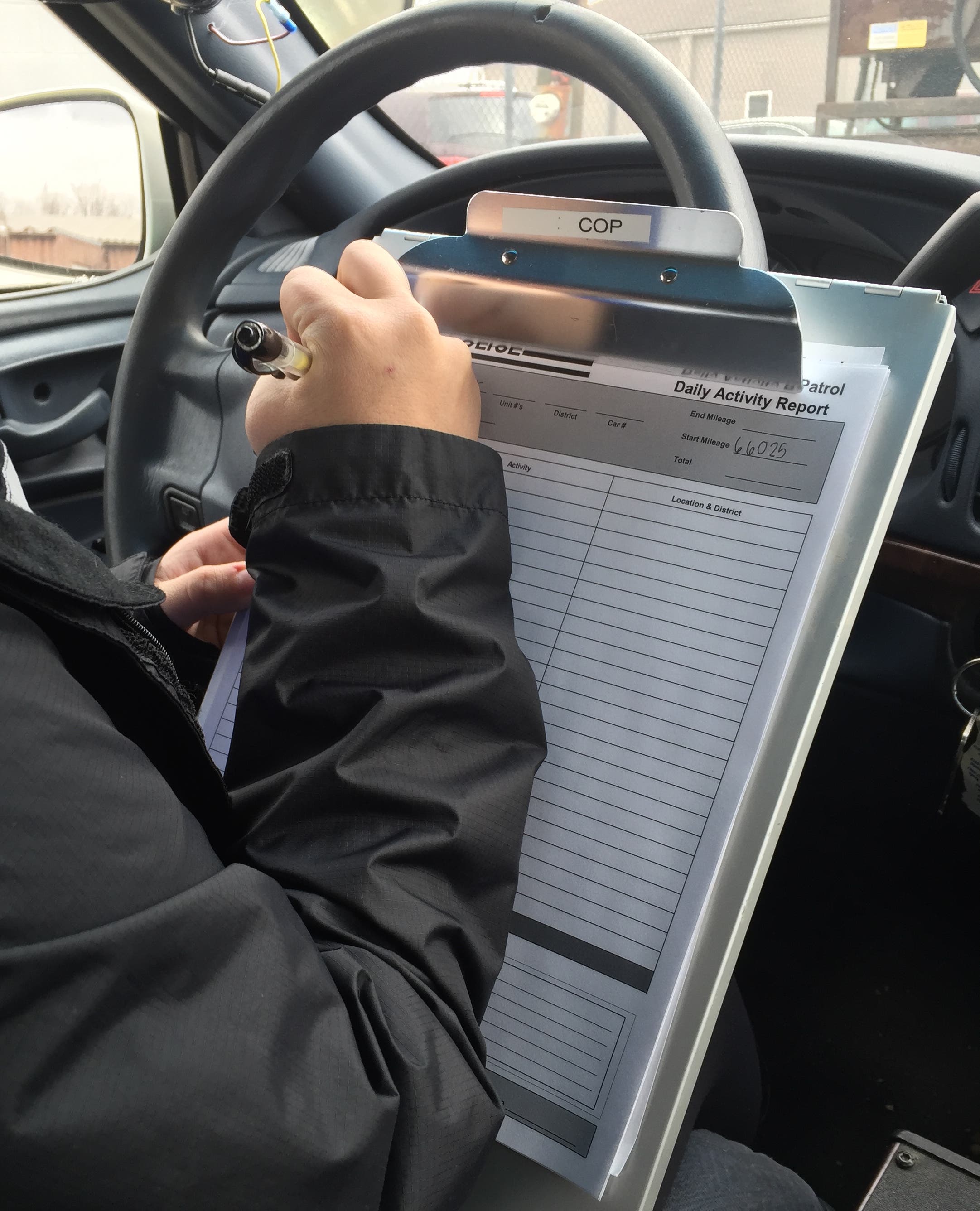
“While the majority of the job is to patrol the streets of Oxford, being a COP comes with many other opportunities to serve the community,” said Benner.
Benner has worked at local community events in Oxford to ensure the safety of citizens, she has been a crossing guard for elementary schools, and, noted as one of her favorite memories, she passed out candy to children on Halloween in the patrol car.
“Being a COP has allowed me to see the city of Oxford in a whole new perspective,” said Benner. “It has given me a greater appreciation and respect for Oxford.”
Sarah Edmonds, a junior at Miami majoring in psychology and minoring in computer science and criminology, is also doing COP in order to fulfill an internship requirement.
“From the program, I’ve already gotten great exposure to what the police officers have to deal with in Oxford,” said Edmonds.
Edmonds explains that while on patrol, she listens to a police radio and is able to hear how the police communicate with one another and is able to see a glimpse into the daily duties that go into being an officer in Oxford.
Through COP, Edmonds has found a greater understanding of law enforcement and how it works.
“Being a COP has taught me mostly how to have more respect for communities and for those who work to keep them that way,” said Edmonds.
Student to Community Relations Improve
Benner and Edmonds are two examples of how the COP program works to enhance the relationship among the students at Miami, the police and the Oxford community. Both students said they feel a significant change in their relationship to the Oxford community and police since starting volunteering.
“When you go to Miami, you really only see campus and what surrounds it,” said Edmonds. “But something that something that I've come to know is that there is so much more. When I'm on patrol I like to explore a little and I've come across some beautiful places I've never seen before."
The students said they enjoyed their time patrolling and it was a good way to explore the city of Oxford.
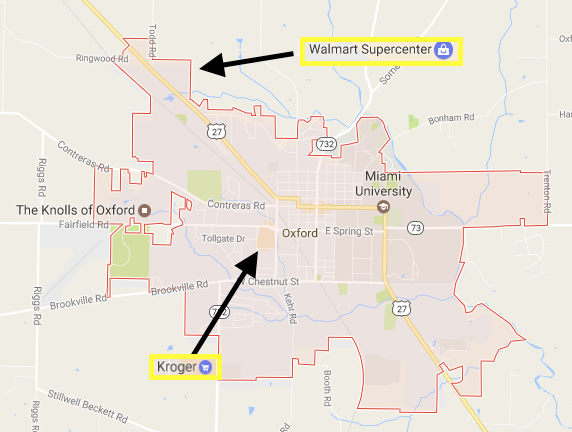
John Buchholz characterized Benner and Edmonds’ experience as “escaping the bubble.”
“I understand not being able to branch out a lot since your whole life here is studying with short interludes in between, but COP offers students a good chance to escape and learn more about the city a little more,” said Buchholz.
Buchholz said the main goal of the Oxford Police Department towards students is to ensure safety.
“There is a chance that many students don’t interact with the police during their time at Miami,” said Buchholz. “But what we want to make sure to do is that we can get the students through their years at Miami without any major problems.”
Muschert referenced “the town and the gown” concept when discussing the relationship between the students and the rest of Oxford. The “town” referenced is the non-academic population, the residents of the community. The “gown” references the university community, those who have worn or will wear an academic gown.
Usually there is tension present in these types of “town and gown” communities, but the relationship between the police and the students is fairly positive in Muschert’s opinion.
“The COP program is a role that students can have in helping community concerns,” said Muschert. “In this sense, the students can be seen as an asset and not a liability.”
Miami University senior Annie Fogel said she is unaware of the surrounding areas of Miami’s campus.
“I would not be able to tell anyone where the borders of the city of Oxford exist,” said Fogel. “It is crazy to me that you can go here for four years and never really know the community you’re living in.”
As appreciative Police Chief Jones is about the help that students and residents involved in COP provide the police, he also recognizes the other important aspect that it has for students like Benner and Edmonds.
“I see the program as an inlet to students of Miami,” said Chief Jones. “They are able to see more that Oxford is a whole community that doesn’t just consist of the university.”
Photo: Courtney Benner sets up the COP car before taking it out for patrolling. -- Photo by Mariah Schlossmann