Neighbor News
Princeton Historian Discusses Connection Between Politics And Pain
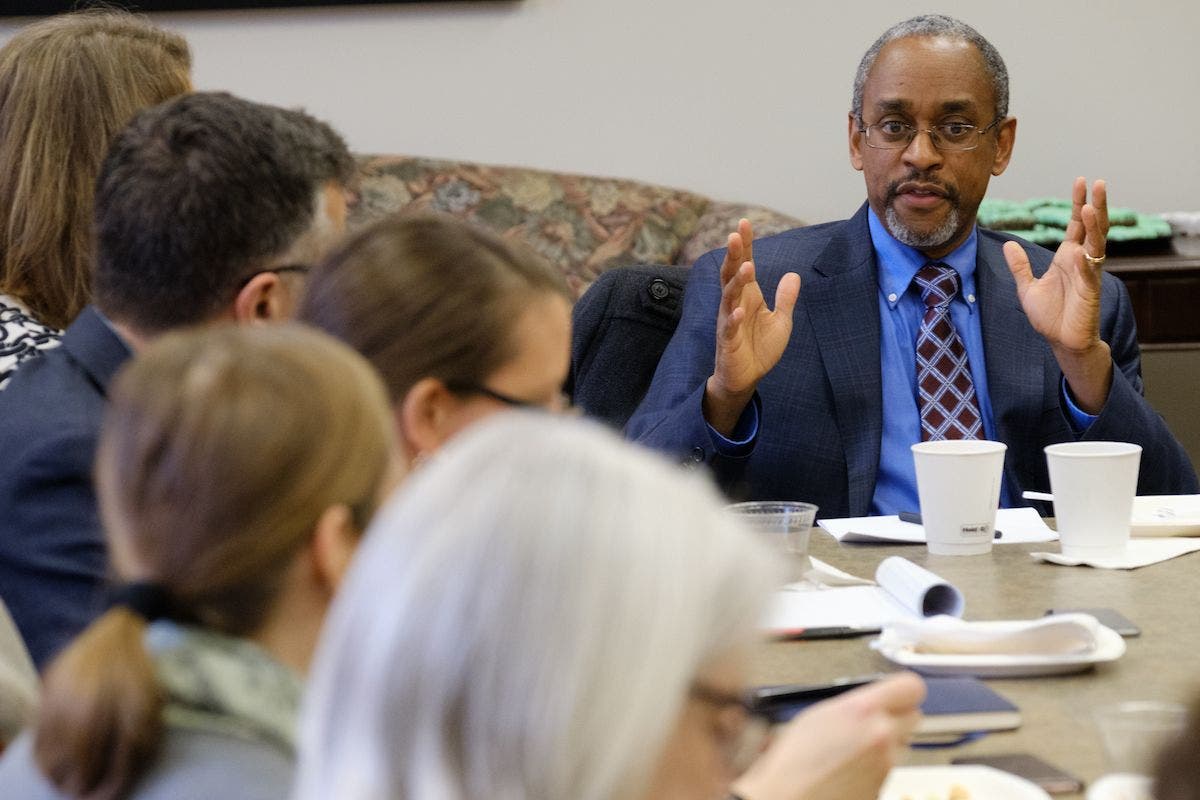
Dr. Keith Wailoo spoke at Miami University Jan. 26 about the politics of pain.
By Karolina Ulasevich
Miami University journalism student
Princeton University historian Keith Wailoo has been researching the topic of drugs and drug policy for years, his work often exploring the economic trends that lead to the rise of drug epidemics.
Find out what's happening in Oxford-Miami Universityfor free with the latest updates from Patch.
In Ohio, the opioid epidemic has been of particular concern. Statistics from the Centers for Disease Control and Prevention show that opioid overdose rates nationwide have nearly tripled over the last 14 years.

Wailoo was on campus as part of the Humanities Center's 2016-2017 'Medicine and the Humanities' program.
Find out what's happening in Oxford-Miami Universityfor free with the latest updates from Patch.
Pain Poorly Understood
In his book, “Pain: A Political History,” Wailoo writes about how the way we understand pain is influenced by the conservative and liberal views of politicians, with particular types of pain being considered more valid than others. This, in turn, influences the drug policies we adopt.
During a luncheon with faculty and students, he explained how this can make it difficult for doctors to do their jobs. Wailoo suggested physicians are often under pressure from drug companies, politicians, and sometimes patients themselves to increase access to painkillers.
In the Wailoo’s opinion, physicians should be acting as gatekeepers, not getting caught up in political discussions over who should get prescription drugs and what the limit should be.
“They have to be less reactive and less feeling, it's as if they have to practice defensive medicine because they’re being watched,” Wailoo says.
The Economics Of Pain
Wailoo says his research has uncovered three economic trends that need to be addressed in order to tackle the heroin and prescription drug abuse epidemic: deregulation, economic decline in rural areas, and the reimbursement system.
Deregulation of the drug industry can make it easier for drug companies to market their products to consumers and also lobby doctors to prescribe their drugs more frequently.
The economic decline in some rural areas, where people struggle to get by because good jobs are hard to find, can produce an environment ripe for drug abuse. Wailoo says the focus on stopping the spread of drugs in these areas can then make it difficult for people who are in pain to access medication.
Wailoo says the healthcare system has also made it difficult for people who are in chronic pain to seek help and receive appropriate treatment. Whichever treatment is easier to get money back on – pills or physical therapy – is the treatment that the system permits. This keeps the "best-sellers" on the market.
One of those best sellers was the painkiller Oxycontin. Researchers have pointed to over prescription of that particular drug as one of the things that set the current opioid epidemic in motion.
No Short Term Fix
Assistant Director of the Humanities Center Sarah Siff agrees with Wailoo that more attention needs to be paid to drug regulation.
"What happens when you let corporations do what they want is people get hurt," Siff says. "We need to regulate them [corporations] or we will end up with another Oxycontin crisis."
Siff does her own research on drug control, but her focus is on the legal side of things. She says she felt Wailoo was the ideal guest to bring to campus to provide a broader view of the drug epidemic.
"He explained how we get to a crisis point and the political side of it, which you normally don't see in the media," Siff says.
Wailoo says while we may now understand the root of the current problem, it's going to be a while before we settle on a solution to it.
“It took 30 years to create this problem. It will take a decade or so to get over it,” Wailoo says.
Dr. Keith Wailoo shares with Miami faculty and students how economic trends led to the rise of the opioid and heroine overdose epidemic -- Photo by Scott Kissell