Neighbor News
"What Does It Mean To Be White In America" Sends Strong Message To Miami
White privilege, and the difficulty people have talking about it, was the focus of a recent talk.
By Hannah Fierle
Miami University journalism student
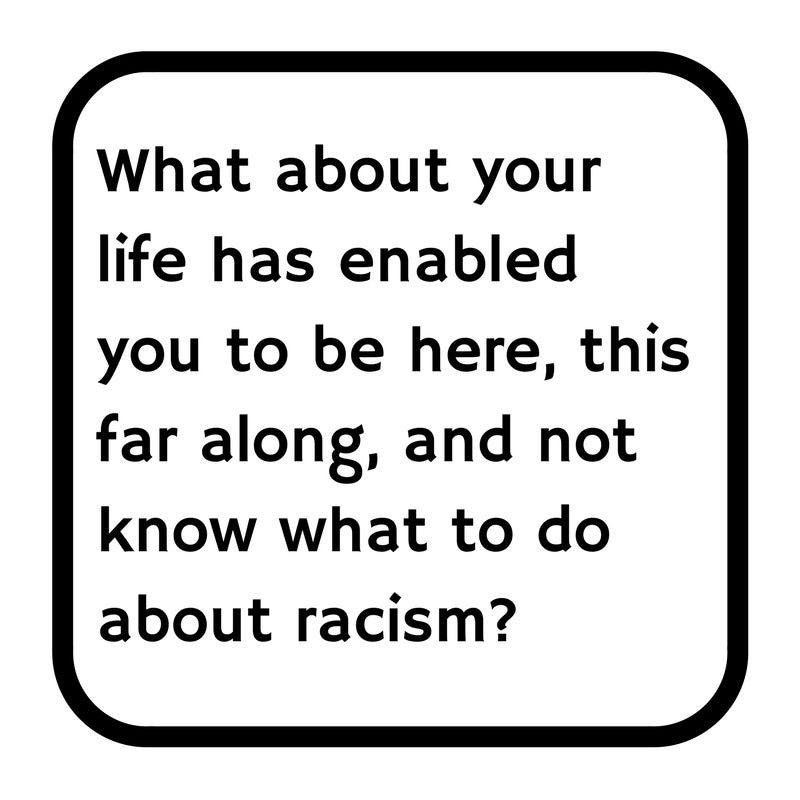
"What about your life has enabled you to be here, this far along, and not know what to do about racism?"
Find out what's happening in Oxford-Miami Universityfor free with the latest updates from Patch.
This is the question that the University of Washington's Robin DiAngelo left a Miami University audience with last Wednesday as she wrapped up her lecture, "What Does It Mean to Be White in America?"
The lecture built upon the argument of DiAngelo’s second book, What Does it Mean to be White? Developing White Racial Literacy, published in 2012.
Find out what's happening in Oxford-Miami Universityfor free with the latest updates from Patch.
DiAngelo has spent her career focused on educating people about racial literacy and fighting racial injustice.
"I grew up poor and white," says DiAngelo on her website. "While my class oppression has been relatively visible to me, my race privilege has not. In my efforts to uncover how race has shaped my life, I have gained deeper insight by placing race in the center of my analysis and asking how each of my other group locations have socialized me to collude with racism."
She described growing up in poverty and how, although her family was very poor, there were still doors open to her because she was white that might not have been open for minorities.
Miami University's population is largely white and DiAngelo hoped her talk could help those in the audience learn to engage in thoughtful conversations about race, something she has has suggested white people have a hard time doing.
“Colorblind” Narratives: What Are We Proving?
As she described racism as institutionalized oppression, DiAngelo gave the Miami audience a few racial socialization questions to consider.
Those questions asked individuals to consider the degree of racial diversity in their neighborhood growing up and the first time they had a teacher of the same race and how often it happened
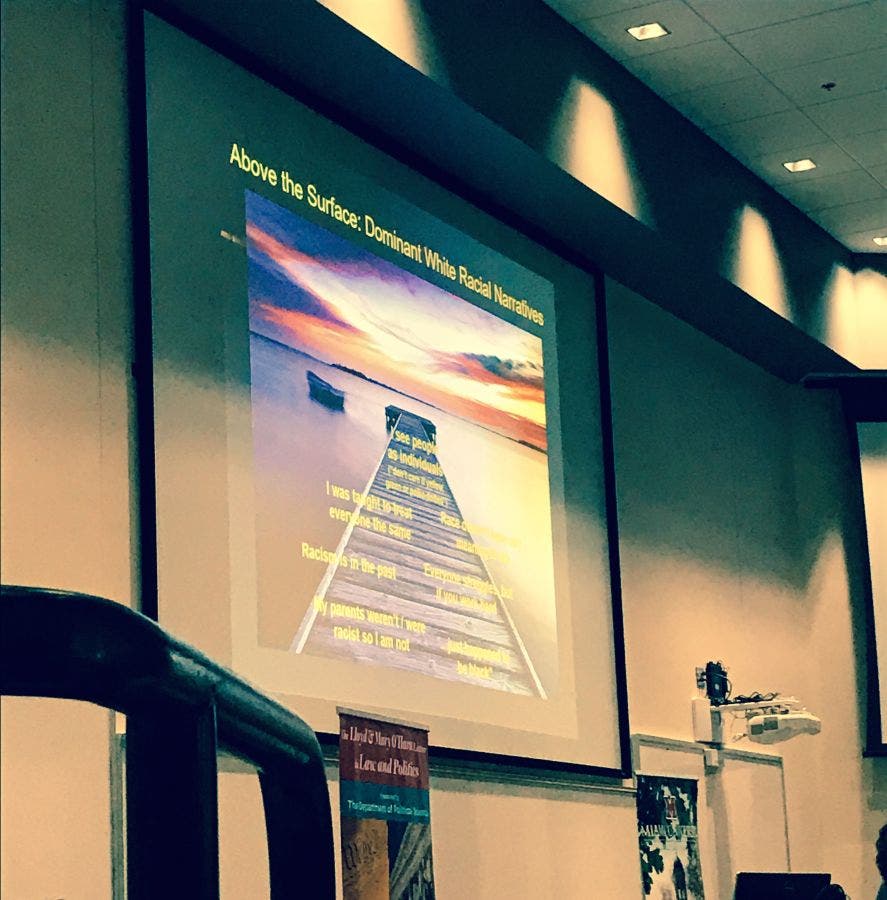
When discussing dominant white racial narratives, DiAngelo poked fun at the way many white progressives discuss race. For example, phrases like "I work in a really diverse environment" and "I used to live in New York" are used as evidence of not being racist.
DiAngelo prompted laughter with one example.
"I believed I wasn’t a racist because I was a vegetarian."
DiAngelo dismissed the idea of colorblindness, countering with the fact that by three years of age, children are able to see how society perceives being white as being "better" or "superior."
Seeing Oneself Represented
In answering her question—What does it mean to be white?—DiAngelo laid out the many examples of the ways white people have been institutionalized to belong and thrive.
She went through endless examples of how whites are able to see themselves represented in daily life, in media, in halls of power, in religion, and in endless contexts that are not enjoyed by people of color. To drive this point home, she ran through dozens of stock photos of weddings, graduations, workplaces, and other occasions, all composed of white people.
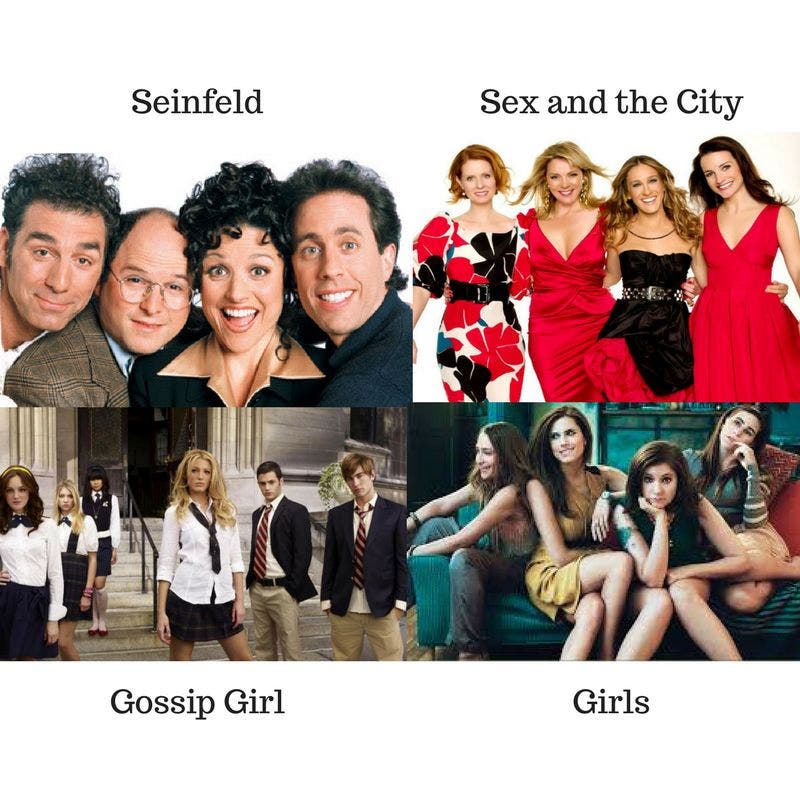
While there are endless examples of white representation in media, DiAngelo chose four popular television shows of idealized friendships from four decades, and showed how all characters are white.
A particularly telling example was what DiAngelo described as the human form, showing pictures from the Bodies exhibit in which scientifically preserved cadavers were displayed.
"Even without their skin, they’re still white."
Resonating an Important Message
DiAngelo says that for many people being white means simply following the trajectory of life without having any meaningful relationships or interactions with people of color. She says many may not think this is even a bad thing.
The point she made to the audience was that white privilege is something deeply indoctrinated if individuals in college (and older) are only now asking themselves what to do about racism.
"I think this message was really informative and necessary," Miami junior Leslie Jason says. "I wish more people would be willing to come to events like these, the people who need to be here most don’t show up."
Many noticed how this message was being delivered by a white woman to a predominantly white audience.
"It was interesting to hear this kind of information from someone who is also white," says freshman Elizabeth Hale. "Dr. DiAngelo was able to effectively touch on the hypocrisy that comes with these kinds of topics in a white environment."
For more information about DiAngelo, visit her website.
Photo: DiAngelo's slide on white racial narratives shows how many are only surface deep. --Photo by Hannah Fierle