Business & Tech
Twinsburg Ready to Turn Wastewater Into Free Fuel
New technology at the wastewater plant means no more money down the drain
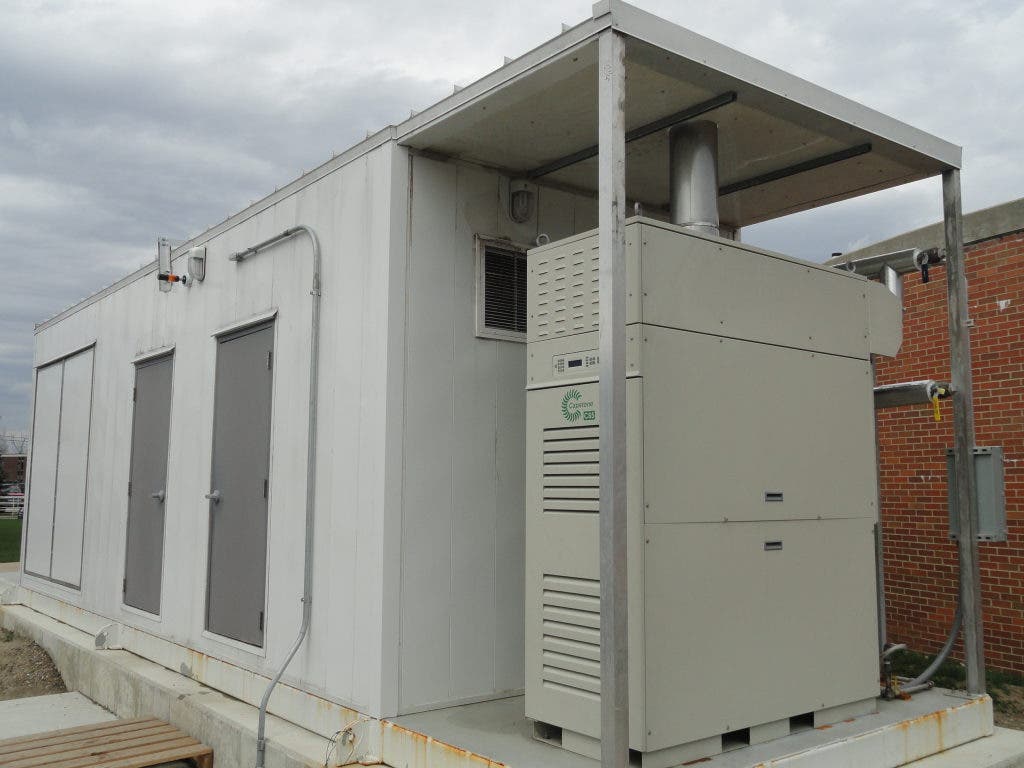

With the help of nearly $1 million in federal stimulus money, Twinsburg’s wastewater treatment plant will soon be turning poo-poo and pop into power.
The city has installed a small electrical generator and heat extractor, called a microturbine, at the plant off Ravenna Road along Tinkers Creek. The microturbine, about the size of the furnace in your basement, burns the biogas that is produced as bacteria break down solid waste.
To this point, much of that biogas, composed mainly of methane, has been burned off and wasted. But sometime in May, the microturbine will go online and begin producing some of the electricity and heat needed to keep the plant running.
Find out what's happening in Twinsburgfor free with the latest updates from Patch.
Johnson Controls Inc., the engineering firm that is coordinating the project, estimates that the microturbine will slash the plant’s electric bill by about $46,000 a year. Based on the amount of power the plant consumed last year, that’s about a 20 percent savings, said John Adams, the city’s wastewater department superintendent.
The microturbine, built by Capstone Turbine Corp. of California, produces up to 65,000 watts of electricity, roughly enough to power 1,000 laptop computers.
Find out what's happening in Twinsburgfor free with the latest updates from Patch.
In addition, exhaust heat from the microturbine will be captured and used to keep the plant’s anaerobic digestion chamber, where organic matter is broken down, at a constant 98 degrees Fahrenheit. That should result in further savings, Adams said, because natural gas no longer will be needed to help run the chamber.
Best of all for the city, the payoff will be immediate. The entire cost of the project, $962,000, was covered by a grant provided through the American Recovery and Reinvestment Act of 2009. There are no loans or bonds to repay.
Chris Campbell, Twinsburg’s public works director, began exploring the idea of installing a microturbine about eight years ago.
“We saw that we had a potential energy source there,” he said.
But the technology was fairly new and unproven in 2003, and the investment would have taken 14 years to recover, Campbell said. Then the federal stimulus money became available, and that made the project viable.
With utilities facing requirements to produce more green energy, there is a big push nationwide to extract the energy that is embedded in wastewater, said Lauren Fillmore, a program director at the nonprofit Water Environment Research Foundation in Alexandria, VA. Fillmore is heading a research project to identify barriers that can keep treatment plant operators from installing the necessary technology.
These days, wastewater is seen more as a resource than a disposal problem, the foundation says. Yet among publicly owned treatment plants a little larger than Twinsburg’s, only about one in five is set up to convert biogas into usable energy, the U.S. Environmental Protection Agency says. If all of them were capable, they could produce a combined 340 million watts of electricity — nearly 100 million watts more than FirstEnergy Corp.’s coal-fired Lake Shore plant in Cleveland.
The Twinsburg plant treats 3 million to 4 million gallons a day. And that wastewater happens to be an especially rich energy source, thanks to the soft drink bottling plants that Coca-Cola Refreshments and Pepsi Beverages Co. operate in the city. The plants discharge sugars and syrups into the system, producing more sludge for the digester. That results in more methane gas than at a typical municipal plant treating domestic wastewater, Campbell said.
“It makes that process a little more viable,” he said
Adams expects the microturbine to run all day, every day.
“This will hopefully help clean up the environment,” he said, “rather than just flaring the gas off.”
The microturbine project will create no additional jobs at the plant, which employs 17.