Politics & Government
SCOTUS Decline ‘Boise’ Appeal. Ban On Homeless Camping Bans Stays
Supreme Court declines to review Ninth Circuit case. Criminalizing rough sleepers when shelter beds aren't available remains outlawed.

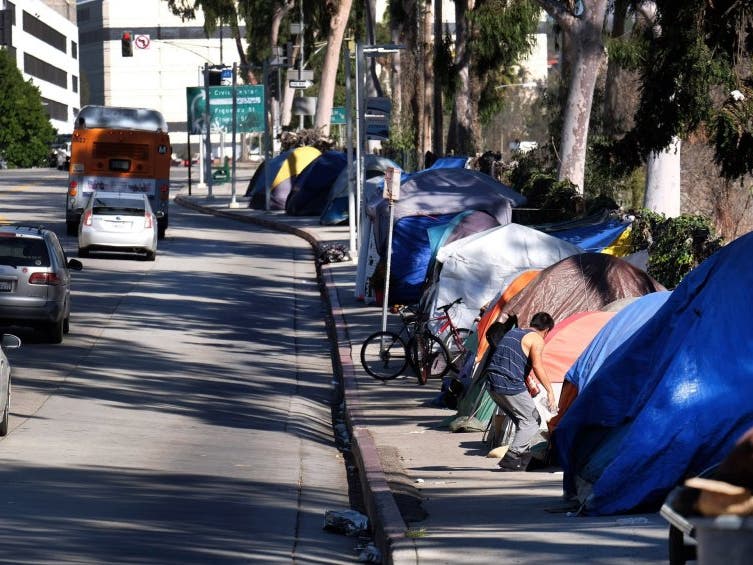
WASHINGTON, DC – Last year the Ninth Circuit Court of Appeals ruled that Boise’s ‘anti-public homelessness’ statute was unconstitutional. By declining to hear an appeal of that ruling, the nation’s Supreme Court yesterday confirmed the Ninth Circuit’s decision must stand.
The appeal had been lodged by a coalition of local authorities, including law enforcement groups and business associations. The justices issued no comment on their decision not to hear the appeal.
In the case of Martin v. City of Boise the lower court had held that enforcing criminal laws against homeless people living on the street would classify as ‘cruel and unusual punishment’ if a city was not first offering enough shelter beds to satisfy those in need. That ruling was made when the city of Boise, Idaho, enacted an ordinance that forbade people from camping or sleeping on sidewalks or in parks without permission.
Find out what's happening in Oklahoma Cityfor free with the latest updates from Patch.
Advocates for the homeless had lauded the Ninth Circuit’s decision as humane common sense. "Paying lawyers six figures to write briefs is not really going to build any more housing," Howard Belodoff, a Boise civil rights attorney told NPR. "Housing, not handcuffs, is what ends homelessness," Maria Foscarinis, Executive Director of the National Law Center on Homelessness & Poverty, added.
“On a daily basis, we encounter people who are experiencing homelessness in southern California and are being punished by law enforcement for no other reason than they can’t afford a place to live,” said Julia Devanthéry, a staff attorney with the American Civil Liberties Union, speaking to the Guardian newspaper. “Criminalizing people for conduct that they cannot help is not a deterrent to that conduct. People will continue that conduct because it cannot be helped.”
Find out what's happening in Oklahoma Cityfor free with the latest updates from Patch.
Officials argued that they needed to be able to enforce those ordinances and prevent homeless people from sleeping in public places because encampments block walkways and create health and safety issues. The decision therefore “takes away an important tool cities have to stop the proliferation of permanent encampments, which undermine cities’ efforts to provide shelter and services to the most vulnerable”, said Theane Evangelis, an attorney for the city of Boise.
In their appeal for the ruling’s review, the coalition had downplayed the issue of the number of shelter beds available, preferring instead to term those they were unable to house as being ‘shelter-resistant’, but this strategy stood in stark contrast to the research underlying the rapid and continuing growth of homelessness and the dearth of accommodation available to them.
To the contrary, with the homeless population growing throughout the west coast – by 16% in a year in Los Angeles and 17% over two years in San Francisco – the research clearly shows that ‘public homelessness’ is a direct result of those suffering homelessness having simply nowhere else to go.
According to the Guardian, San Francisco has up to 1,000 rough sleepers per night that it cannot house. Further, in a 2014 study by the Coalition on Homelessness, when last told to move on by police more than 90% of respondents said they had nowhere else to go.
Despite Monday’s Supreme Court decision though, people without homes still face an array of ‘quality of life’ ordinances that municipalities with significant homeless populations have enacted over the years.
Paul Boden, Executive Director of the Oakland-based advocacy group Western Regional Advocacy Project noted that despite the lack of shelter beds cities are still ticketing the homeless for “having camping paraphernalia, taking up too much space on a sidewalk, trespassing, or because they’re closing a park at night.’
These actions seem unlikely to change. “Cities and municipalities have lots of law enforcement tools at their disposal,” the ACLU’s Devanthéry added. “They have all sorts of quality of life ordinances and laws that allows them to control the movement of people without homes in a way that they can’t control those of us who are lucky enough to have homes to live in.”
The justices issued no comment on their decision not to hear the appeal.