Politics & Government
USDA Launches Second Round of Trade War Mitigation Payments
Assistance designed to help short-term cash flow issues. Farmers continue to experience trade-related losses.

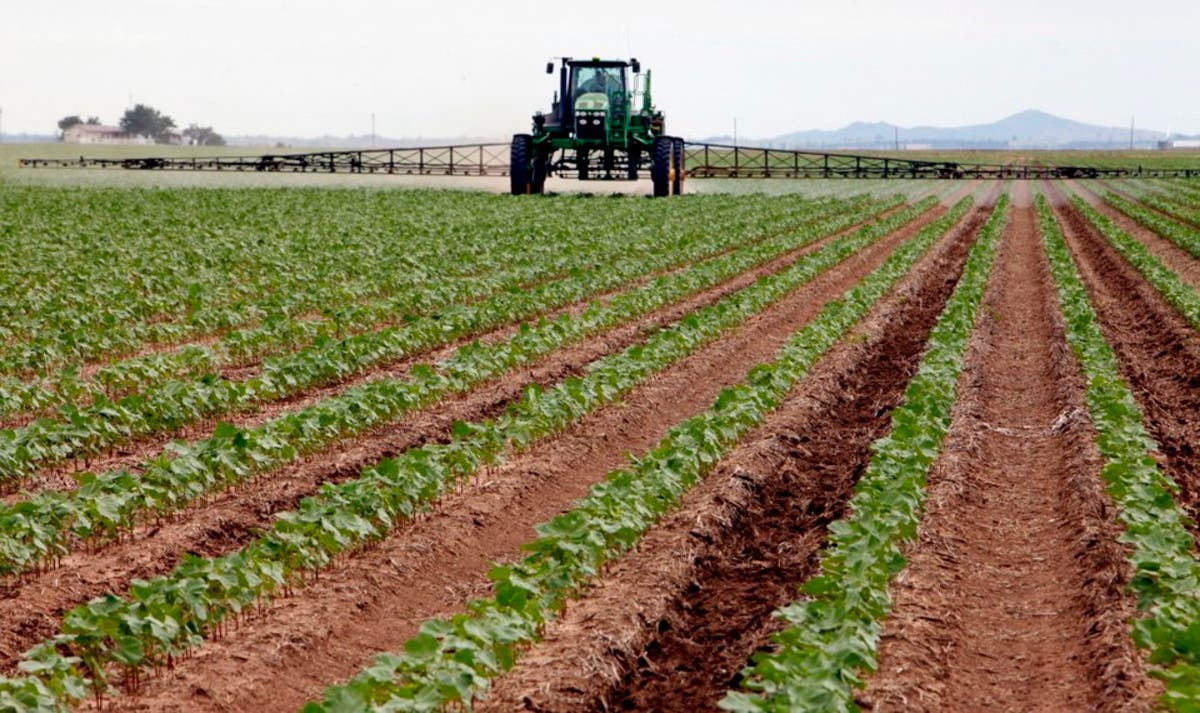
Washington, D.C. – U.S. Secretary of Agriculture Sonny Perdue today launched the second and final round of trade mitigation payments aimed at assisting farmers who are suffering setbacks as a result of the President’s tariff-based trade war with China.
Producers of certain commodities will now be eligible to receive Market Facilitation Program (MFP) payments for the second half of their 2018 production.
“The President reaffirmed his support for American farmers and ranchers and made good on his promise, authorizing the second round of payments to be made in short order,” said Purdue in a prepared statement.
Find out what's happening in Tulsafor free with the latest updates from Patch.
“While there have been positive movements on the trade front, American farmers are continuing to experience losses due to trade retaliation by foreign nations. This assistance will help with short-term cash flow issues as we move into the new year.”
Secretary Perdue announced in July that USDA would act to craft a short-term relief strategy to help protect agricultural producers while the Administration works to help American farmers compete globally.
Find out what's happening in Tulsafor free with the latest updates from Patch.
America’s soy bean industry had been particularly hard hit. Davie Stephens, President of the American Soybean Association (ASA) said, “When USDA calculated the harm incurred by the tariffs on soybean prices, it assumed that China would still purchase at least 50 percent of the 32 million tons of U.S. soybeans it bought in 2017.”
The trade war had darkened those assumptions and soybean farmers have faced a prolonged period of low prices since the contretemps began. With a crop valued at $41 billion annually the U.S. remains the world’s largest soybean producer. Almost half of the yield is destined for export.
Although China recently announced a limited round of purchases, Stephens said the roughly $2.00 drop in soybean prices experienced since last May continues to harm soybean farmers.
“It is vital (to lift) the current 25 percent tariff that China continues to impose on U.S. soybean imports. Without removal of this tariff, it is improbable that sales of U.S. soybeans to China can be sustained. American soybean farmers prosper when they have access to international markets, and our trade relationship with China is critically important to our industry.”
Oklahoma remains in the Top 20 of soybean producing states with more than 600,000 acres planted, and an 18 million bushel annual yield. According to the ASA, the state’s crop is valued at $168 million per year.
As well as soybean farmers USDA’s Farm Service Agency (FSA) has been administering MFP payments to almond, corn, cotton, dairy, hog, sorghum, fresh sweet cherry, and wheat producers since September 2018 for the first 50 percent of their 2018 production.
Producers need only sign-up once for the MFP to be eligible for both the first and second payments. The sign-up period opened in September and runs through January 15th, 2019. Further information on the sign-up process is available at : www.farmers.gov/mfp
For farmers who have already applied, completed harvest, and certified their 2018 production, a second payment will be issued on the remaining 50 percent of the producer’s total production, multiplied by the MFP rate for the specific commodity.