Crime & Safety
Killing Of Man Who Shot Trooper Cederberg 'Likely' Saved Lives, Says D.A.
Report by the Washington County District Attorney's Office finds the officers who helped Trooper Nic Cederberg likely saved lives.


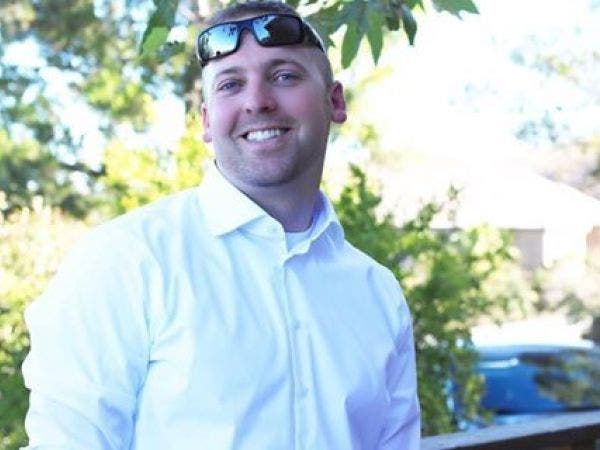

"Code Zero. Code Zero. Officer down!"
That was the urgent message that went out from Washington County Dispatch on Christmas Day. Oregon State Trooper Nic Cederberg had been shot.
Cederberg had been in pursuit of James Tylka who had just shot and killed his wife after she had dropped off their son as she prepared to head to work.
Find out what's happening in Hillsborofor free with the latest updates from Patch.
HAVE PATCH EMAIL YOU ALL THE LATEST NEWS
Tylka had brought his son to the entryway of his home, then walked back to the car where his wife sat and shot her twice in the head and six times in the chest.
Find out what's happening in Hillsborofor free with the latest updates from Patch.
It was less than ten minutes after the call went out to be on the lookout for Tylka that Cederberg spotted him and broadcast his location.
Within moments, according to a report released Wednesday by the Washington County District Attorney's Office, Cederberg reported that he was being shot at.
Dispatch tried to raise him on multiple radio channels. Cederberg didn't answer and that's when the Code Zero call went out. Code Zero indicates an immediate threat to the life of an officer or firefighter.
Officers converged on Gimm Lane - a dead end road where Cederberg's car was found. They could see him lying on the ground.
The officers knew that he had been shot. There was no indication of where Tylka was.
Officers Stanley Smith, Christopher Pierce, and Joseph Twigg from the Sherwood
police Department, Eli Sanders from the Tualatin Police Department, and Anthony Christofaro
from the Hillsboro Police Department quickly coordinated and formed a "360-cell."
The 360-cell allows officers to work together and make sure all bases are covered, that they won't be caught off-guard and had each other covered.
By doing so, the D.A.'s office concluded, they saved their own lives and likely the lives of others.
What they could not know was that Tylka was hiding in dense vegetation less than 10 yards away, on a hill overlook Cedereberg's body. Tylka was armed with the trooper's Smith and Wesson M&P .40 caliber pistol.
Investigators from the district attorney's office talked with all five officers, each of whom added to the story.
Officer Pierce would tell investigators that he held
a hard shield in the front of the 360-cell that moved towards Trooper Cederberg's body. He heard someone say to cover the left which made him turn his head towards where Tylka was hiding.
He saw Tylka crouched down on the embankment, bloody, and holding a gun. He heard commands yelled from the officers, and saw that Tylka did not drop his weapon and continued too have it pointed towards them, so he fired one round from his Glock 21 pistol.
Pierce heard many shots and saw Tylka fall over. He moved up the hill and saw Tylka lying on the ground and that the gun was no longer in Tylka's hand.
Officer Smith described creeping together
towards Trooper Cederberg's body and having no idea where the suspect was. He heard Twigg ask for someone to cover his left, and so he shone his flashlight and ended up right where Tylka was hiding.
Hc saw Tylka's face and heard officers yelling commands. He saw a bright orange muzzle flash from Tylka. He fired one round and heard volley shots coming from other offtcers. He then saw
Tylka's face disappear, concluded that the threat was neutralized, and didn't fire any further.
Twigg, who served in Iraq and Afghanistan in the Army National Guard, has extensive training in Tactical Emergency Casualty Care, and caries a combat trauma kit, rushed to Cederberg after Tylka went down and provided medical care.
Twigg is credited with saving Cederberg's life.
Sanders talked about seeing the flashlight shining and someone yelling, 'there he is." He said he saw Tylka sitting in the woods, a gun trained on the officers. Sanders fired 17 times. Seeing that Tylka was down, he ran up to him to make sure the others could get to Cederberg.
Christofaro directed the formation of the cell, "which ultimately saved the lives of officers" that night, according to the district attorney' office.
The medical examiner would later conclude Tylka had a blood alcohol level of .11 when he was killed.
The investigation concluded that after Tylka shot Cederberg, he went to the trooper, took his gun, and shot him again.
Tylka then headed up an embankment to try and ambush officers.
The D.A.'s office concluded that the officers knew that James Tylka was armed, and hiding in dense vegetation.
All officers believed James Tylka was attempting to shoot them or shoot fellow offcers at the time they fired their weapons.
"It is clear that all five of the above-listed officers acted under the reasonable belief that James Tylka was using or about to use unlawful deadly physical force at the time they fired," according to the district attorney's office.
The investigation is still continuing. The district attorney is still examining the initial shooting between Cederberg and Tylka.
Cederberg, meanwhile, is home recovering. He was released from the hospital 48 days after the shooting.
Photos Oregon States Police
Get more local news delivered straight to your inbox. Sign up for free Patch newsletters and alerts.