Politics & Government
Dallas Shooting: In Portland - Another Day, Another Press Conference
Religious, political, law enforcement leaders come together to repeat words they are tired of saying.


The real sadness seemed to come not from the words being spoken so much as from the fact the words had to be spoken again.
Portland Mayor Charlie Hales decries having to see the flag at half-staff again.
Nkenge Harmon Johnson, the head of the Urban League speaks of heartbreak, saying “I am a black woman who loves a black man. And I am the daughter of retired law enforcement. I know the sadness in your heart because I feel it, too.”
Find out what's happening in Portlandfor free with the latest updates from Patch.
Harmon Johnson, whose husband - as a top lawyer with the Oregon Department of Justice - found himself being racially profiled, speaks from a heart affected not just by what she’s seen but by what she has felt, experienced.
Find out what's happening in Portlandfor free with the latest updates from Patch.
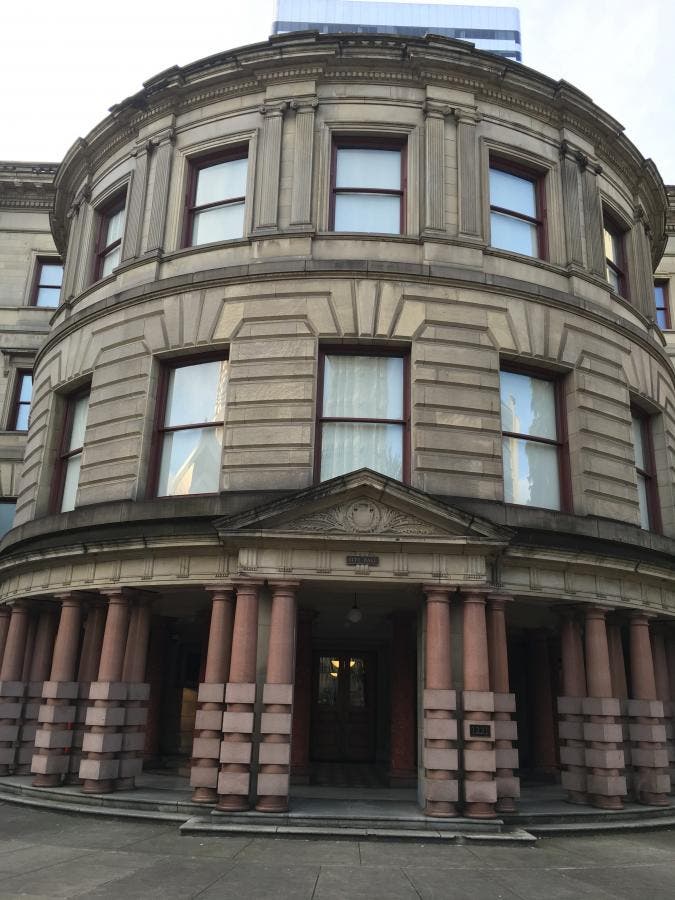
There were more than a dozen leaders - political, law enforcement, religious - gathered in front of City Hall on Friday to react to the shooting of 12 police officers in Dallas.
It’s not always at city hall but the gathering, they point out, has become too commonplace. They gathered after Orlando. They gathered to support those killed in Paris. They gathered after at the attacks in San Bernardino. After the attacks at Umpqua Community College.
There is no questioning the sincerity of the words, the heartfelt emotion, the sadness. But there is a sense of repetition, a weariness.
No one can question Portland’s ability to gather to show support, to express outrage.
Just hours before, people had gathered on the streets of Portland to show solidarity with the communities of Louisiana and Minnesota where there had been police involved shootings.
And then Dallas happened.
“We come together this morning with heavy hearts,” said Antoinette Edwards, the director of the Mayor’s Office of Youth Violence Prevention.
She spends much of her time out on the streets, meeting with kids, meeting with families after someone has been shot.
Edwards said mornings like this “remind us of our commonality, of our vulnerabilities” while at the same time giving us an “opportunity to express our hope for healing.”
She described the officers as “fallen soldiers who were out there protecting us.”
Newly appointed Police Chief Michael Marshman sounded a similar theme, saying “It’s hard for officers, I feel, who go out in the community and try to protect the community and feel like they might be targeted, as they were last night.”
Marshman has acknowledged that in recent years the Portland Police Bureau has brought some of that distrust upon itself, a situation that has resulted in the bureau operating under a settlement agreement with the United States Department of Justice.
He pointed out that the officers who worked the Portland protest Thursday night showed restraint, acted the way they should.
“I’m very, very proud of the members of the police bureau who cautiously and safely enabled the protest to continue on,” he said. “That’s how it should be.
“To the men and women of the police bureau, please continue to do what you do.”
Bishop Steven Holt said everyone needs to step back and look at their neighbors, the people in their communities and look out for each other.
He said that too often there is violence, that people know who is responsible, and yet say nothing.
The Portland Police Bureau, the Multnomah County District Attorney’s Office both say one of the greatest obstacles to ending gang violence in the city is the fact that people do not come forward.
Holt said that must change.
“We have to speak up,” he said. “If we don’t say who did it when we know, if we don’t get involved, nothing will change.”
Pastor JW Matt Hennessee also minced no words.
“This is madness and it must stop,” he said. “We must not lose hope. It sounds out there, pie in the sky. But it’s real and its possible.
“I’m here today because I believe in the power of the human spirit.”
He also talked about the importance of working together, being together.
“This issue that we're dealing with is not black or white. It's human."
Bishop Holt also asked people to go beyond the surface, to think back to from where they started.
“Before you were an officer, before I was a preacher, we were just human,” he said. "We need to find our common humanity again."
Rabbi Michael Cahana looked at the gathering of leaders from different religious denominations and pointed out they share a common origin.
"Our religious ideals teach us that there’s no us, there’s no them, there is we," he said. Everyone should be afforded dignity and respect."
But leader after leader made it clear that is the not the country that we live in.
“Because my skin happens to be this color, why does that make this country less safe for me?” Harmon Johnson said at one point, holding up her hand.
Mayor Hales summed up what everyone hoped for when he said: “This is madness and it must stop.”
The problem was, with the sadness on his face and frustration in his voice, he also summed up the feelings of the people gathered: It won't stop any time soon.
Get more local news delivered straight to your inbox. Sign up for free Patch newsletters and alerts.