Community Corner
Homeless in Oregon: Kaiser Permanente Donates Millions to Help Get People Off the Streets
Meanwhile, weather has forced Multnomah County to postpone its annual Point-in-Time count of homeless people.


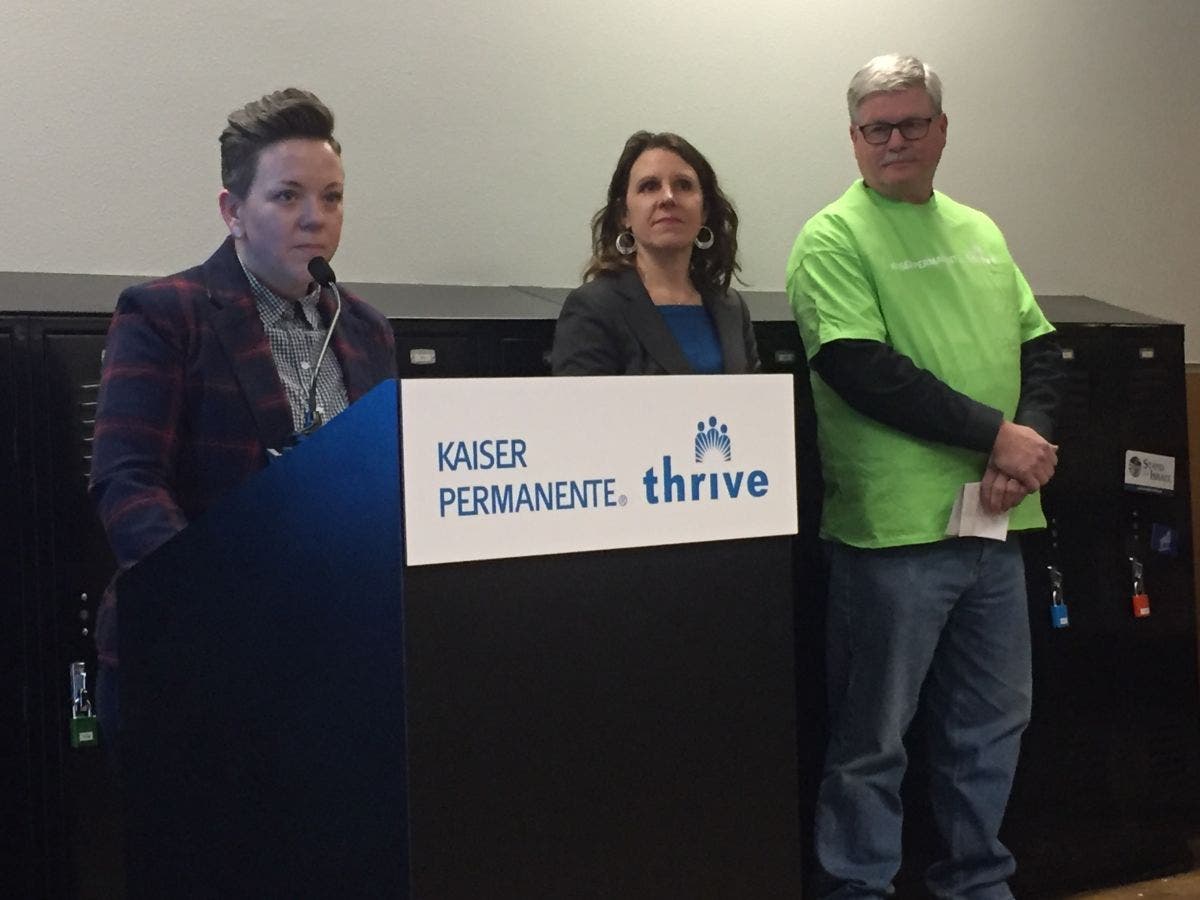
Seven not-for-profit organizations that assist homeless people with mental illness and addiction disorders will split $2.27 million in grants from Kaiser Permanente NW. The health care organization announced the grants Monday.
"As we looked at the challenges facing people with mental illness in our community, we heard repeatedly that lack of stable housing is the most critical need," said Andrew McCulloch, President, Northwest, Kaiser Foundation Health Plan and Hospitals. "But not only do they need housing, they need help getting into and maintaining housing in the first place.
"Without both types of support, it is virtually impossible for people with mental health and addiction issues to attain successful treatment."
Find out what's happening in Portlandfor free with the latest updates from Patch.
Each of the seven organizations will receive $325,000 over the next three years.
Kaiser says that each agency has its own way of "deploying community health workers and advocating for people with mental illness and addiction.
Find out what's happening in Portlandfor free with the latest updates from Patch.
The grants were awarded to:
- Urban League of Portland (Multnomah County) will help households affected by chronic homelessness become housed, healthy and empowered as advocates for systemic change. A peer support specialist (addiction and recovery) and a peer wellness specialist (mental health) will join the Housing Support Team;
- Outside In (Multnomah County) will work with NAYA to serve homeless youth, 18 to 25 years old, experiencing behavioral health challenges. Community health workers will work hand in hand with these youth, supporting them to find, stabilize and maintain housing;
- Catholic Charities of Oregon (Multnomah County) will help homeless women with severe mental illness and substance use disorders secure and retain housing through integrated housing, health care and behavioral health support provided by peer support specialists. Catholic Charities will partner with NAMI Oregon to provide empowerment trainings and advocacy opportunities for participants to share their stories;
- Catholic Community Services of the Mid-Willamette Valley and Central Coast (Marion County) will train community health workers, provide housing support services in nine low-income neighborhoods in Marion County, and advocate for statewide policy changes to increase the number of affordable housing units;
- Love Overwhelming (Cowlitz County) will have its peer support case managers provide intensive community services to high-need households to help them locate, obtain and retain safe, affordable housing. Love Overwhelming will partner with others to advocate for homeless shelters, affordable housing and improved policies related to people being released from prison;
- ShelterCare (Lane County) will provide training to property managers to support their efforts to work with tenants with behavioral health challenges, and refer tenants at risk for eviction to community health workers for assistance. Project partners include Trauma Healing Project, Cornerstone Community Housing, Laurel Hill Center and the Housing and Community Services Agency of Lane County;
- Willamette Family, Inc. (Lane County) will work to help people with behavioral health challenges find and maintain stable housing by training community health workers, providing case management, delivering a rental rehabilitation program, and advocating for statewide policy changes for prolonged case management and peer-delivered services.
Meanwhile, Multnomah County has postponed its annual Point in Time Count of people experiencing homelessness because of the weather. The count, which had been scheduled to begin on January 25th, will now happen from February 22-28.
The federal government requires all metropolitan jurisdictions receiving funds for homeless services to perform a count.
County officials say that the severe weather disrupts the homeless population, making it harder to perform the count.
"Holding a count so soon after these historic storms would almost certainly affect our ability to fully staff this extensive effort, identify all the people living on the street and be able to compare the results to previous years," said Marc Jolin, director of the Joint Office of Homeless Services.
"The count gives us important information and we want it to be as accurate as possible."
The county says that severe weather warming centers operated 23 nights out of the last 42, including 16 of the last 17. On Sunday night, 807 people were in additional severe weather warming center beds - a more than 50 percent increase over our normal seasonal and year-round emergency night shelter population.
Photo of Stacy Borke, Deborah Kafoury and Andrew McCulloch courtesy Multnomah County.
Get more local news delivered straight to your inbox. Sign up for free Patch newsletters and alerts.