Politics & Government
Justice Department Report Details Affair that Led to US Attorney Resigning
Report released to Patch, following a freedom of information request, includes many never before reported details.


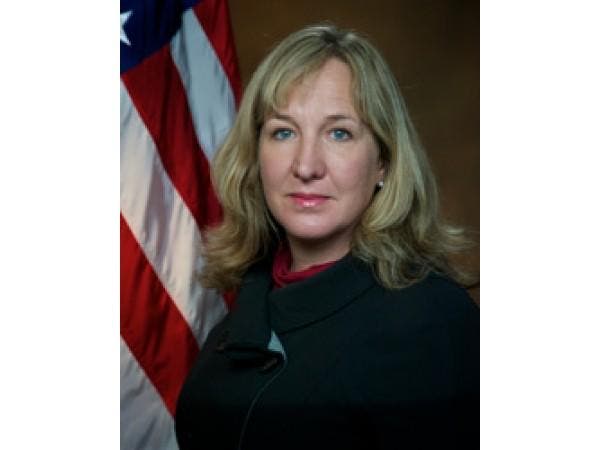
When U.S. Attorney Amanda Marshall was told by the deputy U.S. Attorney she was having an affair with that he did not plan to marry her, she became angry.
That’s one of the many new details in a report from the Justice Department’s Office of Inspector General on Marshall’s behavior.
The office last month released a report that concluded Marshall — who was not named in the summary — had sexually harassed a prosecutor who worked under her.
Find out what's happening in Portlandfor free with the latest updates from Patch.
After the prosecutor complained, saying he was being harassed, Marshall resigned her position as the U.S. Attorney for the District of Oregon, the highest ranking federal prosecutor in the state.
The report — released to Patch after a freedom of information request — details the affair, including how it started and how the deputy tried repeatedly to end it.
Find out what's happening in Portlandfor free with the latest updates from Patch.
The report says the two started to have an “intimate personal relationship” in July 2013 and that the following month, things started to heat up.
It was Aug. 6 and they attended a work event celebrating what the report calls “media coverage of a U.S. Attorney’s Office matter.”
Marshall had some drinks at the event, and then she and the prosecutor went to a nightclub “which led to the beginning of an intimate physical relationship.”
She later told investigators that the relationship became "more intense and sexual."
One month into the affair, the report says, the deputy sought a promotion, which he got.
Marshall told investigators that she had delegated the decision to someone else because she was afraid that regardless of whom she promoted, the other would sue.
The inspector general found that this was an issue raised during training that Marshall had received and that this situation “demonstrated precisely the issues raised when a supervisor engaged in an unacknowledged relationship with a subordinate and the manner in which it can expose the Department to sexual harassment allegations.”
The deputy told investigators that while the affair continued, Marshall would harass him, having “a negative impact” on his work.
He said that she would make inappropriate comments during management meetings, threaten to disclose their affair, and send harassing emails and text messages to his work email and private Facebook accounts.
Things finally came to a head in September 2014.
The two attended the Organized Crime Drug Enforcement Task Force Conference in San Francisco.
They both told investigators they had some drinks and were physically intimate — she said they had “sexual relations” while he described it as limited physical intimacy.
He told investigators that at one point he ignored her, and she responded by sending several inappropriate text messages.
Marshall admitted that she had drank heavily that night, lost her room key and while she clearly had sent the messages did not remember having done so, only realizing that she had when she discovered them the next day.
The deputy emailed her: I can’t deal with this anymore. Please stop.
She didn’t.
Investigators discovered 251 text messages and emails that she sent the deputy between Dec. 10, 2014 and March 4, 2015.
“Examination of the communications between November 2014 and March 2015 provide numerous incidents of Marshall sending inappropriate message to…that could be reasonably construed as harassing.”
In those messages were at least three that asked Marshall to “stop sending inappropriate non-work messages.”
The effect on the deputy, he told investigators, was that he was having “difficulty sleeping and eating, was distracted and unfocused at work, and was concerned about losing his job,” the report stated.
Investigators concluded that once they started their probe and contacted Marshall, she lied to them and tried to obstruct their investigation.
In the initial interview, she denied that the relationship had involved sexual intercourse and had ended around the time the deputy was being considered for a promotion.
During the initial investigation, Marshall was told by her superior in Washington, D.C., not to have any more contact with the deputy.
Investigators determined that within a day or two, she had violated that order.
Marshall called the deputy telling him that the Justice Department said that she either had to resign or be fired.
She also sent the deputy a Facebook post admitting that she had been told not to contact him but was doing so because they were “at risk” and she wanted to meet with him to work out ways “to minimize the damage to both of us.”
The next day, she sent him another message, this time saying the Office of the Inspector General was more interested in him than her, he should get a lawyer, and that he should not speak to OIG.
“Talked to the guy from OIG,” she wrote. “Seems far more interested in investigating you than me. Don’t talk to him. Get a lawyer….I denied everything. Said I was angry, sick, scared….I don’t want this. If you want to talk, call me tomorrow. I will do anything you want to help you. And I hope you will do the same for me. I am so sorry.”
Marshall resigned as U.S. Attorney just over two months later.
The investigation found that while she had harassed the deputy, there was no cause to charge her criminally.
She is still the subject of an investigation by the Oregon State Bar.
Get more local news delivered straight to your inbox. Sign up for free Patch newsletters and alerts.