Health & Fitness
A Letter To My New Kidney
After years on dialysis, a new kidney makes a Patch editor feel as though he's been released from prison. Then the kidney surprises him.



Dear New Kidney,
We’ve been together since you were implanted four weeks ago. I am writing to let you to know that I appreciate beyond words how willingly you have become part of me. You have given me back the life that my failed kidneys almost took away. I’ll get to that. I want you to know what so many people are still going through as they wait for a kidney like you.
You have been flawless. I have to confess, though, that while you’ve been great physically, your arrival has been far more emotionally difficult than I’d anticipated. When I was in need of a kidney, I thought little about what that meant beyond, well, I needed a kidney.
Find out what's happening in Portlandfor free with the latest updates from Patch.
Once I got you, though, a much bigger reality set in. I suddenly recognized that I was being allowed to live only because somebody else was not, that saving my life required someone else’s death. Before the transplant, I had never once pictured a donor’s family grieving over the loss of their loved one.
I’ve struggled with that. These feelings, I know, are telling me that I owe something to somebody, big time. But what do I owe? And to whom, exactly, do I owe it?
Find out what's happening in Portlandfor free with the latest updates from Patch.
I’m uncertain about the details of that debt. For now, I feel certain that what I owe is to live my life doing everything I can to make this world a better place. Who I owe that to, I believe, is myself and the person whose death brought me you to me.
I will always know you, dear kidney, as the something that helped me figure that much out.
And what about me?
I am 50 years old. For almost 10 years, I have lived in Portland, Oregon. Up until then, I spent my life in New York. I’m a reporter, pretty much always have been. My parents tell of how I used to run outside wearing only my underwear, grab The New York Times, sit on the stoop, and read it.
About 11 years ago, while living in New York, I was preparing to head to South Africa on a reporting trip. Following the usual preparations for global travel, I went to a doctor for a checkup, blood tests and shots.
When I returned to my apartment, the phone rang. It was my doctor. Whatever you’re doing, he said, stop. Right now. Get to the emergency room. Tell the doctors there that your potassium level is nine.
I would learn that high levels of potassium - and nine is very high - can cause organ failure.
I arrived at the hospital looking healthy enough. I had no bloody wounds to show, was not gasping for breath, or complaining of chest pains. I showed none of the signs that sometimes help emergency room visitors bypass the agonizing wait for treatment. When I told the admitting nurse about my potassium level, though, I was on a gurney in no time, riding the express train to treatment. Before I knew it, I was being given a blood transfusion.
A few weeks later, after follow-up blood work, I was told that my kidneys were failing and would shut down altogether some day.
Over the next two years or so, my kidneys worked like a clunky machine. The lack of red blood cells carrying oxygen through my body left me constantly exhausted. I was anemic. Soon, the kidneys could not clear the toxins from my blood, the way you now do.
The path was inevitable. I would need a new kidney or dialysis. Without either, I would die sooner than I had planned.
WATCH: 5 Things You Should Know About Kidney Donation
Getting a new kidney can take years. In the meantime, dialysis it was. That meant sitting in a chair three times a week with tubes connecting two needles in my arm to a machine called a dialyser. The machine sucked blood out of me through one tube, cleaned it, then returned it through the second tube. Each session took about six hours. I did that for more than five and a half years. It wore me down.
At my dialysis clinic, about 20 patients at a time were hooked up. We would sit in a large room, reclining in big, uncomfortable chairs with heating elements that sometimes worked, sometimes didn’t. Clocks on the walls marked the hours of our lives slipping away.
Most of the patients were older and kidney failure was usually just one of several health problems they were dealing with. Often, their bodies had been ravaged by diabetes. They had legs amputated below the knee, their hearts were diseased. The majority were unable to work. The psychological toll that utter reliance can inflict made it difficult for many of them to cope.
It was not unusual for some of those people to show up with a bag of chips, fried chicken, two liter bottles of soda (since your kidneys don’t work, you’re supposed to limit your fluid intake), have pizza delivered.
There were days that I was tempted to throw in the towel. But, my new kidney, I never did. I was determined to keep moving forward. Thankfully, the misery of the many, I saw firsthand, was little match for the optimism of the few. I gravitated to patients who, like me, worked to keep their spirits up, even if their attempts at optimism made it only as far as acceptance. We simply built dialysis into our lives.
We talked about work and families, the mundanities of day-to-day living; challenges big and small. There were many horror stories about dealing with insurance companies. Companies like mine that refused to pay for a special vitamin supplement until my doctor filled out a form. Every month for more than one year..
We rejoiced in small victories. From a good night’s sleep to a well-cooked dinner to just going a couple of days without feeling nauseous. We elevated the positive, sometimes to epic status.
One thing to note, for some dialysis patients, missing two sessions in a row can be fatal. We missed family weddings, class reunions, trips of all kinds. When fortunate timing and adequate health allowed one of us to attend such an event, we all celebrated. Weak health managed to spawn robust camaraderie.
When people who shared our dialysis room failed to show up for a session, the possible reasons were generally limited to being very good or really bad; either they were getting a kidney, their health had become dire, or they had died.
One woman in our group was in her late 60s, the daughter of Chinese immigrants. She frequently bemoaned the difficulty getting decent Chinese food in Portland. The complaints were part of her charm.
One Wednesday, she didn’t show up. On Friday, she was missing again. Maybe, we hoped, she was getting a kidney. The following Monday, we learned that she was in the hospital recovering from a minor stroke. No kidney, but still alive. We were relieved. Everything in life, as those facing death are most keenly aware, really is relative.
Back at the clinic and hooked to the machine a few weeks later, our Chinese food critic shared another month of treatments with us before she disappeared again. This time, she wasn’t coming back. She died still waiting for a kidney.
Death for dialysis patients isn’t unusual. She wasn’t the only one I knew who died. The average life expectancy for those on dialysis is five to 10 years, although many patients live fulfilling lives much longer. (More below.)
Dear Readers,
I want to share this information from the National Kidney Foundation.
Of the 123,000 Americans currently on the waiting list for a lifesaving organ transplant, more than 101,000 need a kidney, but only 17,000 people receive one each year. Every day 12 people die waiting for a kidney. Organ and tissue donation helps others by giving them a second chance at life.
Identifying yourself as an organ and/or tissue donor is simple. Simply visit the Donate Life America website to join your state's online registry for donation. You can also declare your intentions on your driver's license.
Signing up online through your state registry or on your driver's license is a good first step in designating your wishes about donation, but letting your family or other loved one's know about your decision is vitally important. Family members are often asked to give consent for a loved one's donation, so it's important that they know your wishes.
You can also consider being a living kidney donor. Living donation takes place when a living person donates an organ or part of an organ to someone in need of a transplant. The donor is most often a close family member, such as a parent, child, brother or sister. A donor can also be a more distant family member, spouse, friend or co-worker. Non-directed donors - those who donate anonymously and do not know their recipients - are also becoming more common. Click here to learn more about living kidney donation.
(Continued):
Around the same time, another of my companions disappeared. During treatment. It’s not unusual for someone to leave early in the back of an ambulance. Her story was better. Her transplant coordinator had called. They had found a kidney for her.
I have to admit that, as happy as I was for her, I was also bitter and resentful, though briefly.
Dialysis is often a commitment of three treatments a week - for a total of more than 20 hours each week, usually. For life.
And it’s not cheap. About $60,000 a month. Before 1972, if you couldn’t afford dialysis you died. That year, President Nixon signed a law stating the government would pay for dialysis for anyone who needs it. If your kidneys failed, Medicare would have your back.
If you get a transplant, Medicare pays your medical bills for three years. I was one of more than 460,000 Americans who undergo dialysis every year at a cost to Medicare of about $34 billion. More than 26 million Americans are estimated to have chronic kidney disease, which is the ninth leading cause of death in the United States.
That’s why kidneys and donors are so desperately needed.
On August 2, 2017, there were 96,897 people on the waiting list for kidney transplants. I was one of them.
The hospital where my doctors practice - Oregon Health and Sciences University, or OHSU - tends to be conservative in their approach to transplants. They select people to place on the waiting list based on how likely they are to succeed.
When I first went on dialysis, doctors ran me through a series of tests, examining me head to toe, inside and out.
I made the wait list for a new kidney. And then I waited. And waited. As expected.
When it comes to organ donation, the country is split into 10 regions. In Oregon, the average time on the waitlist is three years but five years is not uncommon. That’s one of the shorter wait lists in the country. Some places, people wait 10 years.
Or more.
The longer I waited, the harder it was to believe that I would ever get a transplant. Waiting, combined with the ordeal of dialysis, was a great recipe for depression.
Don’t get me wrong, I never gave up. Dialysis was keeping me alive. I was determined to stay that way. I’m a firm believer in Woody Allen’s line that he did not want to achieve immortally through his work; he wanted to achieve it by not dying.
I did not realize just how depressed I was. My wife, Amy, a saint who I refer to as “my better 83 percent” kept me on a somewhat even keel.
But I ate. I put on weight. After being on the waitlist for more than four years, I was made inactive. I had crossed the threshold. And kept going. I was a good 10 pounds over the minimum I needed to receive a transplant.
That meant I was still on the list but, until I slimmed down, I would not be eligible for a transplant. My wait would have been all be for nothing.
I tried. And failed. I would get close, put a couple of pounds back on. Lose again. Repeat.
Weirdly, in the end, I was helped by something that nearly killed me.
In March, a bout with Legionnaire’s and had shaved enough weight from me that I became eligible again for a transplant. My transplant coordinator called with the news. I cried. I was now active and pretty near the top of the waitlist.
“It could happen tomorrow,” the coordinator told me. “Or in months. But a lot likely, sooner rather than later.”
My nephrologist, visiting in me in dialysis soon after, reiterated that message. So, Amy and I packed a bag in case the call came.
Already somewhat obsessive about making sure my phone was charged, I kind of doubled down on that bit of craziness. And we waited.
With summer approaching, we started to make plans - camping, a trip to Seattle to see the Mets play the Mariners, an overnight to see friends in a slightly better place to see the eclipse, trips to the coast.
Then, the last week of June, I had a thought.
My transplant coordinator had said I could travel but to always be in cell range; not be that far away. If a kidney was found, they needed to reach me in 20 minutes and I needed to head to the hospital within one hour.
Suddenly, I was concerned about being out of range and missing my shot. So, I called my coordinator.
Should I just plan on being close by? Just in case?
Yes.
We decided to forget about camping. We found the Mets tickets a good home.
While raised Jewish, I am not an overly religious person who believes in some hidden hand controlling things. I am more culturally Jewish than religiously so. I like to remark that I am a practicing Jew; I can’t get it right, I have to keep practicing.
At the same time, I am a bit spiritual.
On Saturday, July 8, I had a dream. I remember only that my friend Art - who died about two and a half years ago - and Lucy, a beagle/border collie mix who was my first dog, were just sitting there looking at me. The next day was the one year anniversary of saying goodbye to Lucy. (Why dogs don’t live forever, I do not understand.)
That afternoon my phone rang. It was my kidney transplant coordinator.
“You’ve won the transplant lottery,” she said. “There are two kidneys. Both of which are perfect matches.”
They were still trying to figure out which one would be the better fit for me. More than likely, she said, it would be one that was in California.
That, my dear new kidney, was you.
My coordinator cautioned me that there would be no guarantees until I was in the operating room. Things can happen to organs in transit, things can be noticed on further examination that might have been missed.
I was admitted on a Monday morning at 10 a.m. It was July 10.
I waited.
And waited.
And waited.
The day went by, I didn’t hear anything from anyone other than nurses who would come in to check my vitals. My mother flew up from California and, along with Amy, we sat in the hospital room.
And waited.
At the end of the day, I was on the verge of a breakdown. There was so much expectation, so much anxiety. I had no idea what was going on.
Finally, I was told that you, my kidney, were still in California but would arrive the next day.
Tuesday morning came. The waiting continued. Suddenly, a nurse came by at noon and told me to quickly shower. I was going to the operating room.
I was terrified. This was going to be major surgery and, of course, all the doctors had been careful to list death as one of the possible outcomes. Being told it’s extremely unlikely was not as reassuring as you might think.
I tried very hard to focus on Amy. I was determined that if I was going to have a last thought, I wanted it to be of her.
The next thing I knew I was being wheeled back to my room. The transplant had gone without a hitch. You started working as a good kidney should. The doctors were very happy.
I went home and spent my first Friday night in years there rather than at the dialysis clinic. I was thrilled.
There were a couple of early hurdles. I did not realize that the anesthesia was still in my system. When it wore off, I wasn’t been prepared for just how awful I would feel. That was a couple days of misery.
Shutting off from work was hard. It was made easier when my boss told me, via my wife, that he would send her a shovel and rope, if I tried to work. The shovel was to bury my laptop, the rope to tie me up.
My new normal involves a drug regimen of more than a dozen pills twice a day and insulin five times a day or so. I am on something like 14 different medications. Three different drugs to suppress my immune system so that you, my new kidney, are not rejected.
The new normal also includes what I can eat. Spinach and potatoes were off limits before the transplant but not any more. I had been able to eat raw oysters, sushi and smoked fish. No more.
While on dialysis, I had to limit my fluid intake since I did not have a working kidney to remove the fluid from my body. Now that I have you, I have to drink no less than 80 to 100 ounces every day. And, coffee does not count.
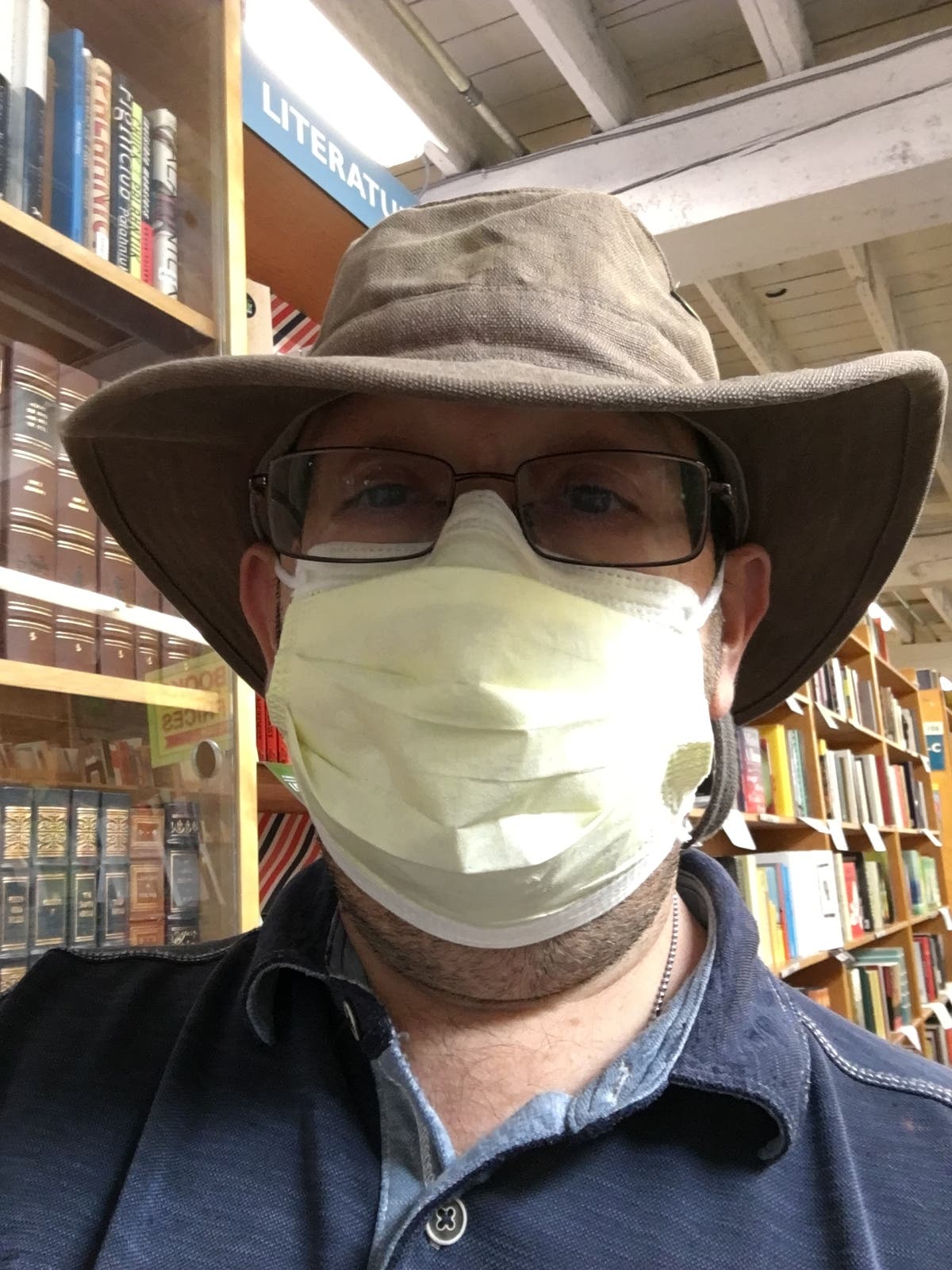
I now wear a mask if I’m around a group of people; I am not allowed to lift more than 10 pounds.
It is only now that I am beginning to realize what the past years have been like.
After more than five years of dialysis, I feel as if I have been released from prison. I am learning to adjust to life on the outside.
That’s what the new normal really is.
There were 19,061 kidney transplants performed in the United States last year. While that may seem like a lot, remember there are nearly 100,000 people on the waiting list, double the number of those waiting 10 years ago.
There is a shortage of organs available for donation. While 95 percent of adults in the United States support organ donation, only 54 percent are signed up as donors. Another problem is that only three out of every 1,000 people die in a way that allows for their organs to be donated.
As a result, about 4,500 people die every year waiting for a new kidney - that’s about 13 people every day.
I once had a real fear that I would be one of those people.
I often think of the family of the donor and of his - or her - family. I know the donor was from California, and that’s about it.
Beyond that, hunches.
Because I got the call on Sunday that you had been found and you weren’t flown to Oregon until Tuesday, I’m guessing the donor had been kept on life support before you were sent to me.
I can’t imagine the pain that the family must have gone through. I hope they know the pain the donor ended for me.
There’s a lot of anxiety I am trying to keep in check, including how I’d pay for my treatment should my job end and insurance protections for people with pre-existing conditions be wiped away by Congress.
I am now very much the definition of someone with a pre-existing condition.
I tend to worry most on Mondays and Thursdays - the days that I go in for blood tests, so doctors can check to see how you’re performing. It’s usually about four hours after giving blood that I see the results. It’s not a fun wait.
Frequently, I wonder where you came from, who you came from. But I’m doing my best to take it one step at a time; not even one day at a time.
I’ve come to realize that I am best off concentrating on what I can control and not worrying about things I can’t.
I know that with you, dear kidney, I can fulfill my promise to make the world better. I know that I’ll pay what I owe for the rest of my life, happily, big time.
Thank you, new kidney. I’m looking forward to quite a life with you.
Colin Miner is a Patch editor living, thanks to his new kidney, in Portland, Oregon.
Get more local news delivered straight to your inbox. Sign up for free Patch newsletters and alerts.