Politics & Government
Oregon Standoff Trial Day One: Opening Statements Complete
"In Ammon Bundy's words, 'this was much more than a protest.' They were taking a 'hard stand," said prosecutor Geoffrey Barrow.


Opening arguments are complete in the trial of six men and one woman charged in connection with the 41-day armed takeover of the Malheur National Wlidlife Refuge. The trial in the federal courthouse in Portland, which is expected to last nine weeks, will be followed by a second trial with eight more defendants next February.
The courtroom was packed with supporters of both sides. United States Attorney Billy Williams was there, as was Gregory Bretzing, the special agent in charge of the Portland FBI Office. The wives of Ammon and Ryan Bundy — brothers who were considered the leaders of the occupation — were also in the courtroom.
The Bundy brothers and five other defendants have pleaded not guilty.
Find out what's happening in Portlandfor free with the latest updates from Patch.
FOR THE LATEST ON THE TRIAL GO HERE
Judge Anna Brown announced that one juror — the only African-American man on the jury — was dismissed because of hardship and replaced by one of the eight alternates.
Find out what's happening in Portlandfor free with the latest updates from Patch.
Assistant U.S. Attorney Geoffrey Barrow opened the trial for the prosecution, explaining how what started as a peaceful protest at the Safeway in Burns, Oregon, "unfolded into an armed occupation."
He told the jurors the story will be broken up into four parts: the buildup, the takeover, the arrests and the aftermath.
Barrow said the government wold call Harney County Sheriff David Ward, who will describe meeting with occupation leader Ammon Bundy in November and how Bundy told him to stand up to the government or he would bring thousands to Harney County to do his job.
Bundy and the others had arrived at the Safeway in Burns in January to protest what they saw as government overreach in dealing with father-and-son ranchers Dwight and Steven Hammond who had been convicted of setting fires on government land.
Barrow played a video of Ammon Bundy speaking at the refuge after the occupation had started.
"Those who understand what has happened here...I'm asking you to follow me to the Malheur National Wildlife Refuge. We're going to make a hard stand," he said. "We're going to insist the Constitution be protected here in this country."
Barrow said the case is not about the beliefs of the occupiers.
"We are not prosecuting the defendants because they don't like the government,'' Barrow said. "In Ammon Bundy's words, 'this was much more than a protest.' They were taking a 'hard stand.' ''
Barrow talked about how 16 employees of the 187,000-acre refuge had been meeting last year to develop plans to deal with invasive species. Instead, they had to deal with "an invasion far more serious than common carp."
The prosecutor talked about how Ammon Bundy and the others put up signs saying the refuge had become the "Harney County Resource Center," set up guard posts and patrols, used the government's computers, disturbed Native American artifacts, rifled through government records, and turned the refuge into an armed camp, complete with places for them to live.
Barrow also revealed that one of the former defendants — Jason Blomgren, who pleaded guilty earlier this year — will testify for the prosecution, describing the hierarchy that was in place during the occupation. Barrow said that by cooperating, Blomgren is hoping for a lighter sentence.
The prosecution also went into detail about some of the refuge employees who were prevented from going to work by the occupation. That goes to the main charge against the defendants - conspiracy to impede federal employees through force, intimidation and threats.
Marcus Mumford, lawyer for Ammon Bundy, gave the first of the opening statements for the defense.
As expected, he painted a different picture, saying the only reason his client is in court is because "he demanded the federal government obey the law... the nerve."
He said Bundy and the others occupied the refuge "because the federal government refuses to respect the limits of its powers."
He had his own video of Ammon Bundy for the jurors.
"Our intent is to assist the people of Harney County in claiming their rights," Ammon said on the video.
Mumford also had a different version of the meetings between his client and Sheriff Ward, saying the sheriff was lying in describing his client as threatening.
The judge interrupted Mumford twice during his opening statement when Mumford started discussing the concept of "adverse possession."
That theory, the defendants believed, allowed them to take control of the refuge, setting up living arrangements, utilities, having mail delivered. The judge has ruled that adverse possession is not a defense against the charges but can be used to illustrate the mindset of the defendants.
"Mr. Bundy complied with the law," Mumford told the jurors. "The government has not. That's why Mr. Bundy took the actions he did.
"How much longer does a people have to be acted upon before they get to act?''
Mumford also said that while the prosecution made a point in describing how some on the refuge were armed 3 the FBI seized more than 20,000 rounds of ammunition and more than 1,000 shell casings — only one person was shot during the occupation.
"Only one side shot somebody, and it wasn't Mr. Bundy or anyone else at the refuge," he said.
Mumford was referring to Lavoy Finicum, an associate of the Bundys and one of the occupation leaders. He was shot and killed during the traffic stop that resulted in the arrest of the Bundys and others.
Finicum was shot reaching for a gun as he fled the traffic stop.
After Mumford was done, Ammon's older brother Ryan, who is representing himself, had his turn before the jury. He told them how he had gone to Burns to help the Hammonds.
"We were there not to impede," he said. "We were there to promote liberty. I believe we were there not to break the law, but to enforce the law, to uphold the law."
Along those lines, he read from the Declaration of Independence and tried to hand out copies of the Constitution. The judge said no to the copies of the Constitution.
Ryan Bundy was followed by Shawna Cox, who found herself interrupted by the judge on more than one occasion.
"If you don't get to the Malheur issues you're going to have to sit down," Brown told her.
When Cox started going into details about religion, Brown cut her off, saying: "Ms. Cox, you made the point, you're a woman of faith."
After Cox came Per Olsen, the lawyer representing David Fry.
Olsen told the jurors that his client has schizotypal personality disorder, that he wasn't part of the conspiracy — he arrived one week into the occupation, and that he didn't even pick up a gun until after Finicum, who had become a friend and father figure, was killed.
After Olsen, Robert Salisbury, the lawyer for Jeff Banta, one of the last to leave the refuge, told jurors that he wasn't part of a conspiracy, he had just wanted to help the Hammonds.
Kenneth Medenbach is representing himself, but his standby counsel, Matthew Schindler, made an opening statement. Schindler admitted his client had made signs and placed them on government property. But, he said, Medenbach was just trying to give voice to a dying rural America.
"When Ammon Bundy said, 'Let's make our voices heard,' Ken Medenbach stood next to him to make his voice heard, knowing that two is stronger than one," Schindler said.
"It worked, after yeas of being ignored."
The last person to give an opening statement was Lisa Maxfield, lawyer for Neil Wampler, a 68-year-old Vietnam veteran.
She described her client as an "original hippie" who had recently developed an interest in the Constitution. She had her client was more interested in discussion than intimidation.
The trial continues Wednesday morning when Harney County Sheriff David Ward is expected to take the stand.
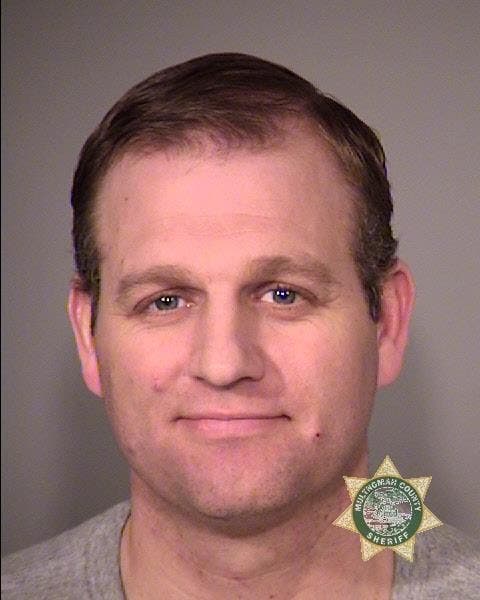
Photo: Ammon Bundy. Credit: Multnomah County Sheriff's Office.
Get more local news delivered straight to your inbox. Sign up for free Patch newsletters and alerts.