Politics & Government
Oregon Standoff Trial Starts Wednesday: What You Need to Know
The trial on charges stemming from the 41-day armed takeover of the Malheur National Wildlife Refuge begins with jury selection.


It's been almost seven months since 27-year-old David Fry from Ohio stood alone at the Malheur National Wildlife Refuge, talking with FBI agents and live-streaming his conversations to the world. It was Feb. 11, Day 41 of the armed takeover that brought the attention of the nation's media to the wilderness outside of Burns in Eastern Oregon.
The occupiers, led by Ammon Bundy, his brother Ryan and their friend, Lavoy Finicum, were protesting what they saw as overreach by the federal government. It wasn't their first protest. They had come together two years earlier in Bunkerville, Nevada, aiding Bundy's father, Cliven, as he battled with the Bureau of Land Management over grazing rights.
They had originally been drawn to Eastern Oregon by the story of Dwight and Steven Hammond, father and son ranchers who had been convicted of arson on federal land.
Find out what's happening in Portlandfor free with the latest updates from Patch.
The Hammonds had been sentenced, then — after prosecutors appealed the light sentence — re-sentenced. On Jan. 4, 2016, they were supposed to report to prison to begin serving longer terms.
The Bundys had organized a protest for Jan. 2 in the parking lot of the Safeway supermarket in Burns. What few knew at the time: The Bundys and Finicum, as the protest was starting to die down, drove the roughly 30 minutes to the refuge and — without firing a shot — staged a takeover.
Find out what's happening in Portlandfor free with the latest updates from Patch.
Fry had driven to the refuge from the home he shared with his parents — they were on vacation in Costa Rica at the time — during the first week of the occupation. The youngest person involved in the occupation, Fry was also perhaps the most tech-savvy. He set up a website, www.defendyourbase.net, that he hoped would provide unfiltered news from the refuge.
At the height of the occupation, there were dozens of people at the refuge. By Feb. 11, it was Fry on his own.
The numbers started dwindling on Jan. 26 when nine leaders of the occupation left to head to a town hall meeting in John Day where they were going to be met by Grant County Sheriff Glenn Palmer.
Along the way, they encountered a road block set up by Oregon State Police and the FBI.
Eight of the nine surrendered. The ninth — Lavoy Finicum, one of the leaders of the occupation and a close ally of leader Ammon Bundy — was shot and killed as he reached for a gun.
That led to an exodus from the refuge. Some just left and have been quiet since. By the morning of the 11th, it was just Fry and three others: Jeff Banta from Nevada and Sean and Sandy Anderson from Idaho.
On a livestream that was heard by as many as 18,000 people at one time, negotiations between the occupiers and law enforcement were broadcast over the internet. It reached the point that Fry ended up narrating the surrender of the other three.
But he wouldn't leave.
Fry was alternately manic, paranoid, ready to come out peacefully.
But he was afraid. Finicum's death had shaken him, left him resolved to stay at the refuge. Fry had always been a bit of a fragile character. Finicum had become a bit of a father figure to him.
There was concern of suicide — he described having a gun to his head — talk of how the government was "chemically mutating people" and, at one point, him saying how he was lying down and enjoying his blanket.
Finally, there was a break.
"If everybody says hallelujah, I'll cone out," Fry told the agents.
A moment passed, and then a chorus of hallelujahs from the FBI.
Fry could be heard talking about having a last cigarette, getting a cookie. The hallelujahs could be heard getting louder.
Then, one voice, clearly: "Put your hands behind your back."
THE TRIAL
In the end, 26 people would be indicted on charges stemming from the takeover. Ten have pleaded guilty. The charges against an 11th, Joseph Santilli, were dropped on Wednesday, though he still faces trial in Nevada.
Santilli and several others are also under indictment in Nevada on charges stemming from the 2014 standoff at Bunkerville between Cliven Bundy, his supporters and the federal Bureau of Land Management.
The trial has been split in two — seven people scheduled to go on trial starting Wednesday, and the other eight scheduled to be tried beginning on Feb. 14, 2017.
Even with the number of defendants dwindling, the courtroom will still be very crowded. The jury will have 20 people instead of the usual 16. Even though three of the defendants — Ryan Bundy, Shawna Cox and Kenneth Medenbach — are representing themselves, they will have standby counsel to assist them.
That means there will be room for only 25 people — including the media, family and friends of the defendants and the curious — to watch the trial on any given day. The trial is scheduled to run Monday through Thursday and run approximately three months.
The main issue for the jury to consider will be whether the defendants conspired to prevent federal workers from doing their jobs.
Getting to this point has been a bumpy ride as both sides have tried to convince the judge to allow them introduce lines of argument they feel would bolster their cases.
For instance, the judge told prosecutors they could call as witnesses refugee employees but that they could not give subjective impressions of what had happened. Prosecutors are also not allowed to call residents of Burns and the surrounding area to discuss their fears and impressions during the occupation.
Prosecutors will be able to call certain residents — such as Sheriff David Ward and Chief Judge Steven Grasty — who had direct roles in the occupation.
One big issue that several defendants wanted to raise is that of adverse possession, which allows for someone to take possession of a land if they occupy it for a certain period.
The judge said it is not an acceptable defense to the charges in the indictment but would allow some discussion of it in the context of their state of mind.
Prosecutors will be allowed to talk about the damage to the refuge but have indicated they do not plan to discuss the cost of repair.
Another big win for the prosecution was the judge's decision that all defendants can be seen as responsible for statements by all defendants. In other words, if a statement made by Ammon Bundy to Sheriff Ward before the occupation is seen as threatening, it can be used to implicate defendants who weren't even around at that time.
In a partial win for the defense, prosecutors will be able to bring up the confrontation at Bunkerville, but only the basic facts of the case.
And in a win for the prosecutors, the judge ruled that the defense cannot bring up the shooting death of Fincium. It turned out after the fact that FBI agents had fired their weapons that day but covered it up. The defense had hoped to use that fact to influence the jury's perception of law enforcement.
Brown will allow Fry to show certain videos that he hopes will sway the jury that he was peaceful, including one in which he is seen chasing a small animal, trying to determine if it is a squirrel or a groundhog.
When Cox was arrested, she had 500 pages of government documents that had been scanned or downloaded. Prosecutors will not be allowed to ask the federal government about any documents that deal with the location of sacred artifacts unless the defense asks about them first. Both sides agreed that Cox had the documents.
THE DEFENDANTS
Jeff Wayne Banta - One of the last holdouts, he surrendered the morning of Feb. 11 — hours before Fry gave himself up. A construction worker from Nevada, he is divorced with two children. He is charged with conspiracy and possession of firearms in a federal facility.
Ammon Bundy - Considered the leader of the conspiracy. Regardless of what happens in Oregon, he still faces trial in Nevada next year on charges stemming from the standoff between his father and BLM officers. He had lived in Arizona before moving last year to Idaho. He is charged with conspiracy and possession of firearms in a federal facility.
Ryan Bundy - Ammon's older brother, Ryan is representing himself, though he does have standby counsel. He was shot in the shoulder the day that Finicum was shot and killed. He has refused to let doctors remove the shrapnel, calling it crucial evidence. Earlier this summer, he was accused of plotting to escape making a homemade rope out of sheets. He is charged with conspiracy, possession of firearms in a federal facility and theft of government property.
Shawna Cox - One of only two women indicted in connection with the takeover, she is also one of only three being allowed to defend themselves. She is from Utah and filed a countersuit against the government, which is not expected to go far.
David Fry - The 27-year-old from Ohio whose calls for hallelujah captivated thousands. He is charged with conspiracy and possession of firearms in a federal facility.
Kenneth Medenbach - He was actually the first occupier to be arrested. He drove a federally owned truck from the refuge to the Safeway in Burns where he was arrested. The occupation was not his first run-in with the feds. He was convicted of camping on federal land. He's from Oregon and is charged with conspiracy and theft of government property.
Neil Wampler - He served as the cook for the occupation. He spent four years in prison after being convicted of killing his father 29 years ago. He's charged with conspiracy.
Who Pleaded Guilty? - Jason Blomgren, Brian Cavalier, Blaine Cooper, Travis Cox, Eric Lee Flores, Wesley Kjar, Corey Lequieu, Joseph O'Shaughnessy, Ryan Payne and Geoffrey Stanek.
Who Goes on Trial in February? Sandra Lynn Anderson, Sean Anderson, Duane Leo Ehmer, Jake Ryan and Darryl Thorn.
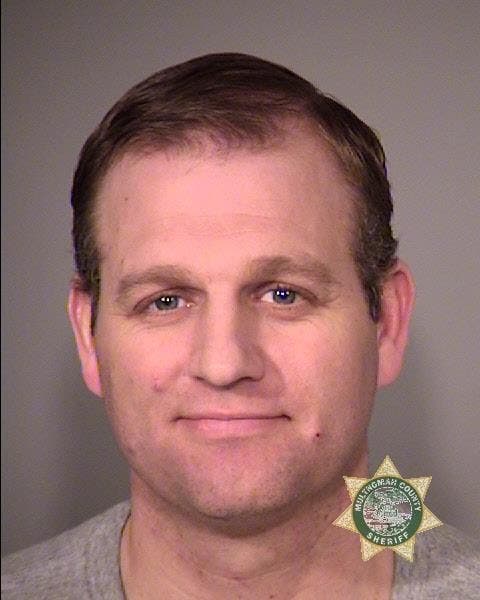
Photo Multnomah County Sheriff's Office
Get more local news delivered straight to your inbox. Sign up for free Patch newsletters and alerts.