Schools
Oticon Awards 2 Pacific Northwest Teens
Ellie Kobak and Tsering Shola were awarded by the hearing aid company for their respective work within the hearing impaired community.


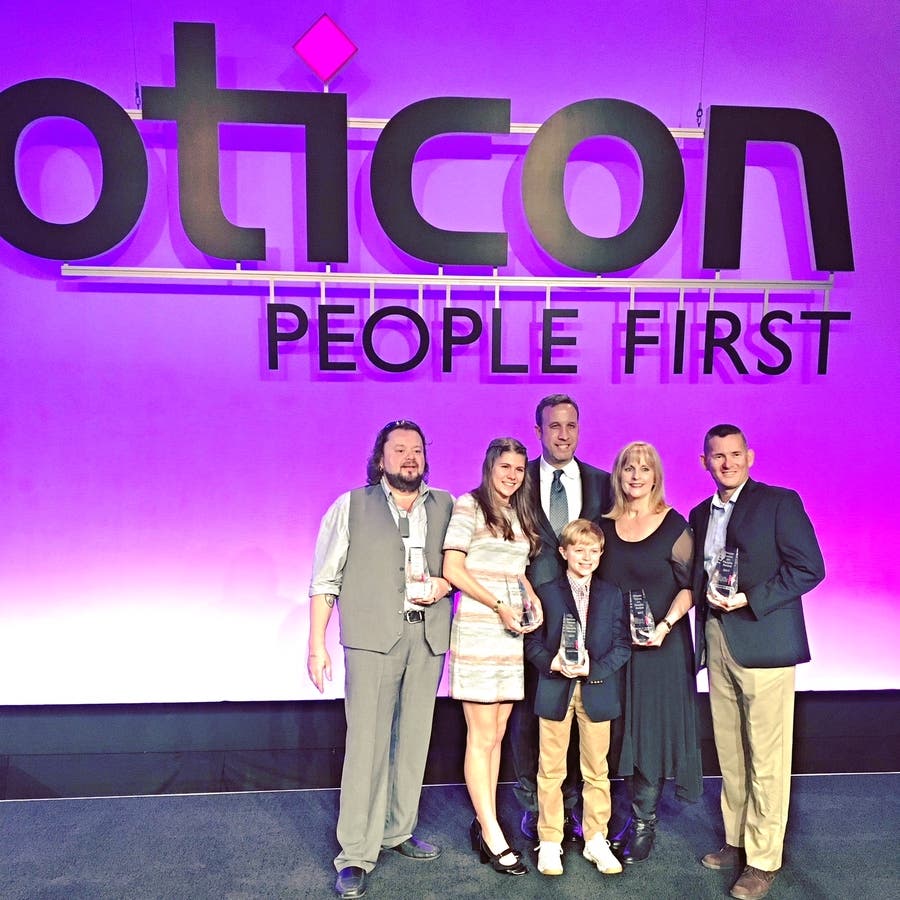
PORTLAND, OR — Two high school girls from the Pacific Northwest were honored last month by Oticon for their positive contributions to the hearing impaired community.
Oticon, a hearing device manufacturer that has revolutionized the hearing aid industry for the past 110 years, in November held its 19th annual Focus on People Awards at the Gaylord Texan Resort & Convention Center in Grapevine, Texas, where it honored 13 people with various hearing impairments who've shown their hearing loss does not hinder their ability to make a difference in the world.
Ellie Kobak of Portland and Tsering Shola of Camas, Washington, took first and third place, respectively, in the student category.
Find out what's happening in Portlandfor free with the latest updates from Patch.
"The Focus on People Awards winners each have a powerful story about how they've helped to drive awareness and open new doors for themselves and for the millions of people with hearing loss,” Oticon spokeswoman Nancy Palmere said in a statement. "We commend these individuals for their exceptional work as hearing loss champions, and hope their stories inspire others to get involved and become an advocate for all people with disabilities."
Ellie Kobak, a 17-year-old senior at Portland's Lincoln High School, stands out as a mentor for incoming freshmen, tutor for the AVID program, and example of what can be done even when the odds are against you. Living with bilateral hearing loss for as long as she can remember, Kobak has never let it stand in the way of accomplishing her goals.
Find out what's happening in Portlandfor free with the latest updates from Patch.
"Often I forget that I'm hearing impaired," Kobak told Patch. "My parents have the same expectations for me as my normal-hearing siblings."
Oticon recognized Kobak for her ongoing peer support as well as for testifying before an Oregon Senate Appropriations Committee that was expected to cut funding for audiology services at Columbia Regional, an Oregon Department of Education program that assists 22 school districts with educational services for students with low incident disabilities.
Only 14 at the time she testified, Kobak got her inspiration from a TedTalk she watched, featuring a woman who was deaf and went to Stanford University. After watching the TedTalk and hearing the woman's story, and learning how many deaf children don't receive support at home, Kobak said she realized how fortunate she is and decided to use her good fortune to help others.
"That was just so heartbreaking to me," she said of the TedTalk testimony. "I realized I'm so lucky, I should try to help other people to do whatever they set their mind to."
With help from Kobak's testimony the Columbia Regional Program continued to receive funding.
Receiving the Oticon award was another level of validation, Kobak said, but more importantly it gave her an opportunity to meet other people "who do great things and are also hearing impaired."
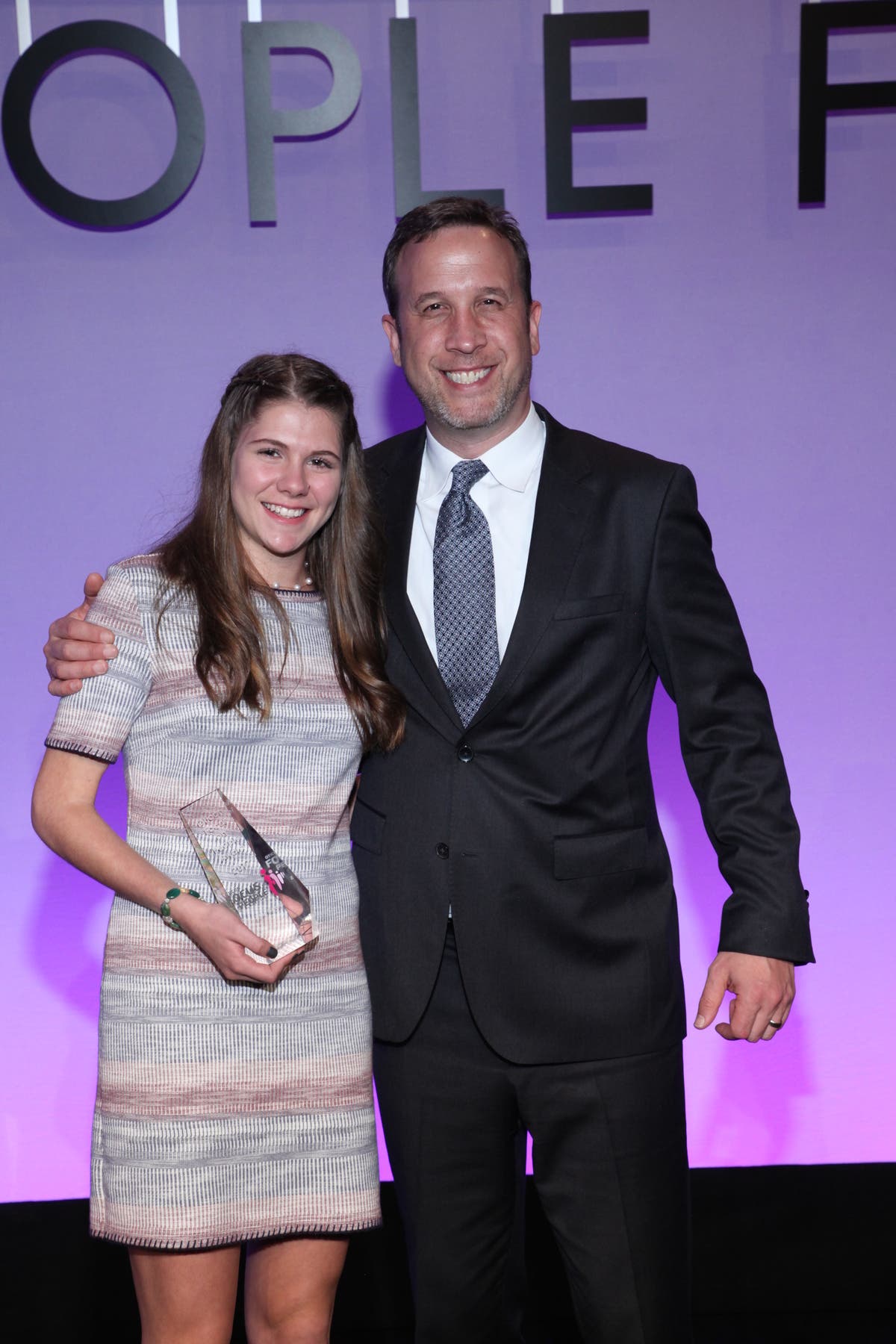
"It was incredible to meet so many other people who are hearing impaired," she said. "And it was really cool to get up and talk about my experience."
Next, Kobak plans to attend college where she would like to continue helping other students, she said.
"I've always thought of pursuing the pre-med track, but I'm not sure which field," Kobak said. "I just know I'd like to do something to help others."
Tsering Shola, 16, earned the third place Oticon award for her work verifying the accuracy of a machine segmentation algorithm that segments images of the inner ears of mice that have been administered antibiotics called aminoglycosides.
Aminoglycosides, which are typically used to treat abdominal and urinary tract infections, can generate molecules within the inner ear that ultimately damage sensory cells and neurons, resulting in permanent hearing loss.
Shola was diagnosed with sensorineural hearing loss while in the fifth grade, she told Patch. While it's the most common form of hearing loss, sensorineural hearing loss typically affects older adults.
"I was told my grandparents had better hearing," she joked, adding that she's unsure why she suffered hearing loss at all.
As an eighth grader, Shola was introduced to a professor at Oregon Health & Science University (OHSU) who studies ear and throat diseases. As part of a job shadow-like experience the summer before her sophomore year at Camas High School, Shola got to work in an OHSU lab; but because she wasn't 16, she wasn't allowed to work with the actual aminoglycosides.
So instead, the professor gave Shola a project that asked her to test whether the results of machine segmentation (which takes 2 minutes) was any more or less accurate than manual segmentation (which could take about 2 hours). Analyzing more than 200 slides per inner ear image, the study of 150 to 200 images took Shola more than seven months to complete.
"I did this project because many team members were working on their own projects," Shola said.
Because the segmentation testing takes such a long time, and because she couldn't work with any actual drugs, the project was perfect for Shola. Ultimately, she found the machine was just as accurate as doing it manually, allowing OHSU scientists to make incredible time savings.
Since her study at OHSU, Shola has won scholarships and accolades from state and international science and engineering fairs as well as the Oticon award.
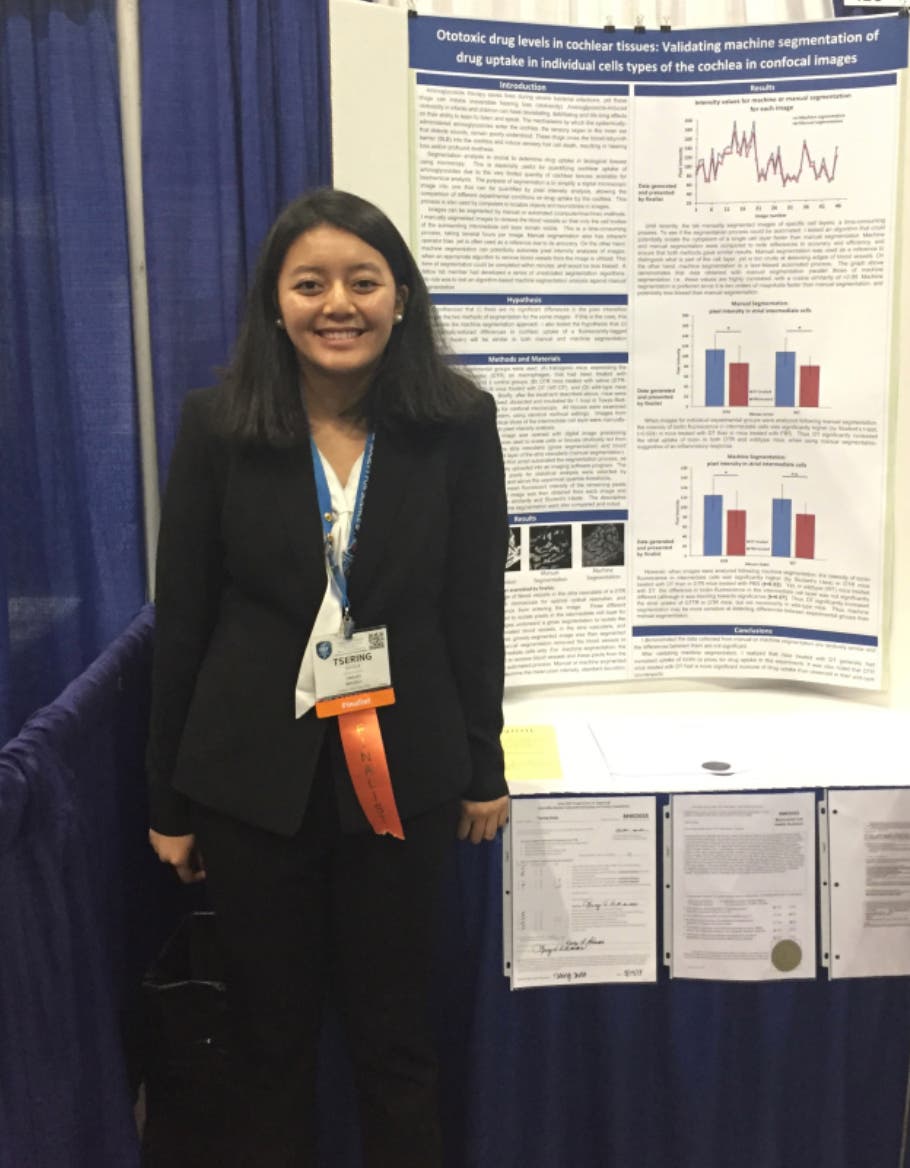
"It's nice to be recognized," she said. "And to see the 12 other finalists was inspirational. Seeing people who are passionate is reassuring."
Shola's next big project is graduating high school, then maybe on to the University of Washington where she hopes to explore other fields of science — though she'll probably stick close to an audiology discipline, she said.
Images via Oticon
Get more local news delivered straight to your inbox. Sign up for free Patch newsletters and alerts.