Schools
About Portland: Marking 30 Years of Health Innovation in Schools
The Multnomah County health clinic at Roosevelt High School opened to pickets and protests. Now, it's seen as a model for the state.


“If we had helped just a few students, it would have been worth it,” says Mary Lou Hennrich, looking 30 years back in time to when she was an assistant director at the Multnomah County Health Department. “In the end, so much good has come of it, it was clearly all worthwhile.”
Hennrich, a registered nurse who devoted much of her career to public health, is talking about the Multnomah County Health Center at Roosevelt High School.
It opened 30 years ago, greeted by pickets and controversy.
Find out what's happening in Portlandfor free with the latest updates from Patch.
Now it is one of more than one dozen school-based health centers in the Portland, David Douglas, Parkrose, and Centennial School Districts. Last year alone, there were more than 17,000 visits to the clinics. And they are just some of the 75 clinics that are now open around the state.
“We didn’t walk into this trying to change the world or even the system,” she says. “We were just trying to open a clinic and help people.”
Find out what's happening in Portlandfor free with the latest updates from Patch.
Hennrich says that she was working for the Multnomah County Health Department when her boss dropped a study from the Harvard School of Health Policy in her inbox.
“This was in the days before email,” she says. “So, she drops this study in my basket about a county health clinic that had been set up in a school in St. Paul, Minnesota. The study found that it had done wonders in reducing teen pregnancy and helping in other ways.
“And she had written, ‘interesting. What do you think?”
Heinrich says her habit at the time - when she wasn’t sure to do about something - was to let things sit until they surfaced to the top of the pile for the third time. And that’s what happened.
“I found it at the top of the basket for a third time,” she says. “So, I went in and asked, “Do really want to do something about this?”
“And the answer was yes. We had a very high rate of teen pregnancy in the county at the time. We knew that we needed to do something. The other problem was that we had been trying very hard - without much success - to get parents to bring their kids into a clinic.”
Hennrich went of to St. Paul to see how they had gotten theirs off the ground.
“They had been running for about five or six years and they were providing full primary care to high school students - even providing contraceptives - and they were fully accepted by the community,” Heinrich says. “And we thought, what’s the big deal? We can do this.”
This was in May - toward the end of the county’s budget process. They quickly drew up a short proposal and Gretchen Kafoury, who was on the County Commission, became its champion.
“Next thing we know, we’re told we have $100,000 to get this thing off the ground,” Hennrich says. “It was the beginning of June, the school year was about over and we realized that we should probably talk to the school district about this.”
So, Hennrich met with Portland Public Schools Superintendent Matthew Prophet and some of his staff.
“We explained that we were looking for the school with the highest need,” Hennrich says. “One with a high rate of uninsured students and a highgate of teen pregnancy. And we would need a principal who was willing to work with us.”
That had been one of the key findings in the Harvard study about the clinic in St. Paul - support from the school had been a key to its success.
“It didn’t take long for Prophet to come back to us and say Roosevelt High School and it’s principal, George Galati, were the answer,” Hennrich says. “We made it clear to him that we had the money. We just needed the space.”
Galati told them there was a space that had been used to store textbooks that could be cleared out and would be perfect.
“So, we go to work getting exam tables and desks and supplies,” Hennrich says. “We didn’t know enough to know that anything we were doing was going to be seen as controversial.”
But it was.
“Word got out that this clinic would be opening and suddenly there were protesters,” Hennrich says. “People calling up the district, calling up the county commissioners, picketers. They were telling people that we were going to be doing abortions in the backroom.
“There were people coming up with crazy things. They would show up at hearings and during the open comment period just say things. And the media would pick it up. And there would be moms with strollers picketing with signs saying that abortion was coming here.”
Hennrich says they quickly discovered a few things - that most of the protesters were actually from places like Oregon City, Newberg, Salem, outside of Multnomah County and there were actually a lot of people who supported what they would be doing.
“One big hurdle we had to overcome was the fact that the Catholic Church was behind a lot of the protests,” Hennrich says. “And that was a big thing. I was raised Catholic, went to Catholic grade school, high school, college. And it was the same for a lot of my colleagues.”
So, it was quite big thing when she found herself in a meeting with the Archbishop.
“We were very forthright,” she says. “We explained that people speaking on his behalf were saying things that just weren’t true. And we told him that there were a lot of people coming us and saying they supported what we were doing.
“Not sure exactly what he said to who after but soon after people started to back off and the controversy started to die down.”
Hennrich said she and her colleagues made a point of explaining they weren’t pushing birth control, they weren’t providing abortions.
“We did what we could to make it clear to people that kids were dropping out of school because they were getting pregnant and we wanted to try to stop that,” she says. “Kids were sexually active. There was no stopping that. We wanted to make sure that they had access to health care.”
Hennrich says one lesson they learned was that when the other side got nasty, they could no longer just sit back and be nice - they had to stand up for what they were doing and not back down.
The county formed an advisory committee. They agreed that if a student did want to talk about abortion they would be sent to another county clinic off school grounds. They also made sure that people understood that privacy would be protected. They arranged to have after school hours and a separate entrance for people who didn't want to be seen going in.
“The day we were set to open there were more protests and threats of more,” she says. “And the superintendent told us not to worry. And open up.
“And the rest, as they say is history.”
Hennrich says the clinic quickly started expanding, not only seeing students but staff and their families.
“It quickly became apparent how important it was for us to be in a school,” she says. “We were there with them each and every day, having lunch with them. They learned who we were and that they could trust us.
“And that is so important.”
That first year, 345 students visited the clinic - only 78 asked for reproductive health care. Of those, only 15 declined to involve their parents. Twenty-seven students had pregnancy tests - two of which were positive.
The next year, the clinic added a mental health professional.
“”We were making services accessible to people not just in the schools,” she says. “We were showing people that when you make services where people live and work, they will take advantage of them. we showed that when you treat students like the young adults they are, and give them the information they need, they will make the right choices.
“We also found that by opening the clinic to former students who had dropped out, many of them were coming back to school.”
Thirty years, later Alexandra Lowell - one of Hennrich’s successors at the county health department - sees the benefit of what was started at Roosevelt - from one clinic with 375 visits to 13 clinics visited more than 17,000 times.
“What we are really celebrating is the model and 30 years of service,” she says. “Not just the Roosevelt center, but rather the investment in the health and academic potential of children and youth.
“The model can reduce health disparities.”
Lowell says there are plans to open more clinics in the county.
Hennrich says, in hindsight, they were lucky to have the right combination of people working together.
"We were able to start something," she says. "And it was clearly the right thing. And it clearly has made a difference."
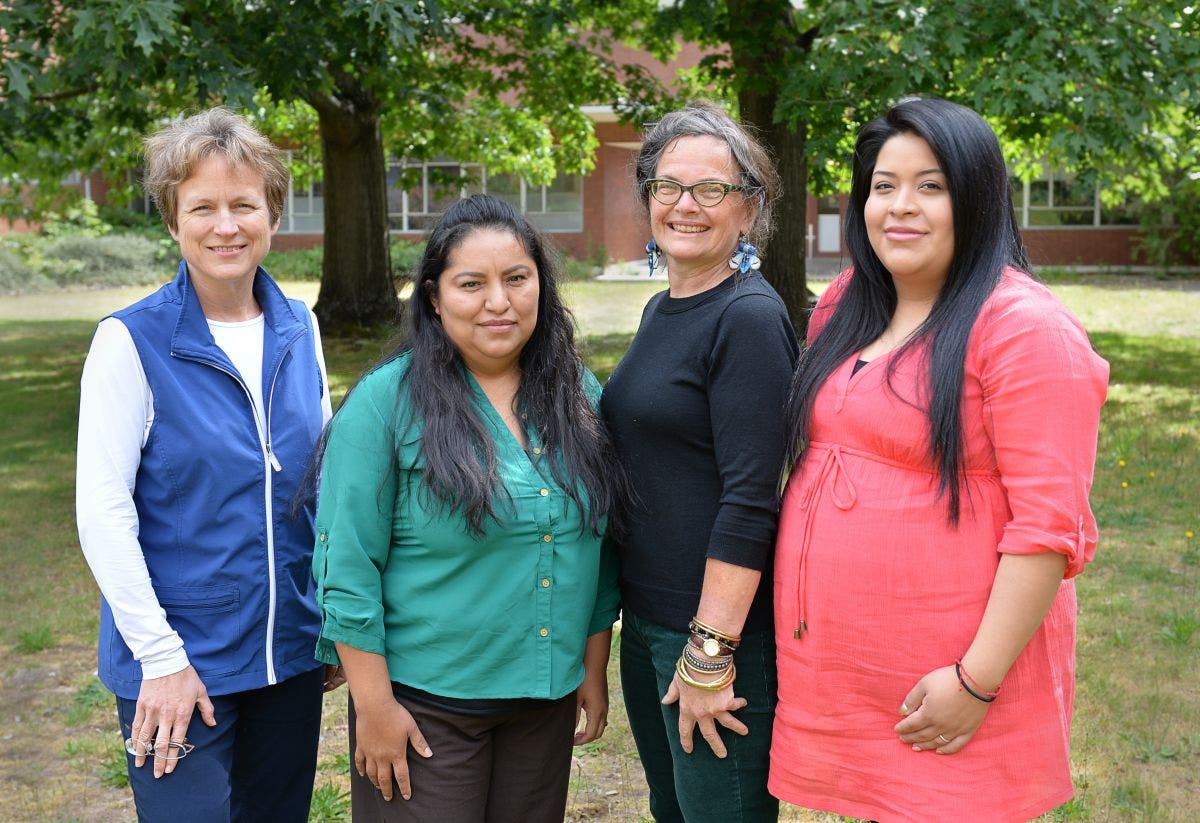
Photo of Health Center staff left to right, Alice Johnson, Lidia Rodriguez, Shelley Bedell and Nora Orozco Lopez treat hundreds of students a year at the Roosevelt High School-based Health Center. courtesy Multnomah County Health Department
Get more local news delivered straight to your inbox. Sign up for free Patch newsletters and alerts.