Community Corner
Poulami Mitra Reinvents Her Teaching Methods For New Virtual Environment In Portland
The spring and summer terms of 2020 have been unlike any that Portland Community College has ever experienced.

August 10, 2020
The spring and summer terms of 2020 have been unlike any that Portland Community College has ever experienced. Though there were daunting challenges, PCC students, faculty and staff showcased remarkable creativity and ingenuity that have allowed them to continue the pursuit of their educational and instructional goals.
Find out what's happening in Portlandfor free with the latest updates from Patch.
One of those innovative faculty is anatomy and physiology instructor Poulami Mitra, who is a former academic researcher with the Oregon Health & Science University. Having taught at the Rock Creek Campus since 2013, she is among several teaching innovators who have worked to reinvent their methods to better connect with and educate students in the new remote learning environment.
Her path to PCC is a fascinating one. The Indian native, who is a mom to two young boys (ages 6 and 10), worked in diabetes research and DNA replication at OHSU after a stint with the University of Washington. One day her boss asked Mitra, who holds a doctorate from the Medical College of Virginia, to fill in for her as a keynote speaker in a PCC bioscience class. After presenting, she was asked if she’d like to teach a class and from there an instructor was born.
Find out what's happening in Portlandfor free with the latest updates from Patch.
Virtual Admissions
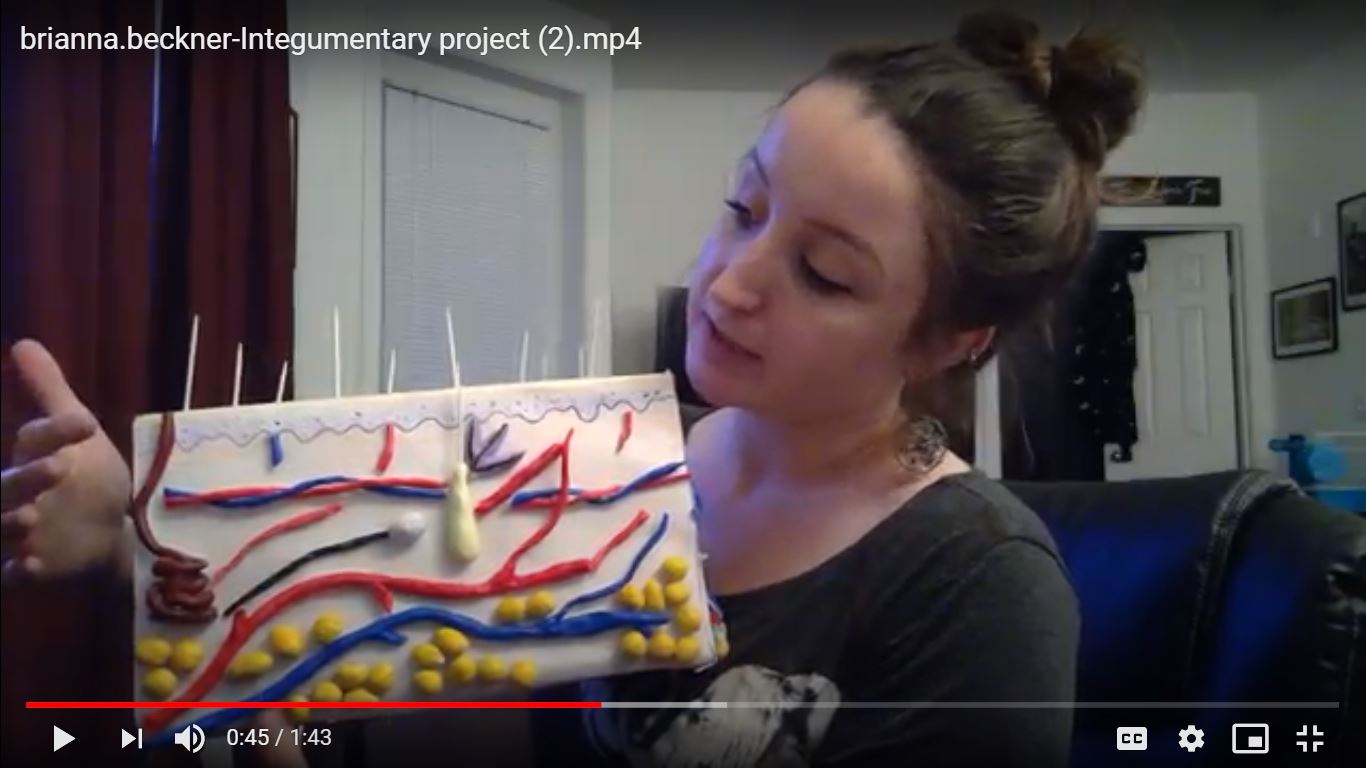
- Like Brianna Breckner (above), PCC helps students reach their goals. Get started by connecting with the college’s admissions team virtually! From one-on-one appointments and group info sessions to recorded sessions and steps for new students, Virtual Admissions has it all.
She shared her story of innovation:
First of all, what do you enjoy most about teaching?
Poulami Mitra: The thing I enjoy most about teaching is my interaction with students. I miss this part terribly as interacting online is not the same as interacting in-person. Also, I enjoy being creative and teaching allows me to do so as I use different strategies to engage students with different learning styles. Last, but not the least, I enjoy hearing from students who get accepted in various healthcare programs. It’s a great feeling to know that I did my bit to help some people reach their goals.
How has your curriculum changed during remote instruction?
Mitra: I made several big changes. One was to organize my D2L shells into weekly folders rather than having two folders for class Power points and class notes. Each weekly folder includes a gentle reminder of quizzes or homework for that week. This reminder is in place in addition to their syllabus and weekly announcements.
Another one was to include interactive sessions — doing quizzes and labeling diagrams — during our live meetings. The most important change to my curriculum has been to ask students to make small models for body systems that we cover in our classes. Most anatomy students are visual and kinesthetic learners and, just like the anatomy teachers, are missing the lab.
How exactly did that work?
Mitra: I asked them to use any material available at home to make a skin model for their “Integumentary System” class and then a hand or foot model for their “Skeletal System” class. I received some amazingly creative models and several messages saying that they enjoyed doing these projects.
A student submitted a paper model of the foot in Mitra’s class.
Also, I heard back from students saying that they involved their kid or partner in making their projects, so it almost became a family activity. These projects were not mandatory. They had the option of researching a skin disease or bone disease topic instead, but almost 90% of the students chose to do the projects.
Throughout the course I encouraged students to use Play-Doh or clay to make models. If they didn’t have that, I asked them to use paper and pencil to draw things out. Some students said they used an app called Procreate. And the goal was always to help them translate their understanding into a visual form.
What inspired you to go this route?
Mitra: Everyone in the Biology Department is very collaborative and supportive. In particular, Michelle Huss and Josephine Pino have inspired me to use artistic projects or props as teaching material. Given the situation we are in, I thought of using artistic projects as part of our lab section.
Have there been any silver linings to this experience for you?
Mitra: I think I will include the anatomy model building as part of lab homework even when we return to in-person classes. Often students take pictures of lab models and rush through a lab. Learning a new subject is directly proportional to the amount of time you spend with it. Making a model will help them to spend time on the topic.
Thank you, Poulami!
This press release was produced by Portland Community College. The views expressed here are the author’s own.