Politics & Government
SUNDAY READER: The Rosenbergs, My Grandparents And Fear: Newly Released Testimony Sheds New Details
Nearly 67 years after testifying before the Rosenberg grand jury, my grandfather's testimony became the last bit to be released.


William and Sylvia Danziger, my grandparents, feared they might be next. Julius and Ethel Rosenberg, whom they knew but were not particularly close to, had both been arrested and indicted on charges of espionage for providing the Soviet Union with information related to nuclear weapons.
More troubling for my grandparents, Morty Sobell, who my grandfather had known since they were 13-year-old students at Stuyvesant High School, had been arrested in Mexico and returned to the United States to answer charges that he had conspired with the Rosenbergs.
It was August 1950, and Sen. Joseph McCarthy had already given his now-infamous speech alleging the country was being overrun with communists.
Find out what's happening in Portlandfor free with the latest updates from Patch.
“The State Department is infested with communists,” he said. “I have here in my hand a list of 205—a list of names that were made known to the Secretary of State as being members of the Communist Party and who nevertheless are still working and shaping policy in the State Department.”
Over several months, from June 1950 through early 1951, 46 people would be called before a federal grand jury in Manhattan. While one prosecutor, Myles Lane, ran the grand jury, another, Roy Cohn, was busy writing indictments.
Find out what's happening in Portlandfor free with the latest updates from Patch.
A couple of years later, Cohn, whose work on the Rosenberg case led to J. Edgar Hoover recommending him to McCarthy to be chief counsel for the Senate Permanent Subcommittee on Investigations, ran into my grandfather at a hearing.
“I know all about you,” he said, pointing at my grandfather. “The class of 1938.”
He was referring to the City College class that included my grandfather, Morty Sobell and Julius Rosenberg.
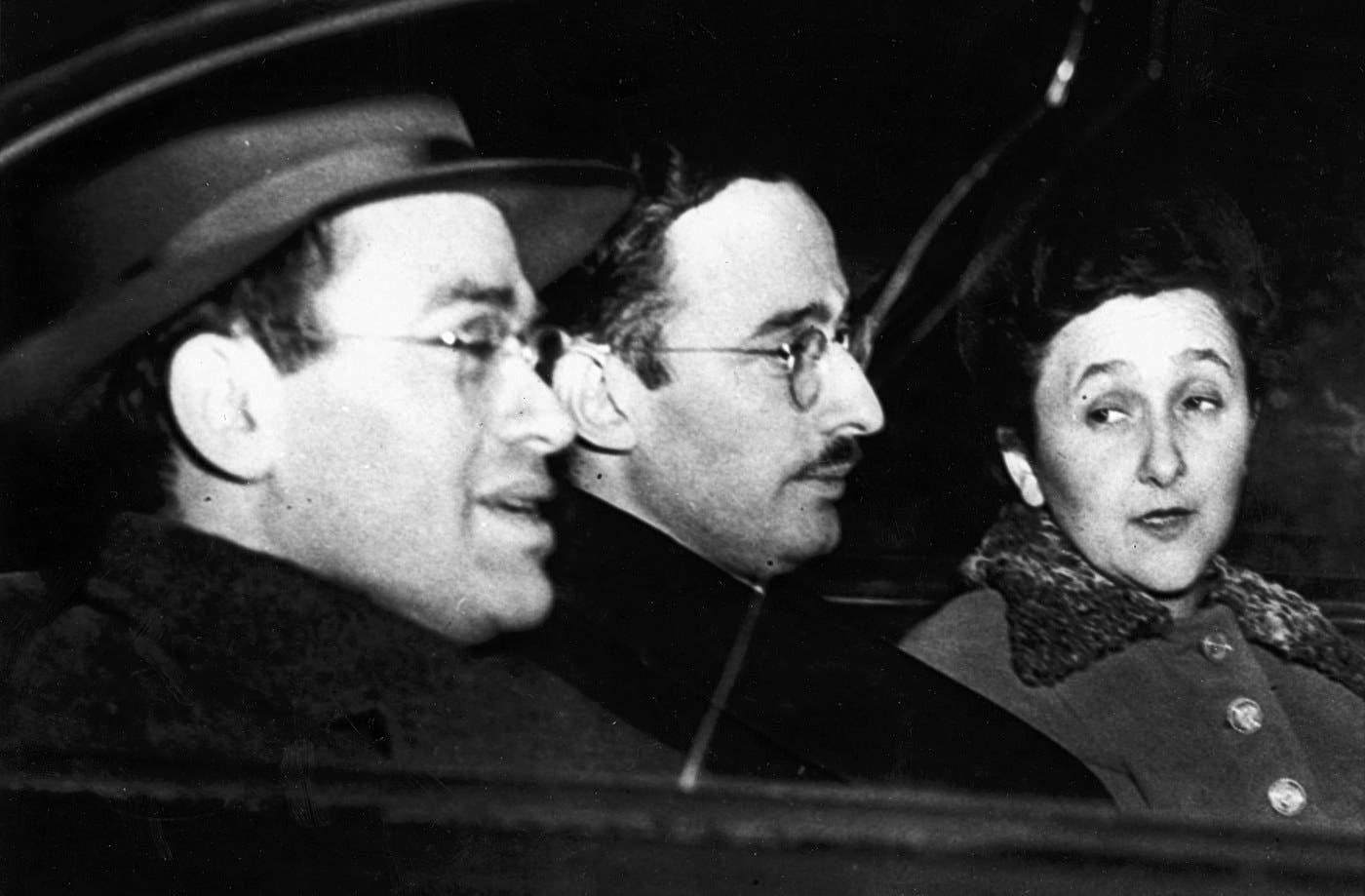
My grandparents, who spent much of their lives in New York City, knew they were being followed by the FBI. On one hot day, they even bought ice cream for the agents. When my grandfather's FBI record was unsealed, there were surveillance notes including how my grandparents had taken my mother and uncle — then, children — to the American Museum of Natural History.
Grand jury appearances did not always end well. Ethel Rosenberg had been arrested as she left her grand jury appearance.
In the years since, the grand jury testimony of 45 of those witnesses has been released. Earlier this month, the grand jury testimony of my grandfather became the very last to be unsealed.
There’s nothing in the testimony — he appeared three times over five months; my grandmother twice over the same period — that changes the ultimate narrative of the case. What it does do is illustrate the tactics used by prosecutors and provide hints at the sense of terror and uncertainty real people — in this case, my grandparents — must have felt.
There is no question that my grandparents were on the left side of the political spectrum, not an unusual thing for people who grew up the children of immigrants in New York at that time.
After high school, my grandfather and Sobell went to City College of New York, where they would meet Julius Rosenberg and Joel Barr.
After college, my grandfather stayed close with Sobell. They both went on to work for the Navy’s Bureau of Ordnance. They frequently had lunch and saw each other outside of work while they worked together.
It was a different time. My grandfather used to talk about how the lunchroom was segregated, but it didn’t matter much to the large contingent from New York. They pretty much sat where they wanted, sometimes even at the tables labeled “colored.”
In 1949, my grandfather was discharged from the Navy as a security risk. It turned out that my grandmother had attended meetings of something called the Communist Party Association.
AUGUST 31, 1950
At the grand jury in August, prosecutor Myles Lane started with lots of seemingly innocent questions. He asked my grandfather when he was born, where he grew up, went to school. He asked about my grandmother, how many kids they had — two: my mother and her younger brother.
The questions became a little more serious: Did he know Julius Rosenberg? They had gone to college together. Did he stay in contact with him? Not really.
One thing curious about this line of questioning. While it didn't come up during the grand jury testimony, at trial my grandfather described going to see Rosenberg twice during this period of 1950. One was either right before or after he visited Sobell as he packed for Mexico.
My grandfather, who had moved back to New York from Washington in March, was working for a company that occasionally needed to contract out to machine shops for work.
Sobell had apparently mentioned to my grandfather that Rosenberg owned a machine shop.
The first time my grandfather went to see him was mid-late June. Rosenberg was out at a stamping shop.
"I was at that time rather interested in getting an estimate on stamping, so I went out to the stamping place and saw him out there," my grandfather would testify.
My grandfather again visited him in early July, wanting "to look over" Rosenberg's shop. Julius told him that "he was rather tied up at the time" and wouldn't be able to accept any new work "for some months."
Of course, that never happened. Within weeks, Julius Rosenberg would be arrested.
And now, in late August, Miles Lane wanted to know: Did my grandfather know Morty Sobell? And then Lane asked my grandfather about the last time he had seen Sobell. It had been about two months before.
“I called him to ask him how things were and to ask him if he would lend me his electric drill, which I had some need for. I don’t recall the conversation in detail, but essentially he said that he was going — leaving for Mexico in a short time thereafter, this I think was roughly eight o’clock or nine o’clock in the evening, that 'If you want the thing better come and get it.' I did. And I got it.”
Lane had lots of questions about that night. It turned out that Sobell had left his job abruptly, telling his boss he needed a few weeks to rest. It also turned out that the night my grandfather saw him, he and his family were fleeing to Mexico.
My grandfather didn’t see it quite that way. He wasn’t sure exactly what was going on with his friend; other than maybe Sobell — seeing what was happening with Julius Rosenberg and others — just didn’t want to get caught up in it.
One thing was certain: He knew Morty wasn’t a spy. How? For years he maintained that if Morty Sobell, who for decades proclaimed his innocence, had been a spy, Morty would have asked him to participate.
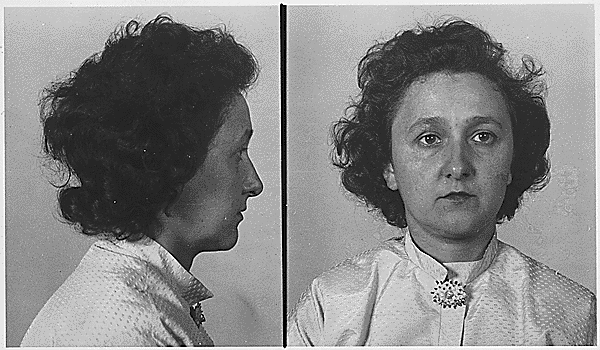
At the grand jury, however, that day in August, Lane was focused on the night Sobell left for Mexico.
Who was at the house? Morty and his immediately family, plus his sister-in law. How did he get to Mexico? How did he get to the airport? Did my grandfather drive him? No. The family drove themselves.
Lane then wanted to know if my grandfather had received any letters from Sobell while he was in Mexico. Yes, many, my grandfather said, before changing it to two.
The prosecutor asked where they were postmarked, what was the return address. My grandfather said he only remembered that the address had the word "Cordoba" in it and that it was in Mexico City,
Did my grandfather write back? Yes. Both times.
What did Morty say? Innocuous stuff. “He said, in the first letter, that he had arrived safely and that he had carried the infant on his lap all the way, and that was about it.”
“Did he say anything about coming back?" Lane asked.
“No,” my grandfather said. “No.”
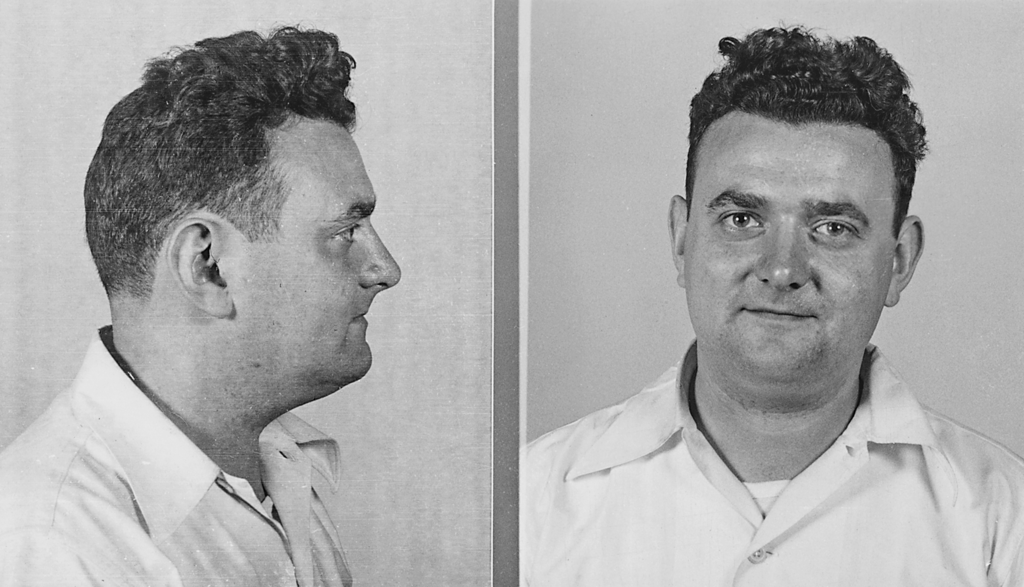
Lane wanted to know if he said anything about where he was going.
“I think he said something looking for a furnished apartment or having gotten a furnished apartment, or something along that line. To the best of my knowledge, that was the contents of the letter.”
Then came the big questions.
“Were you ever approached by Rosenberg to supply any information that you may obtain from the Navy Department?”
“I never was.”
“Were you every approached by Sobell to do the same thing?”
“I never was.”
“Now, you can answer this as you see fit: Were you ever a member of the Communist Party?”
“No, sir. I was not.”
“And was your wife ever a member?”
“She alleges to me that she was not.”
There were two last questions.
“Now, have you talked with this sister-in-law of Sobell recently?” Lane asked.
“No, I have not.”
“Have you talked with the Sobells’ father and mother?”
“No, I have not.”
And with that, my grandfather was excused.
SEPTEMBER 27, 1950
A month later my grandmother was brought in. She and my grandfather were, as my grandmother would tell the grand jurors, “a rather early romance.” She would help him with his reports for school. She would later become a high school biology teacher but, in those early years of their marriage, she had a variety of jobs — keypunch operator for the Census Bureau, hospital lab tech.
At her grand jury appearance in September, the prosecutor — again, Miles Lane — tried to reassure her as they got underway,
“No one is going to bite you so you can just relax and after the first few minutes of talking I think you will probably get over your innate nervousness,” he told her. “To sort of help you get over that, I will ask you a few questions about your background, where you went to school and so forth.”
And that’s what he did — questions about how old she was, how long she had been married, what she did for a living, where she lived. And then things got tougher.
He started asking about Morty Sobell, how well she knew him, how long, when was the last time she saw him?
Lane wanted to know if they had talked about Julius Rosenberg. She said no. Lane wanted to know if it had been before or after Rosenberg’s arrest.
“I assume if Rosenberg had been arrested, you would have talked about it because you both knew him.”
“It didn’t come up, and I don’t know him.”
“You never met him?”
“Never met him.”
“And never saw him?”
“Never saw him.”
Lane wanted to know about letters my grandfather had received from Morty — had she read them?
“My husband and I don’t read each other’s mail - we don’t think it’s right….I am pretty sure I threw it out.”
“You are sure you didn’t read it?”
“I am not certain of that.”
Lane wanted to know if she had known what was in the letter.
“He said that the Sobells had flown to Mexico, and that they had a nice trip, and they were going to stay there, or something like that.”
Lane then turned the conversation back to the visit my grandfather made to Morty the night he left for Mexico. And we get to find out the purpose of the electric drill, showing that in the middle of a government hunt for what they believed were atomic spies, there were moments of day-to-day life that came out.
“He said, 'I got that electric drill, so I can fix the bed for you,'” my grandmother recounted. “We had taken our bed off its regular posts, and had put them on legs, and they were splaying out, and we wanted to put them on buckles to keep it more rigid, and I was kind of nagging him about it, and he said he gone out there to get the electric drill.”
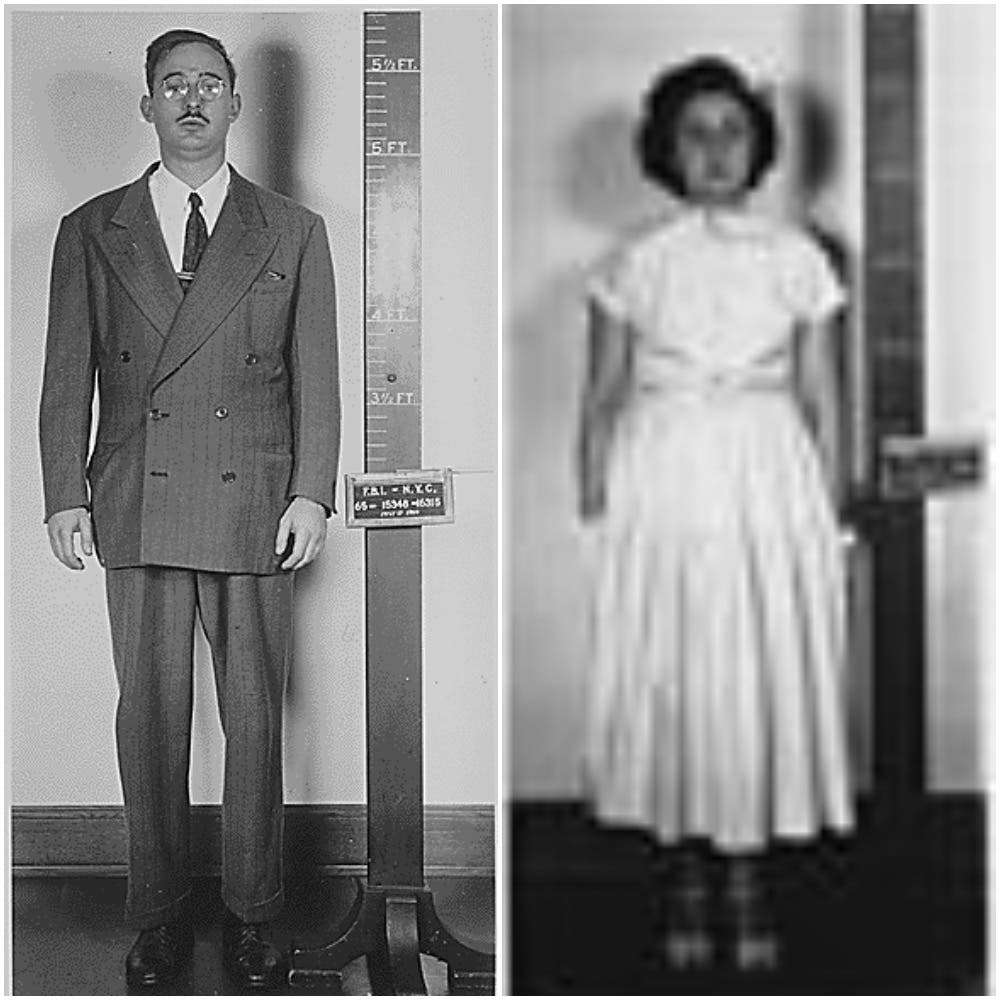
In terms of family history, this was not the only time something like this would play out. There would be times she would have to nag him to get something done. It wasn’t that he was inattentive, it was just sometimes he needed to be pushed a little. It was something he would relate to me as I was growing up and he would push me to focus — sometimes successfully, sometimes not so much. But that was never his fault.
Lane asked if my grandfather had told her that they had already left for Mexico.
“Yes,” she said. “He said that they had departed when he left their house, and I kind of mentioned that I thought they were rather lucky, that they could get a vacation, since we kind of felt the need for one ourselves.”
Lane moved on to wanting to know if my grandmother had ever been a member of a communist cell while living in Washington, D.C., while my grandfather was working for the Navy.
“I certainly did not.”
“You did not?”
“No, I did not.”
“Are you sure?”
“I am positive.”
Lane turned up the pressure. “Now, I don’t say that that question incriminates you, and if you can answer it I suggest that you answer it.”
“As far as I am concerned, I can answer it.”
“You didn’t belong to the housewives cell down there?”
“Absolutely not.”
“You didn’t?
“No.”
“Are you sure?”
“I am positive.”
Lane then asked if she had told the FBI agents that she was a member of the Communist Party while living in Long Beach, California (this is where my mother was born).
“Well, I went to one or two meetings,” my grandmother admitted. “I recall consenting to join it. And so on, and then I recall indirectly hinting to my husband that I had decided to join it, and his getting quite furious, and saying if I wanted to do anything about the war effort I should loan the car out to women, to roll some bandages or get them to give some blood, and it was much better; that I should just not think in those terms, and he didn’t approve of it, and so on.”
The day after — or soon after — my grandfather expressed his anger on the topic, my grandmother called the woman at the Communist Party and “told her to just forget the whole thing.”
Lane then went through a series of variations on the question of membership, asking if she was the member of any number of cells including the Navy Department cell and the Communist Party in the Bronx.
It then turns out that when she briefly belonged to the Communist Party in Long Beach, she had joined under the name Sylvia Tucker — Tucker being her mother’s maiden name.
“I didn’t want anyone to know about it,” she told Lane when he asked why she didn’t use her real name.
He wanted to know if she was ashamed.
“Not ashamed. But I was not absolutely certain it was the right thing to do.”
Lane returned to the letter from Sobell, asking my grandmother if she remembered that when she was first interviewed by the FBI she had denied that my grandfather had received a letter.
She then disagreed with that assessment and painted a picture that would make anyone wonder what exactly the FBI had been hoping to accomplish — if her memory is accurate.
“(The FBI agents) came in just after I had gotten home from my mother's house, with my nephew and the two kids, at about five o’clock; and they came in and I had to get dinner ready. The kids were yelling because they wanted to watch the cowboy show, or whatever it was, on television, and there was complete and utter confusion, as they probably well know; and they were asking me about some letter, and frankly at that point I didn’t know what in the world they were talking about.
“Certainly, any — it just hadn’t struck me that in any way it was significant, to me or anybody else. The scene was one of complete bedlam, and I finally had to take them into the kitchen while I made dinner, to talk to them.”
“I am just trying to find out why the letter was thrown away,” Lane finally said, returning to my grandmother’s assertion.
The answer she gave illustrates a battle she fought, unsuccessfully, for decades. While it would be too strong to call him a hoarder, he was a collector. When we moved him out of his house, there were so many boxes of everything — from papers to screws; several kinds of screws, each with their own container.
The two things that were most important to him were his ticket from the Fischer-Spassky World Championship Chess Match from Reykjavik in 1972 and his summons to appear before the grand jury investigating the Rosenbergs.
“I throw everything out that I consider excess baggage,” my grandmother told the prosecutor. “I regularly clean off the desk, because my husband is a great accumulator, and I have to battle with him perpetually about these things.”
Lane asked her about her Community Party membership leading to my grandfather being deemed a “security risk” and being fired by the Navy.
“And to this day you haven’t told him that you did?”
“No.”
Lane then tries zeroing in on the meeting she attended in Long Beach - this was seven years earlier, and she didn't remember the name of the bookstore where the meetings were held. She did not remember the names of other women who were there, women my grandmother said she never got to know in her brief membership seven years earlier.
This did not make Lane happy.
“I am a little disappointed with your testimony,” he told my grandmother. “To me, from what I have heard, and in the light of other testimony that has been adduced before this body, the conclusion seems inescapable that you have told some untruths before the jury and are subject to perjury.”
“Well,” my grandmother tries to interject.
“I am suggesting to you that the time to purge yourself of that perjury is right now….I am giving you this opportunity.”
“Well, if I can’t remember the names of people whom I saw once or maybe twice, what can I do about it?”
“It is your problem, Mrs. Danziger.”
OCTOBER 18, 1950 - MY GRANDFATHER
My grandfather was back in front of the grand jury in mid-October. In the meantime, there had been another superseding indictment with more charges against the Rosenbergs. Morty Sobell was now very much part of the case, and by the time my grandfather returned, Lane was ready for him.
He quickly returned to the subject of the letters that Sobell had written to him and whether my grandfather had ever written to Morty’s sister-in-law, Edith Levitov.
“Did you ever correspond with Edith Levitov?” Lane asked him.
“As well as I can recall, I never did.”
Lane asked him the question a few more times; each time my grandfather said he had not written to Levitotv.
“Well, if I asked you to do something now, would you do it?” Lane wants to know. “If I asked you to address a letter to her would you do it?”
My grandfather grudgingly agreed.
Lane then showed him two letters - one written July 2 and the other written July 11 - addressed to Levitov.
“Do you deny or do you admit that is your handwriting?”
“I say, it looks like my hand.”
“Do you admit that you sent that letter?”
“I do not recall ever sending this letter.”
There was a little more back and forth.
Did he address the envelope?
He didn't remember addressing the envelope but it certainly looks like his handwriting.
Then there was a brief recess during which Lane and my grandfather talked alone.
“Outside, I talked to Mr. Danziger,” Lane tells the jury. “I told him that in my opinion I thought he was not being open and above board to the jury. I told him that I wanted him to cooperate. I told him if he didn't cooperate, the evidence was such that the grand jury might indict him, and I think that Mr. Danziger, with a few ill-chosen words, was under the impression I was threatening him out there.
“I want to be certain that there was no evidence of any threat on my part when I spoke to you in that outside corridor. I want you to understand that.”
At the same time, Lane made it clear he was doing just that — threatening him. He said if my grandfather could not explain the letters addressed — apparently by him — to Edith Levitov, “the grand jury with any intelligence might very well include you in an indictment feeling that you were part of the whole scheme.”
There was some more back and forth. By this point, it was clear that my grandfather has passed along letters from Morty Sobell to his family. In answer after answer, he hid behind "I don’t recall."
Lane came across as losing his patience.
“Sobell has been indicted for a very serious crime and you are a man who was with him the night that he left. You are the last person that was with him of his friends,” Lane says. “The letter is sent by you, an envelope apparently is sent by you to his sister-in-law, and you disclaim all knowledge.
“I’m giving you a chance to explain, if you wish to, I’m bending over backwards to give you a chance. Conceivably, he may have asked you to forward a letter for him. That in itself probably means nothing, but it means a lot if you don’t want to explain it.”
My grandfather — exhibiting a trait that we would see forever — continued to be stubborn. He would not move beyond that he did not recall.
Finally, Lane told him: “Your situation is extremely precarious. I don’t know what the grand jury is thinking, but as far as I can perceive, there is only one reason why a man refuses to cooperate with his government, and that is because he himself is vulnerable.
“I’m trying to impress upon you — I’m trying to show you the light. You’ve got a group of reasonable people here who know that sometimes people make mistakes in being associated with other people. If you are going to persist in the tack which you have taken, then your fate is, in my opinion, in the hands of the grand jury.”
My grandfather responded with what can only be described as naiveté. He really believed that Morty was being swept up in something in which he had had no part. He wanted to protect his friend and really believed that the grand jury would recognize that; that they would recognize what he saw as the good in himself.
“I know, Mr. Lane, that the grand jury are my friends. I mean they are people I might meet on the street, and I also know the prime interest in life rests around my family and kids. It is true that this case may be your full-time job. It isn’t mine and I don’t pay as much attention to every detail as you probably would.
“In other words, I have a life to live. I have a job. I have kids to bring up, and when I get home in the evening, they kid around with me. I probably don’t have a chance to talk to my wife about anything. And those are my prime interests.
“My life - I have always been faithful to the government, I did a good job for them and I am going to continue to live in this, my country. I know I’m going to live a free man because my conscience is clear. Now, these people, as I say, they are just — I might be sitting there some day when someone else is sitting here.”
And with that, Lane let my grandfather go for the day.
OCTOBER 18, 1950 - MY GRANDMOTHER
While he was done with the grand jury, my grandfather could not go home right away. Not yet. My grandmother was called in right after him.
“Mrs. Danziger,” Lane said. “Your husband just appeared before the grand jury.”
He told her that he wanted to talk about Morty Sobell's sister-in-law, Edith Levitov. But before going into detail, he made it clear the stakes were high.
“Before I ask you that question, how many children do you have?”
“Two.”
“How old are they?”
“One is going to be four next week and one -“
“A girl and a boy?”
“The boy is four.”
“Your husband is greatly devoted to those children?”
“Yes, he is.”
“Do you think he cares more for the children than he does for the Sobells?”
“I definitely do.”
“Can you give me any reason why he doesn’t want to cooperate?”
“No.”
“Do you suppose you can get him to cooperate, to tell the truth?”
She said she hopes so. He turned up the heat a little, reminding her that she had said she had thrown out the one letter that she knew that Morty Sobell had sent my grandfather.
“I am pretty sure I threw it out,” she said.
“You couldn’t have thrown it out because I have the letter,” Lane says.
“Then I didn't throw it out….When the agents asked about the letter, I hunted all over the house for it, and when I did not find it, I assumed I threw it out.”
“You assumed. Now you are certain you did not throw it out.”
“How can I be certain of anything?”
“I have the letter.”
“Then you have the letter. I was just certain I did. I’d have no reason to keep such a letter.”
Lane showed her six envelopes and asked her to identify the handwriting as my grandfather’s. She generally did, adding a little bit of color, saying, “He is a very sloppy writer”… that he usually “types things… he has very bad handwriting.”
Lane wanted to know, “Is there any reason why your husband should be shielding Sobell?”
“No,” my grandmother said. “I think my husband ought to take Sobell and choke him.”
“Why?” asked the grand jury foreman.
“Because how can anybody let somebody come out to his house when he knows he is running away?”
At this point, my grandmother was apparently crying.
“Mrs. Danziger, those tears don’t — I don’t think they affect the jury at all,” Lane said. “What we want to know from you, what is more effective than tears, is why your husband acted as a mail drop for the Sobells. If you can explain this satisfactorily, I think we can disband. And if you can’t, I’m going to ask the jury to take appropriate action. Now, do you have an explanation?”
“He would be a damned fool if he ever did.”
“That’s the way you put it. Then you think he is being rather silly in what he is doing?”
“To me, it would be the most ridiculous thing I ever know of.”
The grand jury foreman tried to reassure my grandmother, saying they are not trying to get anyone in trouble, that they just want to help.
And, with that, she was dismissed and told that she and my grandfather are to come back one week later.
FEBRUARY 7, 1951
For some reason, they don’t come back. Not until the following February, when only my grandfather comes back before the grand jury. It’s not clear why there was a delay other than that’s fairly normal in grand jury investigations. Sometimes witnesses are put off until testimony from others can be obtained.
As for why my grandfather had to come back and not my grandmother, the thinking is that he may have made it clear ahead of time that he would be forthcoming.
Also, while Lane and the prosecutors had been interested in my grandmother as a target — she had been accused by another witness of having belonged to the housewives cell — her accuser, they quickly discovered, had perjured herself and, as a result, they would not be able to use her as a witness.
On February 7, 1951, my grandfather was back. It was a much shorter appearance in which he admitted writing to Morty using a fake name for him and passing letters along to his family. And with that, seemingly, all there was to do was wait and see if the other shoe would drop.
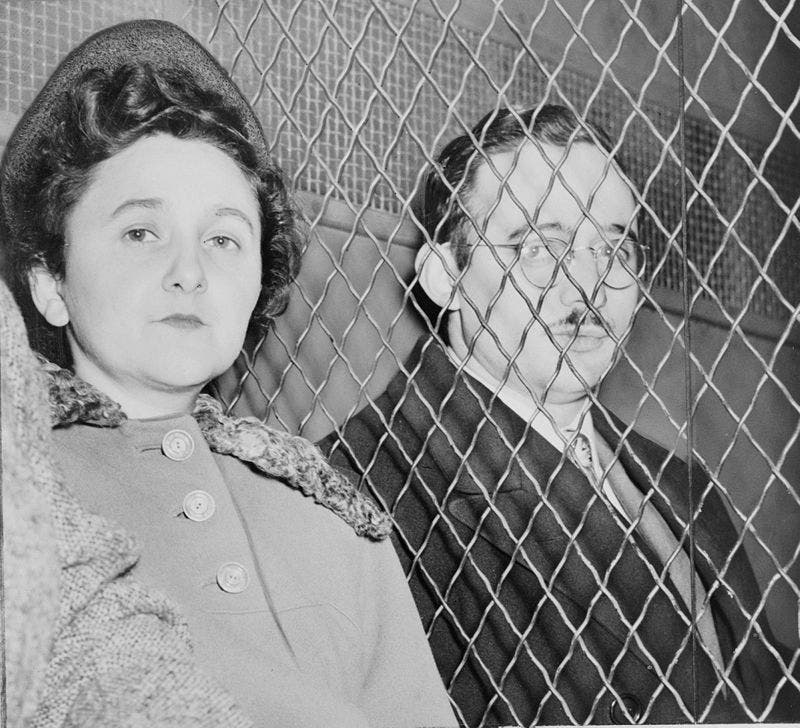
About one month later, the Rosenbergs and Sobell were on trial. And within a few months all had been convicted. The Rosenbergs would be sentenced to death, and Morty to 30 years behind bars. He served the first few years of his sentence at Alcatraz.
AFTERMATH
It was far from the end of the story.
Even though Morty Sobell went to jail and the Rosenbergs had been executed, the FBI kept eyes on my grandfather for more than a decade. They finally closed his file in the '60s.
For years, people maintained the innocence of the Rosenbergs. It turned out to not quite be the case.
Declassified files from both the United States and Soviet Union made it clear that Julius Rosenberg was a spy. At the same time, it became clear that Ethel Rosenberg, while maybe aware of some of her husband’s activities, played a lesser part than described by prosecutors at the time.
The main evidence against her came from her brother and sister-in-law, David and Ruth Greenglass.
At trial, David Greenglass, who had confessed to passing the Soviets secret information, testified that Ethel had typed up Julius Rosenberg’s notes, which that were then passed along to the KGB.
In his summation to the jury, the prosecutor said that Ethel had “struck the keys, blow by blow against her own country in the interests of the Soviets.”
That turned out to be a lie that David Greenglass finally admitted to in conversations with New York Times reporter Sam Roberts.
And when the grand jury testimonies were finally released, there had been no mention of Ethel typing notes. It had been invented by prosecutors and Greenglass.
The biggest blow against Julius Rosenberg not being guilty, however, came in 2008.
Morty Sobell, speaking to Sam Roberts, not only admitted that Julius Rosenberg had been a spy, he confessed that — despite decades of denials — he had been one as well.
My grandfather, feeling betrayed, was furious. He never spoke to Morty Sobell again.
Cover: Family photo of my grandparents. All other photos from the National Archives.
Get more local news delivered straight to your inbox. Sign up for free Patch newsletters and alerts.