Politics & Government
Supreme Court Upholds Offensive Trademarks, Sides With The Slants
The Supreme Court decision is a victory for the Portland-based band and, likely, for the Washington Redskins, who latched on to the suit.


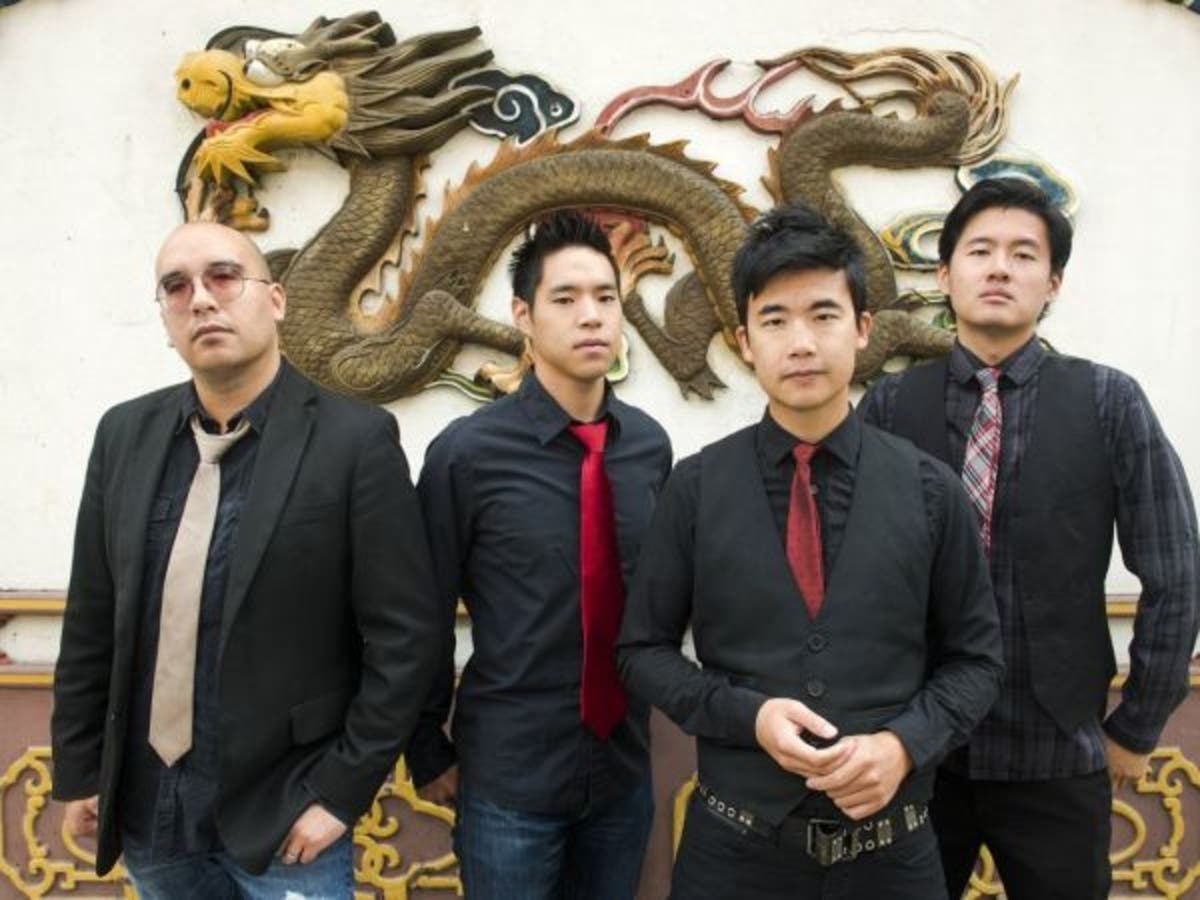
The United States Supreme Court handed a major victory on Monday to a Portland-based band, ruling that the government's trademark office had no right to deny them the chance to trademark their name. The Slants have been fighting the trademark office for several years in a case that has been embraced as a First Amendment fight.
"I am very happy," the band's bassist and founder, Simon Tam, told Patch early Monday. "I haven't had a chance to read the decision yet and see what they actually said."
The federal government's Patent and Trademark Office had denied them a trademark, saying the government had a right to deny trademarks deemed offensive.
Find out what's happening in Portlandfor free with the latest updates from Patch.
"The disparagement cause violates the First Amendment's Free Speech Clause," Justice Samuel Alito wrote for the court. "Contrary to the Government's contention, trademarks are private, not government speech.
"It offends a bedrock First Amendment principle: Speech may not be banned on the ground that it expresses ideas that offend."
Find out what's happening in Portlandfor free with the latest updates from Patch.
The court's ruling means the band — a group of Asian-Americans who chose the name to seize it back from bigots — have a right to call themselves whatever they want.
It also means that organizations such as the Washington Redskins, who had latched on to The Slants' case, will be able to keep their name.
Tam was in Washington in January as lawyers for the band appeared before the court.
"No one goes into music expecting to one day be getting ready to appear before the Supreme Court," Tam told Patch at the time. "But that’s where I am.
"I just hope to be able to go back to focusing on playing music."
Tam said the fight was about free speech.
"It’s about self-identity." he said "It’s about not letting others, including the government, define who you are."
The dispute is over a decision by the U.S. Patent and Trademark Office in 2011 to deny Tam’s request to trademark the band’s name. Their reason? The name was “disparaging to persons of Asian ethnicity.”
In rejecting their application, the office had cited a quote from urbandictionary.com and a photo of Miley Cyrus pulling her eyes back.
Every member of the band is of Asian descent. Tam is the child of Chinese and Taiwanese parents. Another member was born in China. Two others are Japanese-American. Tam started the band, recruiting other Asian-Americans, not just to play music but to fight stereotypes and discrimination.
"We want to take on these stereotypes that people have about us, like the slanted eyes, and own them," he said in court papers.
When they got the news of the rejection, they had just finished a tour playing more than 100 events for Asian-American groups. All the profits from their latest album had gone to help Asian women with cancer.
"We picked the name to take the word back," said Tam, adding that they were inspired, in part, by the movie "Kill Bill." "Our music is about who we are."
Tam and his bandmates went to court, and in December 2015, the Federal Court of Appeals ruled in their favor.
"With his band name, Mr. Tam conveys more about our society than many volumes of undisputedly protected speech," Judge Kimberly Moore wrote in the majority opinion. "With his band name, Mr. Tam makes a statement about racial and ethnic identity.
"He seeks to shift the meaning of, and thereby reclaim, an emotionally charged word. He advocates for social change and challenges perceptions of people of Asian descent. His band name pushes people. It offends. Despite this—indeed, because of it—Mr. Tam’s band name is expressive speech."
The government disagreed and appealed the case to the Supreme Court.
The Justice Department says the Trademark Office is not restricting free speech. It says what the law does is allow the government to not be associated with “racial epithets, religious insults and profanity.”
Tam disagrees, arguing there is a difference between speech that some people find offensive and hate speech.
"For there to be free speech, you also have to be able to have speech that some might find offensive,” he said. "People also need to be aware of the dangers of opposing some speech because one day they may find themselves on the other side."
He also argued that when the government starts restricting free speech, it’s often communities of color that are targeted.
The band’s push to overturn the Patent and Trademark Office decision led to an ironic twist in which the Washington Redskins, who lost their own battle with office, have associated their case with that of The Slants.
Tam takes issue with the association, often pointing out the differences between the cases, notably that while Redskins “always has been used as a racial slur and has a long history of demeaning Native Americans” and "has a long history of oppression, the football team treats the people as mascots.” On the other hand, he said, "slants" has been used by Asian American activists for decades to present a bold portrayal of their culture.
"Simon Tam and his band members are not disparaging Asian-Americans," their lawyers argued in their filing to the Supreme Court. "They are doing precisely the opposite; they are appropriating a slur and using it as a badge of pride. Simon Tam is not a bigot; he is fighting bigotry with the time-honored technique of seizing the bigots’ own language.
"'Slant' can certainly be used in a disparaging way, but Tam is not using it that way. Only an uninformed philistine could find the band’s name disparaging."
Another irony of the situation is that while The Slants find themselves fighting the government on one hand in the form of the Justice Department and the Patent and Trademark Office, it is the same government that has been among their biggest supporters.
The Defense Department has sent them overseas. The band was part of a White House anti-bullying initiative.
"We’ve done a lot with the government," he said. "We’re proud of what we’ve done. We’re ready to focus on the music."
And that includes the band’s upcoming album: "The Band Who Must Not Be Named."
Photo courtesy of The Slants
Get more local news delivered straight to your inbox. Sign up for free Patch newsletters and alerts.