Health & Fitness
Iranian Baby With Heart Defect Arrives In Portland Amidst Immigration Ban
Four-month-old, Fatemeh, caught up in the immigration ban, makes it to Portland for what they hope will be life-saving surgery.


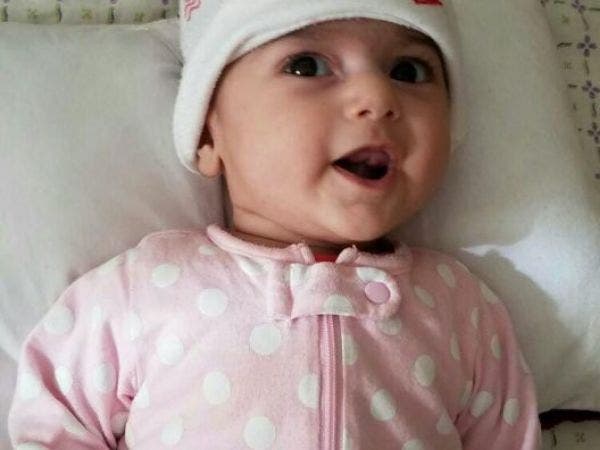
Baby Fatemeh Reshad, the 4-month-old Iranian infant with a heart defect who was caught up in President Trump's executive order limiting the ability of people from seven predominantly Muslim countries to come to the United States, arrived in Portland Tuesday afternoon, the hospital announced.
Fatemeh - who was born with a complex, life-threatening condition known as transposition of the great arteries, in which her blood doesn't make it to the lungs so oxygen never gets to her body - was supposed to arrive last week just as the ban went into effect.
Thanks to the work of immigration attorneys who volunteered their time as well as the efforts of the Oregon and New York congressional delegations, she was granted an exemption and made her way - with a guardian - to the United Arab Emirates and then Portland.
Find out what's happening in Portlandfor free with the latest updates from Patch.
Once admitted, doctors immediately started conducting diagnostic studies. They say the early results are promising.
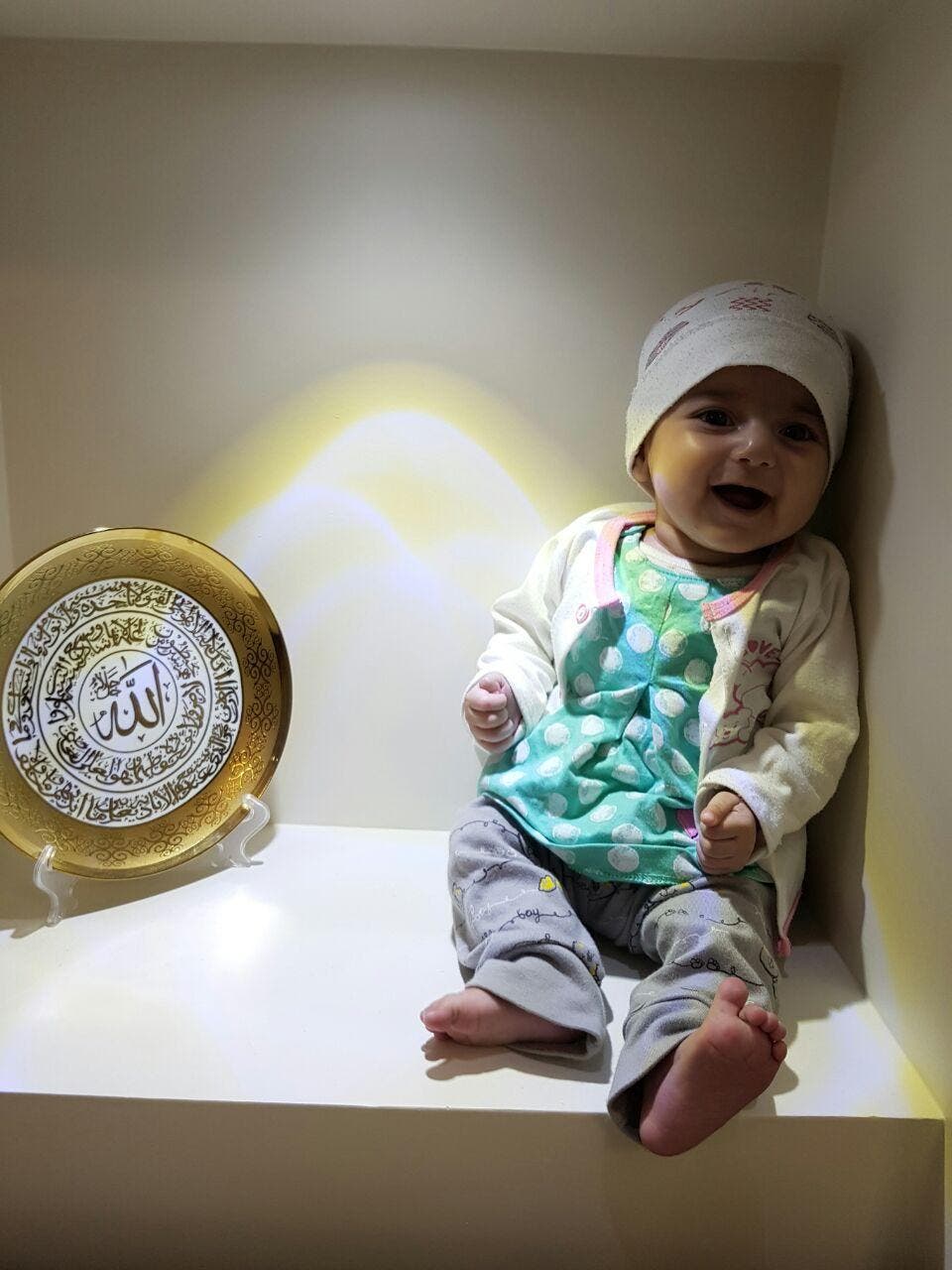
"Fatemeh looks well. Our tests this morning have confirmed her diagnosis and the urgent need for treatment,” said Dr. Laurie Armsby, interim head of the Division of Pediatric Cardiology at the OHSU Doernbecher Children's Hospital.
Find out what's happening in Portlandfor free with the latest updates from Patch.
"As we suspected, her heart condition has resulted in injury to her lungs, however the studies today indicate that she has presented to us in time to reverse this process,” she said.
The immigration lawyer who spearheaded the effort, Jennifer Massey, said the effort to bring Fatemeh to Portland involved many people.
"This was truly a team effort to beat the clock, given the medical and legal hurdles Fatemeh was facing,” said Massey.
She said that Amber Murray - an immigration attorney in Washington, D.C. - as well as volunteer medical coordinator Dr. Mary Pao Seidenman, and the International Refugee Assistance Project in New York were instrumental in that effort.
Fatemeh's rare form of congenital heart failure - it only affects two in every 10,000 newborns - is basically a death sentence without surgery.
"This is a fatal condition without treatment," Armsby said at a press conference on Saturday.
Armsby and her colleagues said that while there are excellent hospitals in Iran, this sort of condition requires a higher level of care - one that OHSU's Doernbecher's Children Hospital is prepared to offer.
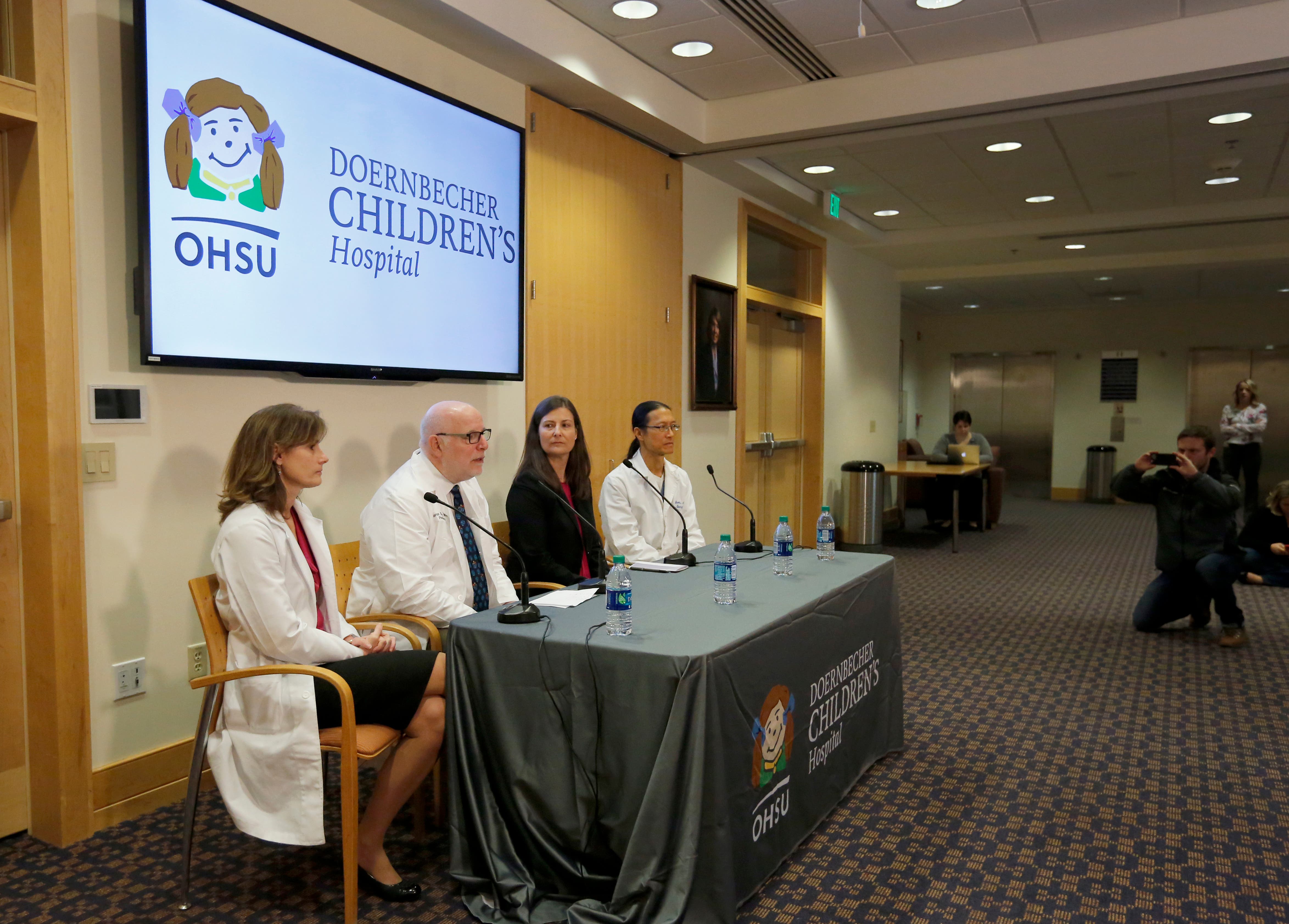
Dr. Irving Shen, the head of Pediatric Cardiothoracic Surgery at Doernbecher, say that while the defect is rare, it is not an uncommon procedure.
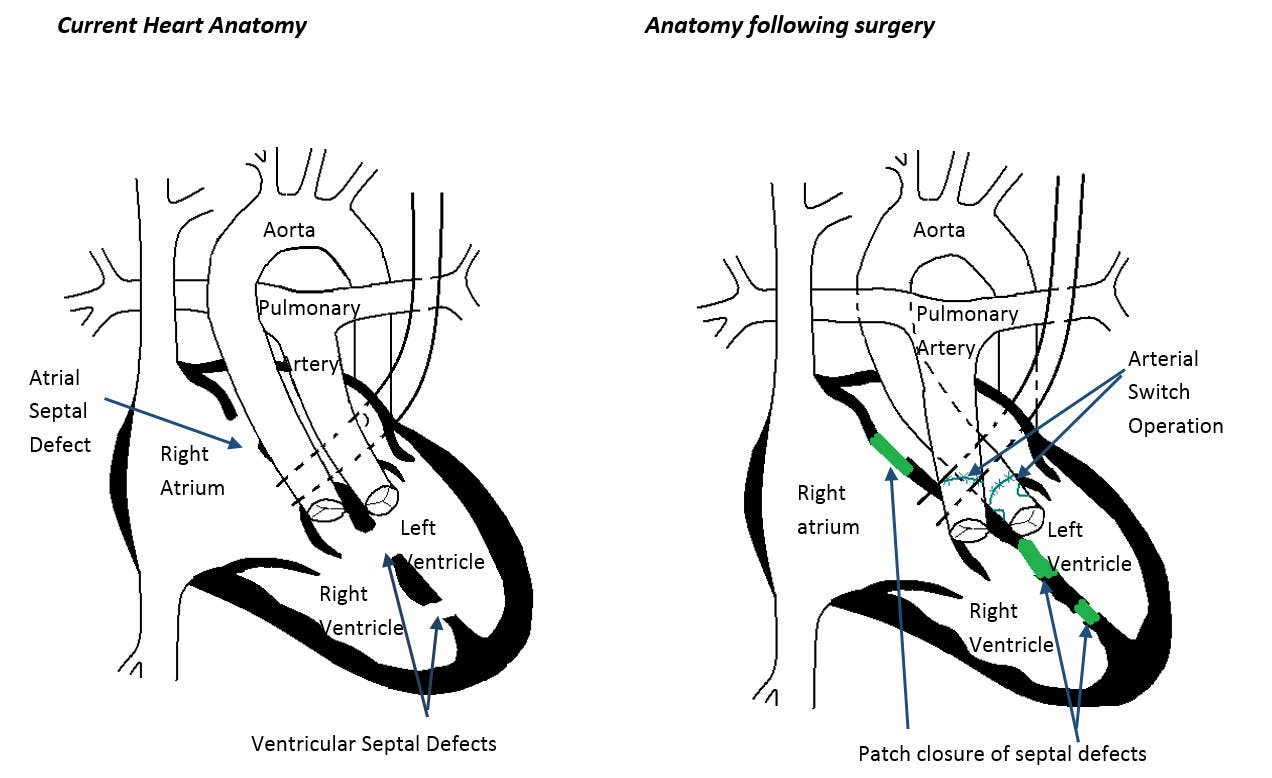
Shen, who will perform the procedure, says that they performed three during the Christmas break and between six and 10 a year. The whole procedure, from the time the child enters the operating room until the time the child leaves, lasts about six hours, though the actual repair takes about 90 minutes.
If Fatemeh had been born in the United States, the defect would have been diagnosed and treated immediately. If the situation had gone on for months as opposed to weeks, however, Armsby says it could have become irreversible.
Want to get more Portland news? Sign up for our free newsletter:
While New York's Mount Sinai Hospital - another institution with experts in this condition - OHSU was chosen because Fatemeh's grandparents and uncle live in Portland.
"Families are as important as doctors and nurses to help children survive and thrive," said Dr. Dana Braner, the chief physician at Oregon Health Sciences University Hospital. "This child coming here to Portland where her grandparents live and her uncle lives, will give the child a chance to be supported by the family.
"We believe that's a good thing."
Armsby agreed.
"Having a family nearby to give aid and comfort to a child we believe is extraordinarily important for a child to recover," she said.
The hospital stresses its doctors are waiving their fees and the hospital is donating its services - as it says for thousands of children every year. It also says that no public funds will be used for her care.
"OHSU Doernbecher provides a significant amount of uncompensated care every year to ensure that the ability to pay does not prevent children from accessing OHSU's services," the hospital said in a statement. "We are fortunate to receive donations from the community to offset some of our uncompensated care costs."
OHSU says that individuals who would like to ensure their funds are used solely to benefit Fatemeh and her family can visit generosity.com. A page has been set up by Murray and Seideman. Those gifts are not tax-deductible.
The hospital also says that tax-deductible gifts to the Doernbecher Children's Hospital Foundation benefit all children and families in need. The Doernbecher Patient Care and Comfort Fund supports costs associated with medical care, lodging and travel of OHSU Doernbecher families in need. Monetary donations may be made online, or a check may be sent to: Doernbecher Children's Hospital Foundation, 1121 S.W. Salmon Street, Suite 100, Portland, OR 97205
Braner says they are proud to be helping Fatemeh — that giving her care is in keeping with Doernbecher’s 90-year history.
"We have never turned a way a child and never expect to," he said. "Every child is amazing. Every child deserves the best care. Every child adds something to the world that’s never been added before.
"We are here to take care of every child that we can."
Photos courtesy OHSU
Get more local news delivered straight to your inbox. Sign up for free Patch newsletters and alerts.