Politics & Government
Wyden Blasts Plan To Reopen CIA 'Black Site' Prisons
It "would be illegal, contrary to our fundamental American values and profoundly destructive to our national security," Wyden says.


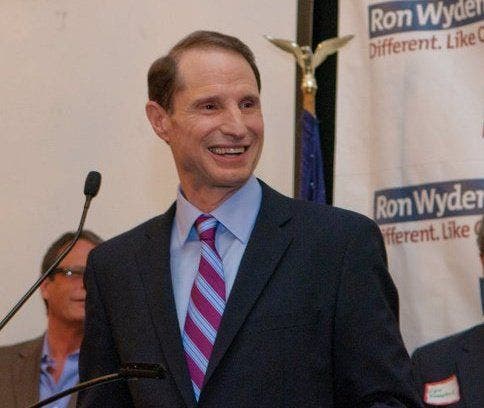
An executive order being considered by the Trump administration that would essentially allow the CIA to reopen so-called "Black Site" prisons overseas "would be illegal, contrary to our fundamental American values and profoundly destructive to our national security," according to Oregon Sen. Ron Wyden, a member of the Senate Select Committee on Intelligence.
The proposed order — first reported by The New York Times — would overturn executive orders issued by President Obama in 2009 that ordered the closing of the prison at Guantanamo Bay and the CIA prisons.
White House Spokesman Sean Spicer refused to comment on the proposed order Wednesday, saying "it is not a White House document. I have no idea where it came from."
Find out what's happening in Portlandfor free with the latest updates from Patch.
The order would say that the United States would keep Guantanamo open and, in addition to Al Qaeda fighters, include people from ISIS as among the "enemy combatants" that could be held there.
It would also revoke an order by Obama that limits interrogations to rules spelled out in the Army Field Manual.
Find out what's happening in Portlandfor free with the latest updates from Patch.
The order would have Trump receive a recommendation "whether to reinitiate a program of interrogation of high-value alien terrorists to be operated outside the United States and whether such program should include the use of detention facilities operated by the Central Intelligence Agency."
Wyden says that these deliberations by the administration reinforce his belief that the Senate Intelligence Committee's report on torture be declassified and released to the public.
"I am absolutely committed to fighting any actions that would return us to the dark days of torture or create religious tests to enter the United States," Wyden says.
"There is a bipartisan coalition in Congress that will oppose these abhorrent proposals and any attempts to circumvent or change the law."
Earlier in the day, Trump told ABC news that torture "absolutely works" but said that he would defer to his Cabinet about whether or not to reinstate the practice as a policy matter.
Asked about his previous endorsement of waterboarding, Trump said, "When ISIS is doing things that nobody has ever heard of since medieval times, would I feel strongly about waterboarding? As far as I'm concerned, we have to fight fire with fire."
He went on to note, though, that he will defer to Gen. James Mattis, his pick for secretary of defense, and Mike Pompeo, whom Trump made director of the CIA.
"But I have spoken, as recently as 24 hours ago, with people at the highest level of intelligence, and I asked them the question: Does it work? Does torture work?" Trump said. "And the answer is: 'Yes, absolutely.'"
Read more: Could The Military Disobey A President Trump?
If Pompeo, Mattis and his team want to engage in torture, Trump said, he would work toward that end within the bounds of the law.
This is something of an odd statement, given that torture is expressly forbidden by both American law and international law. Torture is defined in the U.S. statutes as:
The act of a person who commits, or conspires or attempts to commit, an act specifically intended to inflict severe physical or mental pain or suffering (other than pain or suffering incidental to lawful sanctions) upon another person within his custody or physical control for the purpose of obtaining information or a confession, punishment, intimidation, coercion, or any reason based on discrimination of any kind.
It's precisely for this reason that during President George W. Bush's administration, when waterboarding was used, officials went out of their way to argue that waterboarding does not constitute torture.
In a statement, Republican Sen. John McCain of Arizona, previously a prisoner of war, came out against the president's pro-torture position.
"We are not bringing back torture," the statement said."The President can sign whatever executive orders he likes. But the law is the law. We are not bringing back torture in the United States of America."
Others have expressed serious doubts about the efficacy of torture, despite Trump's claims to the contrary, over and above the legal and ethical objections.
When the Senate Select Committee on Intelligence investigated the CIA's "harsh interrogation tactics" under Bush, it found that the agency's claims about incidents of effective torture did not stand up to scrutiny. (The CIA, unsurprisingly, disputed these findings.)
Photo: Senator Wyden's office
Get more local news delivered straight to your inbox. Sign up for free Patch newsletters and alerts.