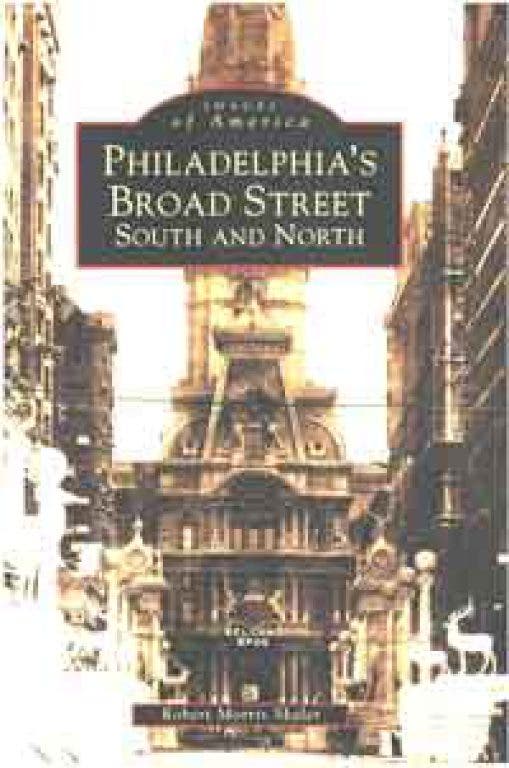

A Slide Lecture by Forensic Architect
Robert Morris Skaler
Following his lecture Mr. Skaler will sign copies of his book: Philadelphia's Broad Street South and North.
Register for this free program in the Library Office, call 215-885-5180, ext. 15, email kburnham@mclinc.org or Register online here.
Find out what's happening in Abingtonfor free with the latest updates from Patch.
South Broad Street began to develop as a cultural street with the building of the ornate Academy of Music in 1857. After the Civil War the trend continued with the construction of the Ridgway Library, Union League, Horticultural Hall, and the Broad Street Theater. By 1910, South Broad Street had become known as “hotel row”, with five prominent hotels within a few blocks of one another. South of hotel row was “millionaires’ row”, whose owners lived extravagant brownstone mansions.
Find out what's happening in Abingtonfor free with the latest updates from Patch.
While prosperous, North Broad Streetwas never really fashionable, as a “north” address did not have the cachet of one south of Market Street to Philadelphia’s traditional elite class ensconced around Rittenhouse Square. Perhaps to compensate for this lack of social standing, residents of North Broad Street built their houses grander than any in Center City preferring the clean “Uptown” air to that of the old Quaker City with its cramped hurley-burley. In addition, it was the home of Temple University and the Wagner Free Institute. North Broad Street was also the center of social life of upper class German Jews who built four major synagogues, and the impressive Mercantile Club on Broad below Jefferson Street.