Neighbor News
Feb. 25 to April 24: Arcadia University Art Gallery Presents "Pati Hill: Photocopier"
Exhibit to highlight Hill's black and white prints made between 1974 and 1983

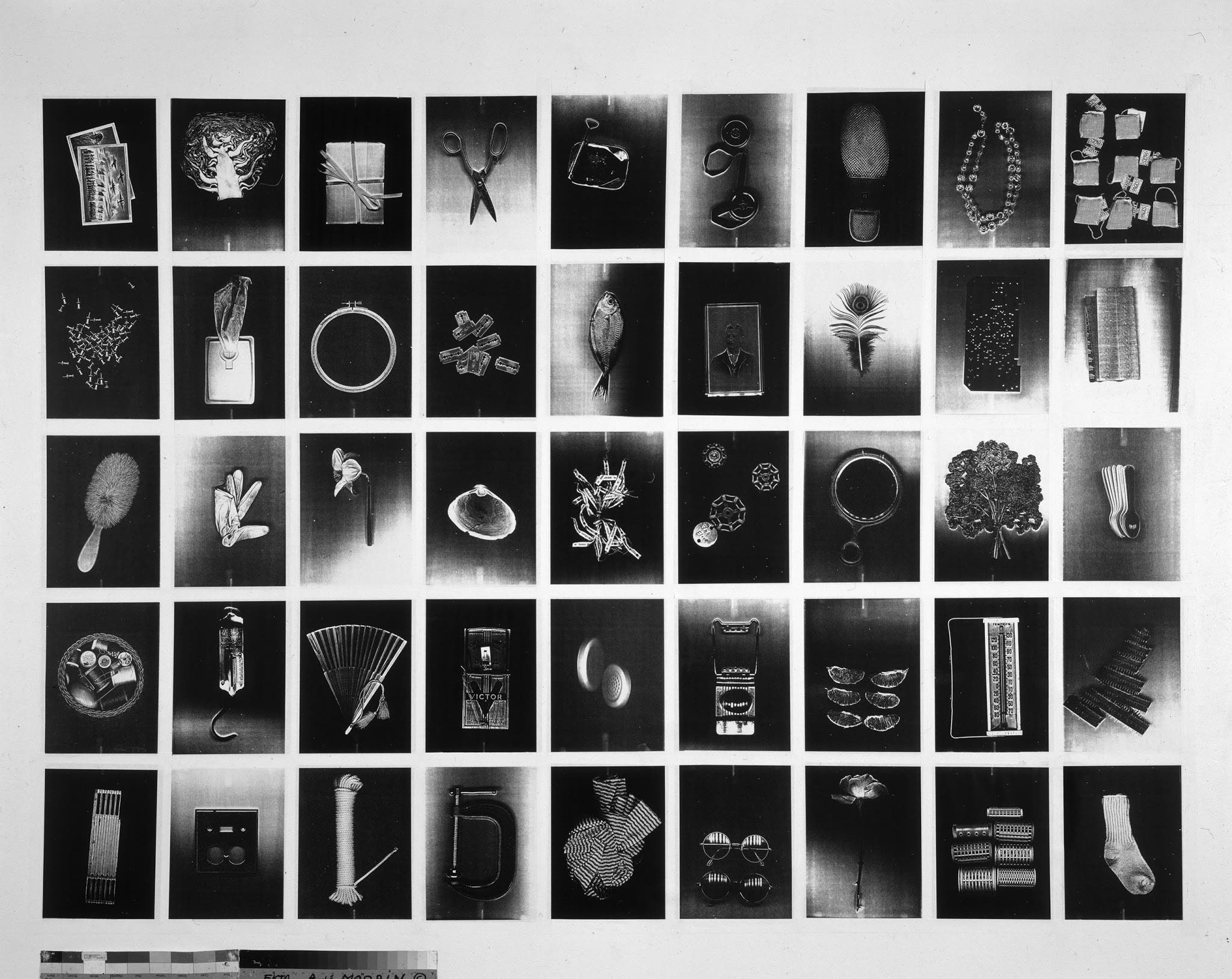
Arcadia University Art Gallery is pleased to present “Pati Hill: Photocopier, A Survey of Prints and Books (1974–83)” from Feb. 25 to April 24. Featuring more than 100 works on paper, this exhibition explores the first decade of the singular and cross-disciplinary practice of Pati Hill (1921–2014). Untrained as an artist, Hill was a published novelist and poet before she started to experiment with the copier. She was not alone in recognizing the creative possibilities of what she called “a found instrument, a saxophone without directions.” However, her literal approach to the medium—“having come to copying from writing”—coupled with her lucid texts about it, have proved prescient, especially regarding its potential for self-publishing and image-sharing that we take for granted today.
Unlike many artists who flirted with this instant-duplication process—a medium whose affordability and use of plain paper made it revolutionary—Hill sustained her commitment to xerography (Greek for “dry writing”) for 40 years, celebrating the medium’s instantaneity and accessibility as well as the way in which “copiers bring artists and writers together.” In a 1980 profile in The New Yorker, Hill remarked: “Copies are an international visual language, which talks to people in Los Angeles and people in Prague the same way. Making copies is very near to speaking.”
Hill employed the copier as both a collaborator and a muse. The inspired writing of her 1979 book, Letters to Jill: A catalogue and some notes on copying, remains a jargon-free primer on the medium and serves as a core resource for the show. The following description of a photocopier that appears on the front of the announcement of her 1978 exhibition at Franklin Furnace is also telling:
Find out what's happening in Abingtonfor free with the latest updates from Patch.
“This stocky, unrevealing box stands 3 ft. high without stockings or feet and lights up like a Xmas tree no matter what I show it. It repeats my words perfectly as many times as I ask it to, but when I show it a hair curler it hands me back a space ship, and when I show it the inside of a straw hat it describes the eerie joys of a descent into a volcano.”
The objects Hill chose to scan are visually transformed yet faithfully convey their intrinsic properties, as well as those of the copier. She appreciated the machine’s capacity to duplicate at life-scale and produce “human-vision-sized pictures” with “eye-accurate” details. She learned to favor the rich blacks of IBM’s “Copier II” as well as its flaws and shallow perception of depth, which gave the originals Hill isolated on its platen the potential to be read as symbols.
Find out what's happening in Abingtonfor free with the latest updates from Patch.
Thanks to a chance encounter on a transatlantic flight with designer Charles Eames in 1977, Hill secured a two-and-a-half year loan of this particular model, which IBM delivered to her home in Stonington, Conn. Direct access to the machine made it possible for her to copy a dead swan (found near the local beach), a process that took five weeks and resulted in a suite of 32 captioned prints that suggest a myth of metamorphosis. Hill also used the copier to modify appropriated photographs, which she sequenced into the pictorial narratives that comprise Men and Women in Sleeping Cars (1979) and extend the detached prose of her novel of familial dissolution, Impossible Dreams (1976).
Informed by a hieroglyphic symbol language she developed, much of her work from this period sought to fuse text and image into “something other than either.” Hill applied the copier as a vehicle for this research, using her prints to experiment with the conventions of the caption, the book, and the gallery exhibition. By 1979, her interest in testing the limits of the medium inspired her to “photocopy Versailles,” a project that would occupy her for the next 20 years and lead her to work with colored toner, frottage, and photogravure. A selection of initial attempts from this effort—scans of paving stones, an espaliered pear tree, and other materials gathered from the grounds—are included in the exhibition along with a sampling of her publications.
“Pati Hill: Photocopier” will be presented in the Spruance Fine Art Center and the two galleries of the Commons, marking the first time that all three of these venues will be used to stage a single exhibition at Arcadia. Major support has been provided by The Pew Center for Arts & Heritage.
The Spruance Fine Art Center is open Monday through Sunday, and the Commons Gallery is open all week. Hours and directions are available online at gallery.arcadia.edu.
Events
“Pati Hill: Photocopier” will be accompanied by a catalog and series of public programs that commence with a lecture by exhibition curator Richard Torchia at 6:30 p.m. in the University Commons Great Room preceding the 7:30 p.m. opening reception on Feb. 25.
Additional events will continue through April 24, including a lecture on March 17 at 6:30 p.m. by Michelle Cotton, director of the Bonner Kunstverien (Bonn, Germany). Cotton, who has contributed an essay to the catalog, will discuss Xerography, the international survey exhibition she curated for Firstsite (Colchester, Essex, UK), to honor the 75th anniversary of Chester Carlson’s 1938 invention of the photocopier.
For more information, including hours and directions, visit gallery.arcadia.edu.