With the lull between the flower show and spring planting comes a useful period to take stock of our gardens and yards, and of our public spaces as well.
Brad Baker is a Pennsylvania Certified Horticulturalist and, through Baker Creative in Elkins Park, has won numerous landscape awards. He agreed to share with Abington Patch readers some advice and some of the trends in the field.
“Plant the right plant in the right place,” he said. “That’s the ultimate integrated pest management (IPM) system.”
Find out what's happening in Abingtonfor free with the latest updates from Patch.
He went on to explain in how that advice is key to the future landscape.
Attention to the most appropriate plants and their placement “helps keep pest and water costs down. It means less pruning in the long run, and better proportions.”
Find out what's happening in Abingtonfor free with the latest updates from Patch.
He said that appropriate biodiversity also promotes a rich collection of natural predators, thereby reducing the chance that pest population explosions could decimate your landscape.
The science of horticulture has changed dramatically since the time Baker grew up in the agricultural Midwest. He said that basic research – including the use of the electron microscope to analyze billions of microbes in the ground – “provides huge news every day.”
Thanks to the continually developing science, new best practices are emerging to alter the way we should be tending our lands, Baker said.
For instance, he said, we used to believe that rotor-tilling the vegetable garden was helpful. Now we understand that tilling, unlike vertical aeration, destroys the interconnected tunnels, root systems and microbial infrastructures.
Baker suggested that the initial investment in horticultural expertise is cost-effective over time in the same way that preventive maintenance helps the car and preventive medicine helps the patient.
If proper planning had gone into a particular garden, said Baker, he wouldn’t have been called to rescue a yard by removing an out-of-control, 20-year-old pyracantha – a very large, thorny evergreen.
The moral of that story: In the design stage, before you plant, plan ahead and factor in plant growth and maintenance.
Storm water capture is another wise feature in today’s landscape. Trends are moving toward more architectural features to set off selected plantings. Teak, from sustainable forests, is a favorite material because it is renewable and very durable. Raised container gardens – on patios and rooftops – help protect your produce from the bane of Mr. McGregor’s garden.
Baker emphasizes that prudent, sustainable landscaping can also be beautiful.
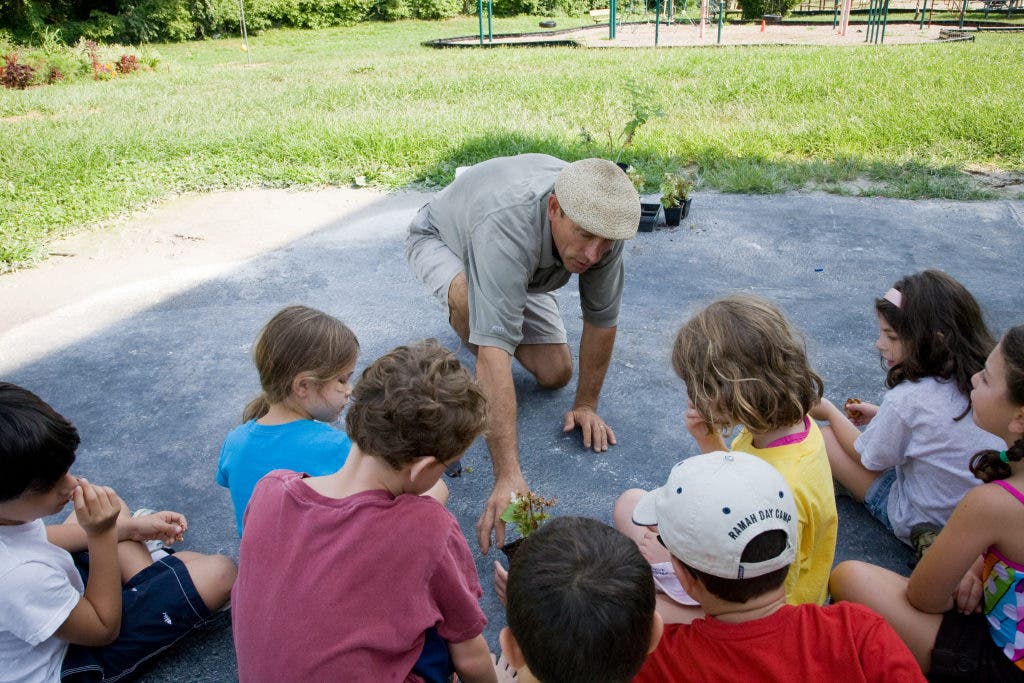
To that end, the consultant has initiated a local program called Grass Roots. Baker educates children and adults about horticulture, and engages volunteers in beautifying the public spaces along the Old York Road corridor.
Baker is also helping schools, faith organizations and civic organizations install and maintain community gardens. http://www.bakercreative.com/community.html
Research shows that gardening outdoors makes us happier and healthier, Baker said. The kids don’t have to just weed. Let them harvest and eat snow peas!
Meanwhile, the expert suggested, identify just one space or need. Think it through with good information. Perhaps you want a rose bush. Or maybe basil, or mint for your tea. “Then just do one little thing.”