Health & Fitness
Beef Recalled In PA Due To E. Coli: What We Know
Boneless beef chuck shipped to retailers and distributors in PA and 8 other states is being recalled because of E. coli contamination.


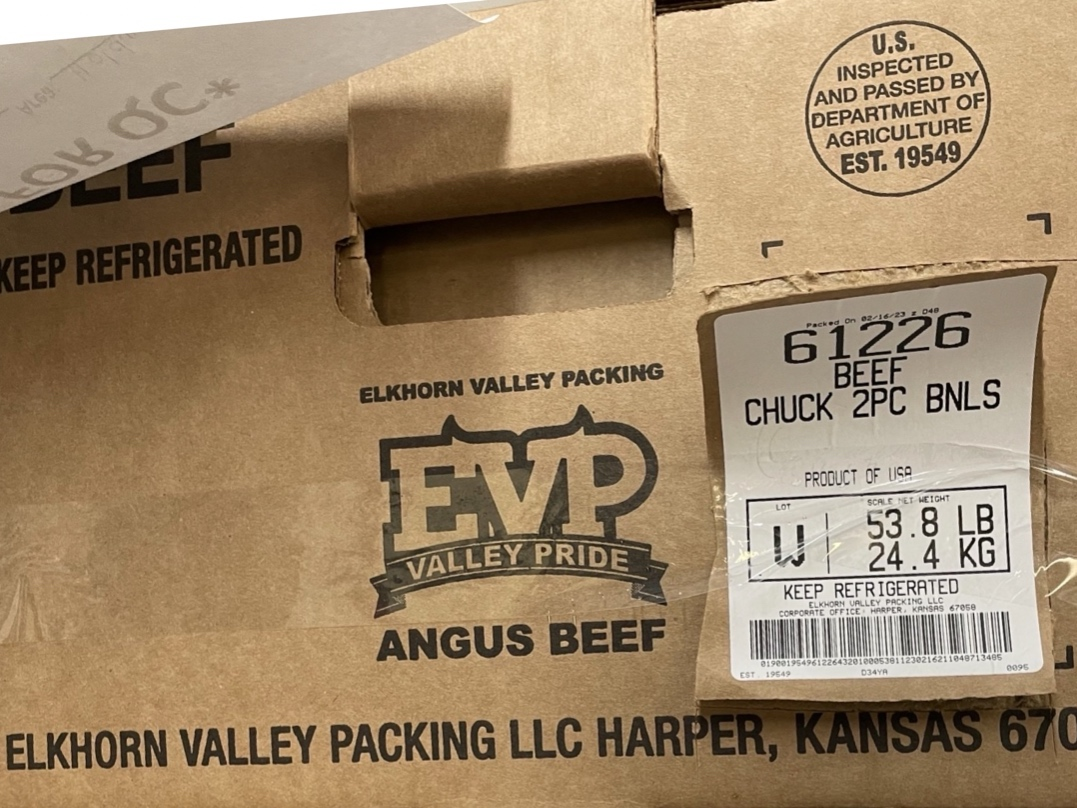
PENNSYLVANIA — Boneless beef chuck sold in Pennsylvania has been recalled because it may be tainted with E. coli bacteria, which can cause bloody diarrhea, and in extreme cases, kidney failure, according to federal officials.
Pennsylvania is one of nine states that received the meat that was packed on Feb. 16 and shipped to distributors and retailers such as hotels and restaurants according to food safety officials.
Elkhorn Valley Packing in Harper, Kansas, is recalling about 3,436 pounds of the meat that may be contaminated with Shiga toxin-producing E. coli (STEC) O103, the U.S. Department of Agriculture’s Food Safety and Inspection Service said.
Find out what's happening in Across Pennsylvaniafor free with the latest updates from Patch.
There is not yet a list of stores or restaurant chains that received the recalled beef, the USDA said.
The recalled beef has the establishment number “EST. M-19549” inside the USDA mark of inspection. These items were shipped to distributors, federal establishments, retail locations, and wholesale locations, which includes hotels, restaurants, and institutions, in Pennsylvania, Connecticut, Illinois, Indiana, Maryland, Massachusetts, Michigan, New Jersey, and New York.
Find out what's happening in Across Pennsylvaniafor free with the latest updates from Patch.

The boneless beef chuck was packed on Feb. 16, 2023. The following product is subject to recall: Various weights corrugated boxes containing “Elkhorn Valley Pride Angus Beef 61226 BEEF CHUCK 2PC BNLS; Packed on 2/16/23.”
The complete list of serial numbers and box count numbers for the boneless beef chuck product that are subject to recall can be found here.
The problem was discovered when federal food inspectors conducted routine testing of ground beef and the sample confirmed positive for E. coli.
There have been no confirmed reports of illness due to consumption of the tainted products, the USDA said.
Many clinical laboratories do not test for non-O157 STEC, such as O103, because it is harder to identify. Infected people can become ill two to eight days after consuming the organism.
Most develop diarrhea, which is often bloody, and vomiting. Infection is usually diagnosed by testing a stool sample. Vigorous rehydration and other supportive care is the typical treatment; antibiotic treatment is generally not recommended. Most people recover within a week, but rarely some develop a more severe infection.
Hemolytic uremic syndrome, a type of kidney failure, is uncommon with this infection. The kidney problem can occur in people of any age but is most common in children under 5 years old, older adults and persons with weakened immune systems. It is marked by easy bruising, pallor and decreased urine output. Persons with these symptoms should seek emergency medical care immediately.
Distributors and other customers who have purchased these products should not use or distribute them. The meat should be thrown away or returned to the place of purchase.
When available, the retail distribution list will be posted on the FSIS website at www.fsis.usda.gov/recalls.
For more information about the recall, contact Dallas Kenney, director of operations at Elkhorn Valley Packing, at 620-243-3308 or email at dallas@elkhornvalleypacking.com.
Anyone with food safety questions can call the toll-free USDA Meat and Poultry Hotline at 888-MPHotline (888-674-6854) or live chat via Ask USDA from 10 a.m. to 6 p.m. (Eastern Time) Monday through Friday.
The USDA reminds consumers to safely prepare raw meat products, including fresh and frozen, and only consume ground beef product that has been cooked to a temperature of 160 degrees. The only way to confirm that ground beef is cooked to a temperature high enough to kill harmful bacteria is to use a food thermometer.
This story contains reporting by Patch's Deb Belt and Anna Schier.
Get more local news delivered straight to your inbox. Sign up for free Patch newsletters and alerts.