Politics & Government
'Higher Than Expected' Powassan Virus Levels In PA; Child Hospitalized
Driven by climate change, the dangerous tick-borne illness is spreading in the state. Here's what you need to know.


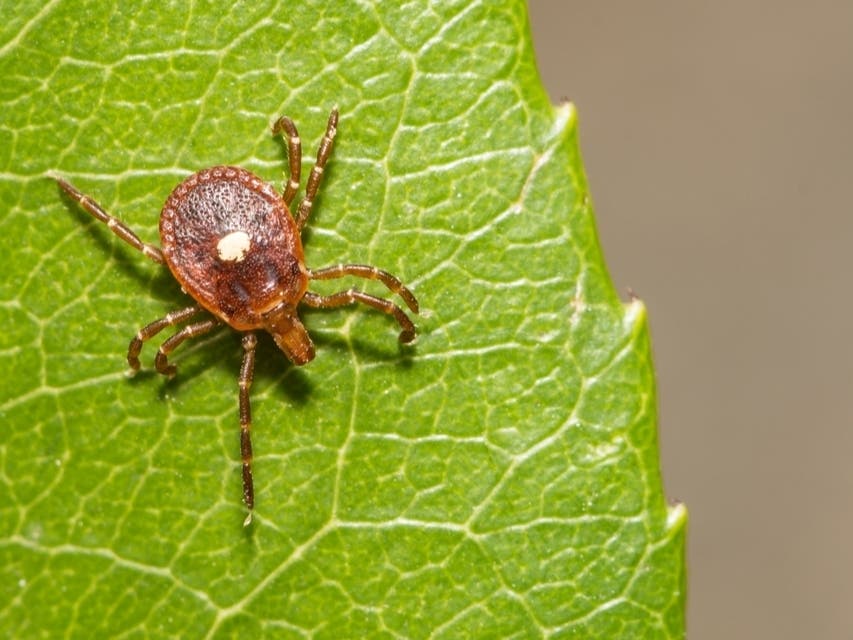
PENNSYLVANIA — Powassan virus, a once rare tick-borne illness whose increased spread is due at least in part to climate change impacts, has been found in "higher than expected" rates across Pennsylvania, local officials warn. The virus has also caused the hospitalization of a local toddler, marking the state's first case of the disease in a human in 2022.
Since ticks are mainly active in the warmer weather, and do not bite below freezing, warmer temperatures and shorter winters are allowing ticks to expand their range, according to ecologists. Pennsylvania, whose dense woods and fields are already a hotbed for ticks carrying Lyme disease, is at the epicenter of the high risk area.
While Powassan virus has long been present in local deer ticks, the Pennsylvania Department of Environmental Protection said that increased rates of the virus were found during surveillance in 2021. That didn't bode well for the 2022 season.
Find out what's happening in Across Pennsylvaniafor free with the latest updates from Patch.
For 3-year-old Pennsylvania resident Jonny Simoson, things spiraled quickly. Within short weeks of removing a tick, Jonny had no appetite and a headache. Days later, he had a fever of 104 and was unresponsive for days, according to a Facebook page launched to chronicle Jonny's journey.
This led to a rare case of meningoencephalitis, and Jonny is now trying to recover in a pediatric intensive care facility.
Find out what's happening in Across Pennsylvaniafor free with the latest updates from Patch.
A total of just 10 cases have been found in humans in Pennsylvania since the state began surveillance in 2011. And no cases were found in 2021. But the higher concentration of ticks carrying the disease, coupled with 2022's case in the local toddler, have both health and environmental officials watching out. Infection numbers in humans could be notably higher than what's been reported, given that many cases have mild or no
Areas of the state where especially high concentrations were found were in Clearfield, Centre, Wyoming, Bradford, and Schuylkill counties, Department of Environmental Protection officials said. The virus is almost entirely restricted to deer ticks in the northeast and Great Lakes areas. States like Connecticut have already seen multiple cases this year.
While the area is used to tick precautions for things like Lyme disease — and there is an understanding that a whole host other tick-borne diseases are possible — there is little public awareness of just exactly what Powassan is, the Simoson family has found.
"If we have learned anything over the last two months, it is that there is just not enough awareness or research when it comes to TickBorne illness in general, specifically Powassan," Jonny's mother Jamie shared on Jonny's recovery Facebook page.
In Pennsylvania, the Department of Health has issued multiple health alerts to the state's healthcare facilities with information on the virus and treatment information. Some healthcare agencies have also issued alerts.
“A deer tick can transmit Powassan virus in as little as 15 minutes,” Geisinger Health's Jennifer Vodzak, a pediatric infectious diseases doctor, shared in a public announcement. “Compare that to Lyme disease, where transmission can take 24 hours or more.”
Symptoms of Powassan virus include fever, headache, vomiting and general weakness, usually progressing to meningoencephalitis, a very serious neurological condition resembling both meningitis and encephalitis with symptoms that include mental confusion, seizures, paralysis and palsies. If left untreated, it can lead to death.
Ticks are active anytime the weather is above freezing, but especially from March to mid-May and from mid-August to November. Bites are more common from late spring to early fall, but can happen any time of year.
Tick tricks
Experts recommend basic precautions:
- Cover exposed skin with lightweight and light-colored clothing
- Avoid tick-infested habitats such as areas dense with shrubbery or tall grass
- Use an EPA-approved insect repellent
- Once returning home, immediately check yourself, children, and pets for ticks
- Take a shower immediately to remove ticks that may be crawling on skin
- If possible, dry clothing and gear in a dryer to kill any ticks
When ticks hatch from eggs, they have to "eat blood at every stage to survive," according to the CDC. They range in size from less than one-eighth of an inch up to about five-eighth of an inch. And they find their hosts like a highly skilled assassin, detecting breath, body odor, body heat, moisture, and vibration.
If you find a tick, remove it as soon as possible using fine-tipped tweezers. Make sure to pull straight up with steady, even pressure to ensure part of the tick doesn't break off in the skin. Once it's out, clean the
Get more local news delivered straight to your inbox. Sign up for free Patch newsletters and alerts.