Community Corner
Northern Lights May Be Visible: When Is The Best Chance To See Them In PA
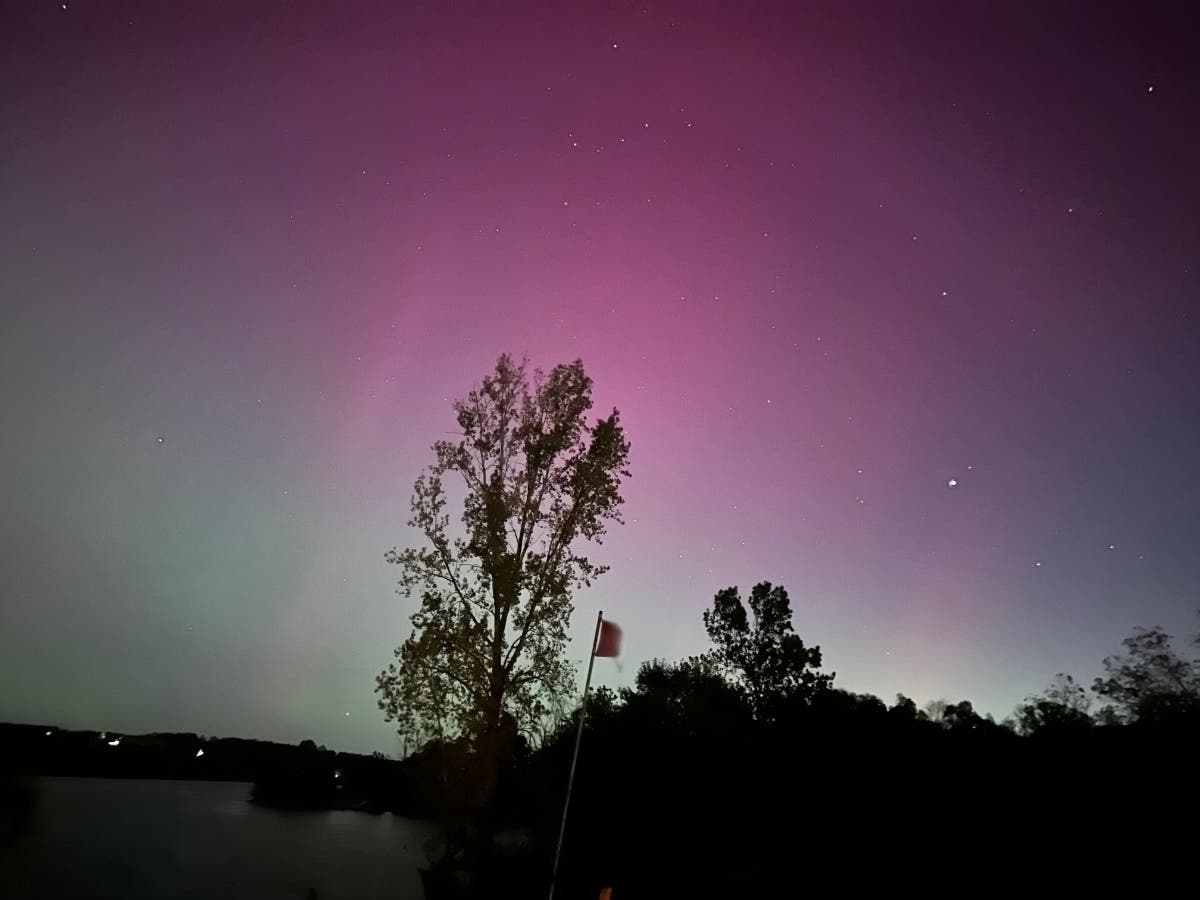
The next few nights offer Pennsylvanians an amazing opportunity to see the otherworldly aurora borealis.


PENNSYLVANIA — While the fickle weather will determine its clarity, this week could offer residents in Pennsylvania a chance to see the aurora borealis.
Wednesday through Friday night mark the best chances for northern lights displays as far south as Iowa, according to the U.S. National Oceanic and Atmospheric Administration’s Space Weather Prediction Center.
Thursday offers the best chance for viewing, experts there say, and that's good news for those in eastern Pennsylvania. Thursday night will be clear, dry, and warm, the National Weather Service said.
Find out what's happening in Across Pennsylvaniafor free with the latest updates from Patch.
Wednesday could be cloudy and rainy for at least part of the night in the Philadelphia area, but Friday is set to be at least partially clear at night, according to forecasters.
Most of western Pennsylvania has a shot on all three nights, but it remains up in the air: partially cloudy skies are forecasted each night, the National Weather Service said.
Find out what's happening in Across Pennsylvaniafor free with the latest updates from Patch.
NOAA issued G1 (minor), G3 (strong) and G2 (moderate) solar storm watches for Wednesday, Thursday, and Friday, respectively.
On Sunday, a plasma cloud known as a coronal mass ejection, or CME, was launched from the sun. Since then, the cloud of charged gas has been heading toward Earth at a high speed and is “expected to arrive at Earth as a glancing blow” on Thursday, potentially producing aurora displays “over the far Northeast to the far upper Midwest, across portions of the north-central states, and perhaps over the northwest section of Washington state.”
Solar storms 93 million miles from Earth occur with more frequency midway through an 11-year cycle in which the sun's magnetic fields flip polarity — and that means the northern lights could dance more often in the next decade or so.
They are never guaranteed, of course, but aurora experts say the busy season for sunspots should peak between 2023 and 2028.
The sun's magnetic field flips polarity about once every 11 years — and we're in the middle of that process, the solar maximum, solar storm equivalent of the hurricane season, according to Bill Murtagh, program coordinator for the Space Weather Prediction Center.
"The sun has negative and positive polarity, just like Earth," Murtagh told meteorologist Jennifer Gray. "During this 11-year period, it does a reversal of the polarity. So negative becomes positive and positive becomes negative. During the middle of that process and transition, that's when those sunspots emerge. So we go through a process when we are in the middle of this transition, we get lots of sunspots and lots of space weather."
- You Might Also Like: 2022 Guide To Meteor Showers, Supermoons, Other Celestial Events
The science behind the aurora borealis is complicated, and all many people care to know is that they're jaw-droppingly beautiful.
The aurora borealis becomes visible to the human eyes when electrons from solar storms collide with the upper reaches of the Earth's atmosphere, according to the Space Weather Prediction Center.
In normal circumstances, the Earth's magnetic field guides the electrons in such a way that the aurora forms two ovals approximately centered at the magnetic poles.
Get more local news delivered straight to your inbox. Sign up for free Patch newsletters and alerts.