Politics & Government
PA Vineyards Under Attack By Spotted Lanternflies
One of Pennsylvania's most treasured agricultural products faces unique threats from the invasive bug.


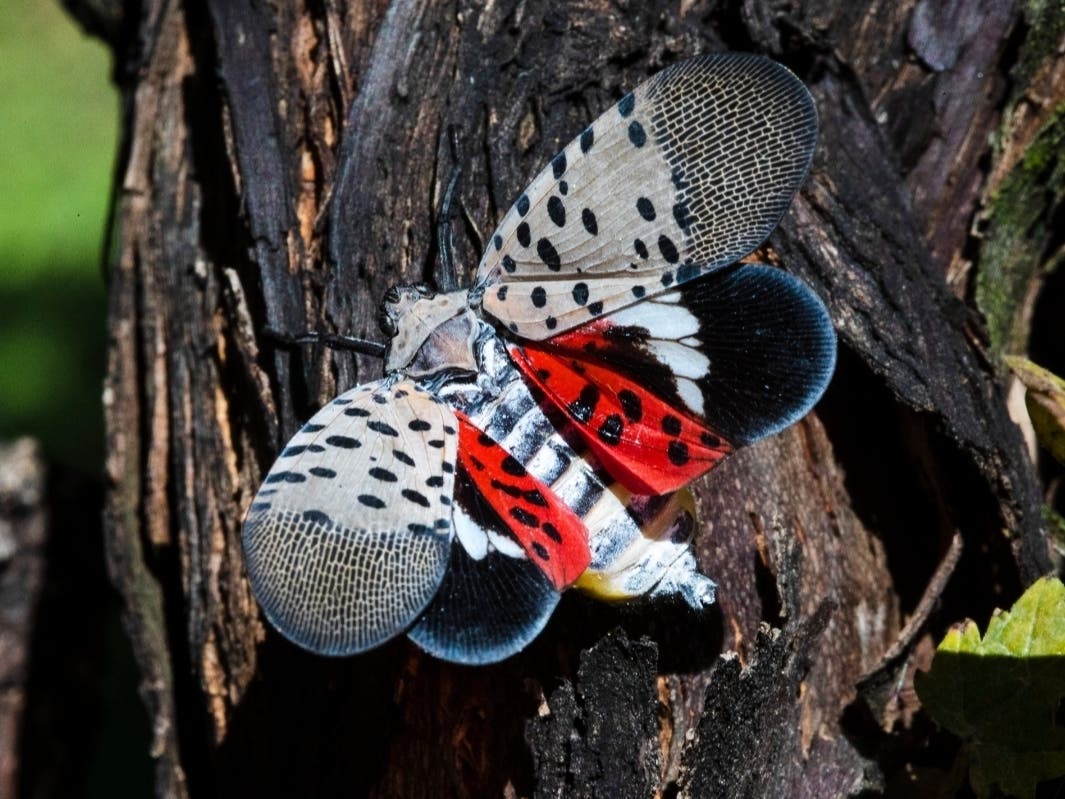
PENNSYLVANIA — As the spotted lanternfly continues to hop and horrify its way across anything leafy and edible this side of the Mississippi, countless industries in Pennsylvania are feeling the invasive bug's destructive impact. Not the least is one in which residents have a deeply vested interest: wine.
Pennsylvania's vineyards are one of the hardest hit by the planthopper, with millions in damage caused already. Research from from iEcoLab and Temple University indicates that if the insect spreads into counties adjacent to where it is already established and across the state, the worst-case scenario is startling: a $324.9 million hit per year to the Pennsylvania economy and the loss of 2,810 jobs.
"In Pennsylvania, we’ve seen vineyard losses from the double whammy of cold and from spotted lanternflies feeding on the vines," Chris Jones, research scholar with the NC State Center for Geospatial Analytics, said in a release promoting a new study tracking how the bug could spread in the near future. "But we do know producers can also experience losses because of the mold growth alone."
Find out what's happening in Across Pennsylvaniafor free with the latest updates from Patch.
An infestation of the lanternflies may not kill a vineyard off on its own, but impacts can be cumulative and long lasting. Lanternflies excrete honeydew, which can attract stinging insects like wasps and honeybees with its high sugar content. This can lead to other problems.
RELATED: As Spotted Lanternflies Reemerge In PA, Their Legend Grows
Find out what's happening in Across Pennsylvaniafor free with the latest updates from Patch.
"The threat to our delicious adult beverages — and the small businesses that produce them — is real and growing," the Pennsylvania Winery Association said. The group has joined scientists and elected officials to join the fight against the bug.
While lanternflies, which were first spotted in the United States in Berks County in 2014, eat all kinds of plants and trees, wine-producing grapevines are among their favorite delicacies. Agricultural experts with Penn State Extension say it may be because they crave "turgor pressure" in their treats, or plants with interior pressure that makes parts rigid, but they also use the nutrients in the plants to survive.
Significant feeding by the bugs on grapevines, photosynthesis and sap flow through the plant is reduced, eventually destroying it. "Heavy SLF feeding can also decrease the amount of carbohydrates (i.e., starch) and nitrogen stored in root tissues in the fall, which might compromise vine health and growth in the following year," Penn State researchers explained.
All told, the agriculture industry as a whole could face a $42.6 million loss annually if lanternflies continue to spread at this rate, the iEcoLab and Temple University research shows.
Berks County's Stony Run Winery is among the wineries that have been especially hard hit. Lanternflies destroyed 15 percent of the vineyard over the past year, which equals about 30,000 bottles worth more than half a million dollars, CNBC reports.
"They cover the entire trunk and you get to the point where you can’t even see the trunk anymore," owner Larry Schrawder told CNBC. "It’s just side by side lanternflies all sucking the juice out of your plant."
Some infestations have been even worse, causing up to 97 percent crop loss on some Berks County wineries, officials said.
The quarantine zone for the bug was recently expanded. It now includes the entirety of eastern Pennsylvania, and a line of connected central counties heading all the way out to Allegheny on the western border.
While dozens of policy initiatives, outreach efforts, and containment strategies have been put in place, success has thus far been limited. Still, authorities are optimistic that better solutions will materialize.
"Good research takes time — and funding — but we are making discoveries every day and are sharing those findings with the public and key stakeholders," Rick Roush, dean of the Penn State College of Agricultural Sciences, said in April.
A 2020 study analyzed the costs of fighting the bug. Those range from relatively cheaper initiatives, such as education and increased monitoring, to more-complex measures such as inspection and the eradication of the tree of heaven (Ailanthus altissima), an invasive Chinese tree that spotted lanternflies seem to prefer to use for reproduction.
Warmer and wetter conditions brought about by climate change allow invasives, such as the tree of heaven, to spend more of the year growing out, thus likely providing more habitat for the spotted lanternfly.
The advanced techniques to battle the bug, should it expand across the state, would cost $106.4 million for agricultural methods and $219.6 million for timber methods, the study found.
The lanternfly has a very distinctive sappy egg mass, which runs a gray and pocked scar down the side of the trees which it feeds on. This should be scraped away and destroyed.
Get more local news delivered straight to your inbox. Sign up for free Patch newsletters and alerts.