Politics & Government
Several New Laws Proposed In PA After Norfolk Southern Train Disaster
Restricting train lengths, mandating a certain number of staff, and holding railroads accountable are just a few of the goals.


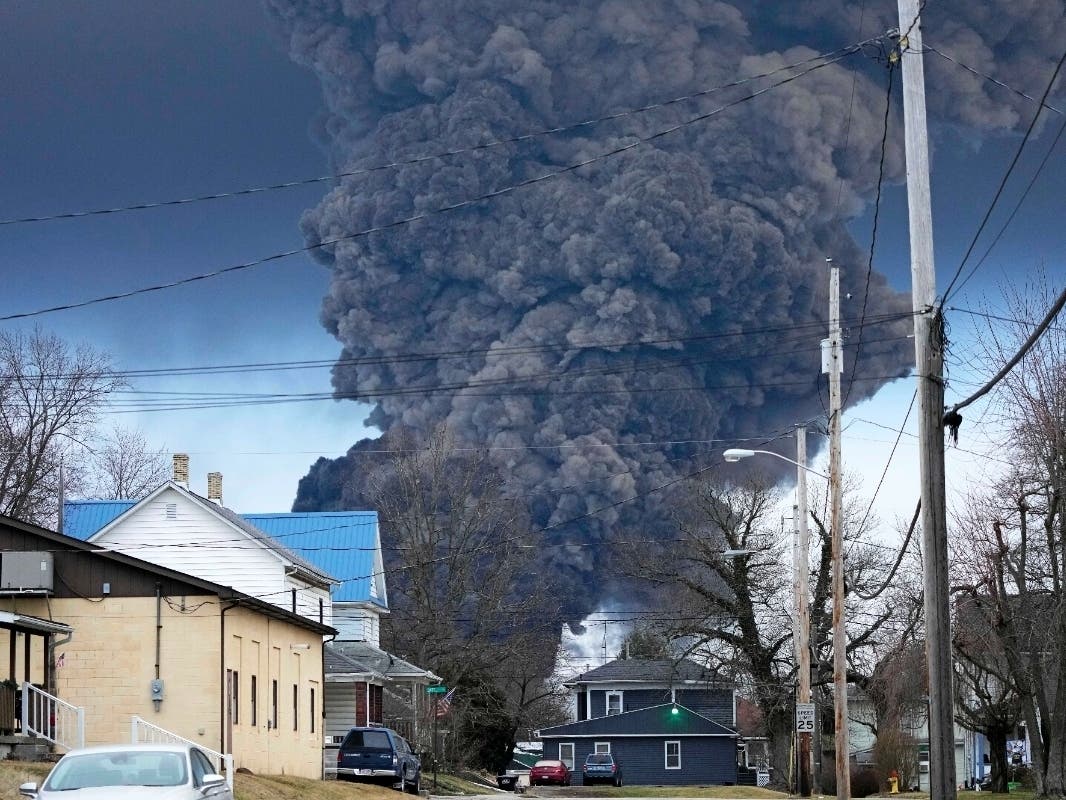

HARRISBURG, PA — A slew of new laws and resolutions have been proposed in Pennsylvania in the wake of the Norfolk Southern freight train disaster that sent hazardous materials into communities throughout the region.
Officials say that much stricter safety standards are needed, and that basic precautions could have prevented the worst impacts of the recent incident and can protect the state in the future.
“Our area is one of the most heavily traveled in the country for rail traffic, which means that safety problems create a very real and immediate threat for residents right in our own backyards,” State Rep. Rob Matzie (D-Beaver) said in a statement. “As the recent East Palestine derailment made clear, we can’t rely on federal safety standards to protect us."
Find out what's happening in Across Pennsylvaniafor free with the latest updates from Patch.
The accident occurred on Feb. 3 in East Palestine, Ohio, near the Pennsylvania border with Darlington Township and Beaver County. The derailment of the 9,300-foot-long train sent dangerous chemicals like isobutylene, chloroethene, butyl acrylate, 2-ethylhexyl acrylate, ethylene glycol monobutyl ether, and more into the environment and into the air when it was burned.
Both Norfolk Southern, Pennsylvania emergency management, and federal authorities have been heavily criticized for their response and general preparation for such a contingency.
Find out what's happening in Across Pennsylvaniafor free with the latest updates from Patch.
Here's a glance at legislation and resolutions recently introduced in the Pennsylvania General Assembly.
Restricting train lengths
Forthcoming legislation would aim to rstrict the length of freight trains to 8,500 feet, notably shorter than the 9,300 foot Norfolk train that crashed. While the state does not have the power to enforce that through law, the new bill would allow the Pennsylvania Public Utility Commission to levy penalties on railroads that don't comply with the new limitation.
"As we have repeatedly seen over the past few months, there is a glaring need for stricter freight rail safety standards," State Rep. Louis C. Schmitt Jr. (R-Blair) wrote in a co-sponsorship memorandum. "Limiting train length will not only increase safety but will also help alleviate traffic jams at grade crossings."
Schmitt added that there's been no meaningful reduction in derailments in Pennsylvania since the introduction of Positive Train Control in 2020, the name for the collection of federal technological systems aimed at reducing such events.
Urging federal action
Similarly and simultaneously, Schmitt also introduced a resolution urging the federal government to act legally on limiting train length.
His resolution calls on U.S. Congress, the U.S. Department of Transportation, and the Federal Railroad Administration to make "comprehensive" changs to the restrictions on the size and length of rail cargo.
"The way a train is arranged or made up – meaning the mix of loaded and empty cars and locomotives – affect its stability," Schmitt wrote. "Those consequences are much more pronounced on longer trains."
Crew size
Some massive freight trains have just one crew member, even as trains get longer and more difficult and riskier to operate, officials say.
Another Schmitt resolution will call on the federal government to mandate that all freight rails use at least a two-person crew.
Using just one crew member is a dangerous tactic railroads use to save money, officials said.
"This cost-reduction approach eliminates necessary safety margins and redundancies, off-loading risk onto local communities, with potentially tragic results," Schmitt added.
Additional trained crew will also help in the event of a derailment or disaster, the resolution states.
Railroad safety standards and oversight
Another forthcoming bill will address a wide range of existing safety standards which lawmakers said needed to be improved, and will aim to hold railroads more directly accountable.
“We have the power under state law to enhance those standards, and we will soon be introducing legislation to do that," State Rep. Matzie added. "But we can’t afford to wait. With the high volume of trains crossing our region every day, we need better controls in place now, before another potential catastrophe.”
The bill will require more oversight for railroad companies to comply with safety regulations, require a clear "reporting mechanism" so officials are aware if railroads are out of compliance with standards, establish mandatory minimum staffing requirements, create more oversight for wayside detector systems, and more.
Matzie is joined by State Rep. Jim Marshall (R-Beaver) in a bipartisan effort to gain support for the bill.
Immediate response
A bill has already been introduced in the State Senate that would create a new Train Derailment Emergency Grant Program and a Train Derailment Emergency Grant Fund to help expedite response and cleanup to the disaster.
PEMA will adminster the grant program, which residents of the impacted areas can apply to.
"Residents have expressed fears that they may never feel comfortable living in their communities again, State Sen. Doug Mastriano, who introduced the bill, said in a co-sponsorship memorandum. "Small business owners have had their livelihoods vanish as once reliable customers stay away from the area. Farmers are struggling to sell their products on the market to customers wary of any food products grown and produced in the derailment area."
The Act would amend Title 35 of the Pennsylvania Consolidated Statutes. The full text is available online here.
Get more local news delivered straight to your inbox. Sign up for free Patch newsletters and alerts.