Politics & Government
What Roe V. Wade Decision Could Mean For Abortion In PA
From a flood of patients to the state to the general election, the Supreme Court's Roe v. Wade decision could have immense impact.


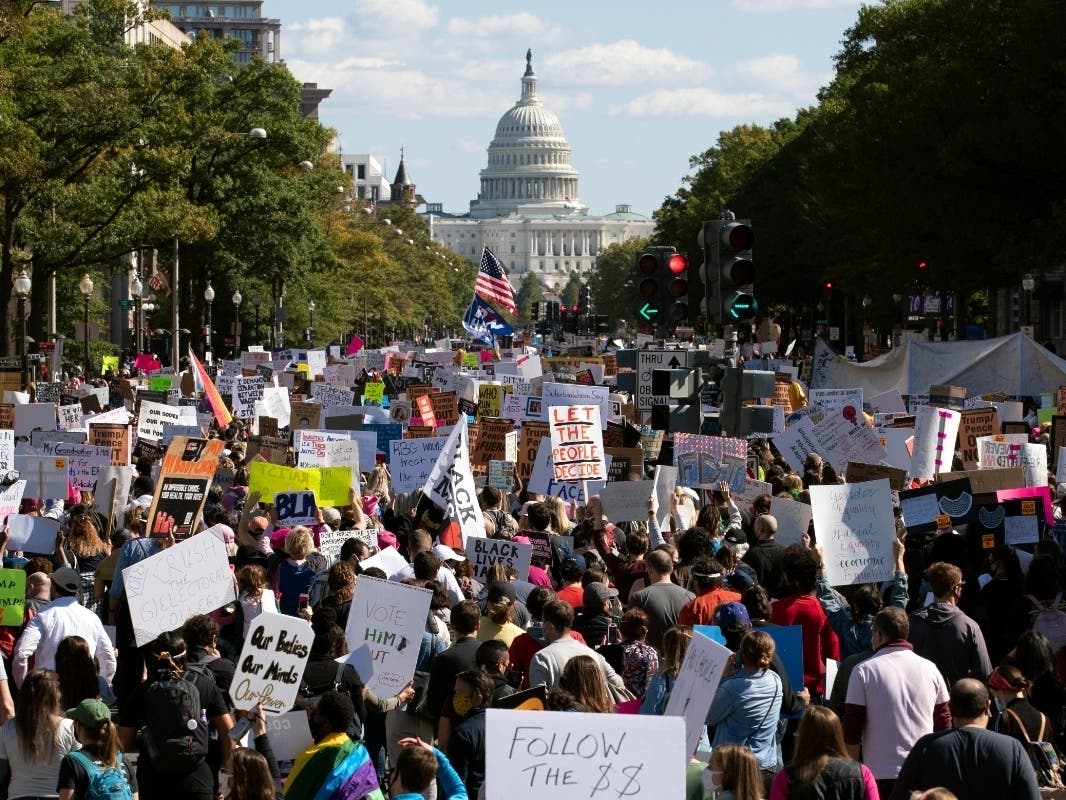
PENNSYLVANIA — With the U.S. Supreme Court's final decision on Roe v. Wade continously pending, and it's leaked draft opinion seemingly overturning the case looming over the nation, speculation has run rampant as to what exactly a seismic shift in federal law could mean at the local level.
In the short term at least, Pennsylvania is fixed to stand pat. While an eager Republican legislature would leap on the chance to enforce similar restrictions on abortion in the state, Gov. Tom Wolf has been clear that "abortion access in Pennsylvania will remain legal and safe as long as I am governor."
But no state is an island unto itself, and Pennsylvania's populous neighbors, both very near and far, could find themselves turning to the Keystone State as an abortion refuge.
Find out what's happening in Across Pennsylvaniafor free with the latest updates from Patch.
More than half the states in the nation have Republican-controlled legislatures and governors that would swiftly bring an end to abortion if Roe v. Wade is indeed struck down.
Two of them are immediately on the state's borders: West Virginia and Ohio.
Find out what's happening in Across Pennsylvaniafor free with the latest updates from Patch.
Months before the Roe v. Wade draft opinion was even leaked, healthcare providers in Pennsylvania were preparing for just such a contingency. Sydney Etheredge, the CEO of Planned Parenthood in Western Pennsylvania, told the PA Capitol Star that patients were welcome "whether they're in our region or in sister regions and states nearby."
While clinics are doing what they can to prepare for the influx, an overload might be inevitable. ABout 85 percent of the state's counties do not have abortion clinics in the first place, according to the Guttmacher Institute, a pro-choice oriented think tank.
Aside from bracing for an influx of patients, clinics are also bracing for potential unrest. Given violent protests and exchanges in the recent past, additional patrols have been requested and new security measures put into place at several Philadelphia area clinics, the Associated Press reports.
Of course, the best barometer for the future of the issue comes down to the Pennsylvania gubernatorial election in November. A win for Democrat Josh Shapiro would continue the policies existing under Gov. Tom Wolf. A win for Doug Mastriano would all but guarentee the passage of some kind of concommitant severe restriction of abortion in the state, with the Trump ally's views on the issue well-known and the legislature firmly Republican.
As a state senator, Mastriano has himself introduced legislation that would do just that. In both 2019 and 2021, he introduced Senate Bill 378, the "Heartbeat Bill," which would "require physicians – before proceeding with an abortion – to determine whether the baby has a heartbeat," according to a co-sponsorship memorandum. In May, Mastriano added that the original Roe decision "was one of the darkest days in American history."
The U.S. Supreme Court heard arguments on a Mississippi case challenging Roe late last year
The case at issue — Dobbs v. Jackson Women's Health Association — challenges a Mississippi law that bans abortions in most cases after 15 weeks of pregnancy. The law undercuts the standard set by Roe that guarantees women access to the procedure up until the fetus is viable outside her womb, typically around 23 or 24 weeks after conception, and longer in cases where the woman's life or health is in jeopardy.
The 6-3 conservative majority on the court previously signaled that it may be willing to impose new restrictions on abortion. Mississippi's lawyers argued that striking down the law is necessary to enforce its ban — striking down or gutting Roe and the Planned Parenthood v. Casey case that affirmed it.
In Roe, the Supreme Court said an unwanted pregnancy could lead a woman to "a distressful life and future." In the 1992 case, Casey v. Planned Parenthood, the court upheld Roe, finding that abortion rights were necessary for "women to participate equally in the economic and social life of the nation."
The Center for Reproductive Rights, which challenged the law with the Jackson Women's Health Organization, argued that although the Constitution does not address pregnancy, courts have upheld the decision in Roe, which was tied to privacy and personal autonomy.
"Every version of the State's argument amounts to the same thing: a request that the Court scuttle a half-century of precedent and invite states to ban abortion entirely," the plaintiffs' brief states."
The plaintiffs also argued that denying women access to abortion is detrimental to their physical and emotional health.
With reporting from Patch correspondent Beth Dalbey
Get more local news delivered straight to your inbox. Sign up for free Patch newsletters and alerts.