Arts & Entertainment
A Guide for the Artsy Gardener
Dr Lori explores the connection between art and gardening.

History has produced some famous artists who were also avid gardeners. For instance, Impressionist painter Claude Monet (French, 1840-1926) and his colleague, Auguste Renoir (French, 1841-1911) tended flower and herb gardens at the artist colony of Argenteuil in the early 1870s. And, at Monet’s home in Giverny, the artist enlisted the aid of fellow gardeners to care for his famous water lily pond, which was the subject for his paintings from the early 1890s until his death in 1926.
In May of 2010, one of Monet’s famed water lillies paintings, dated 1917, sold for $24.7 million.
In addition to the famous gardeners, there are many references to flowers in art and antiques. Different flowers mean different things when found in antiques and works of fine art.
Find out what's happening in Lower Gwynedd-Ambler-Whitpainfor free with the latest updates from Patch.
In the decorative arts, flowers often reference the bounty of plants, herbs, flowers, trees, nuts and fruits that were found in the New World. These elements were highlighted in embroidered and hooked rugs made in New England during the early Colonial period.
Likewise, Baltimore album quilts showed an abundance of plants and flowers when the art form peaked in popularity from 1846 to 1852. Some album quilts with embroidered flowers have sold for $40,000 to $50,000.
Find out what's happening in Lower Gwynedd-Ambler-Whitpainfor free with the latest updates from Patch.
Tall case clocks and corner cupboards also featured flowers such as tulips to reference prosperity and peonies to symbolize good fortune. Cultivated during the T’ang dynasty, peonies with ruffled petals were often found in Chinese imperial gardens and brought indoors via heavily painted and gilt decorated room-dividing screens.
In the 17th century, Dutch still life paintings of flowers were all the rage. The realistic method of painting flowers was important to artists of the period. The artists were so intrigued by the forms of the flowers that they showed little regard for the season in which a particular flower grew. In these paintings, tulips would be depicted in a Delft vase along with carnations, iris, hibiscus, zinnias, dahlias and roses, even if the variety of flowers bloomed at different times of the year.
The preeminent female Dutch baroque artist of this brand of still life painting, Rachel Ruysch, painted an oil composition of honeysuckle and 0ther flowers in a blue glass vase that sold for $690,600.
Color is king
Color, a typical art historical reference, offers special meaning in flowers. For instance, lilies, white in color, are associated with the Virgin Mary, purity and chastity. They are the flower of choice at Easter Sunday.
Deep orange, dark red and gold chrysanthemums were brought from China to Marseilles, France, in 1789 and were hybridized in many forms. In Asia, mums are held in high esteem and associated with long life. One of the best known paintings of these blooms is Edgar Degas’ Woman with Chrysanthemums, 1865, from the collection of the Metropolitan Museum of Art, which is simultaneously a still life and a portrait painting.
The Dutch were charmed by carnations and often included them in watercolor albums documenting botany examples. The flower, also known as a pink, signified faithful love in marriage and everlasting love. Dutch masters, including Rembrandt and de Heem, painted pinks in wedding portraits of brides and grooms.
Carnations are also carved into Dutch-style corner linen cupboards of hardwoods. These cupboards were traditional gifts to newlyweds setting up housekeeping.
The most common floral symbol is the red rose of love. Roses were the flower of choice for paintings produced in the French rococo period (circa 1715 to 1774) during the reign of King Louis XV when frolicking with lovers and outdoor garden parties were all en vogue.
Lastly, orchids are associated with patience, and they are a difficult flower to grow. Orchids are admired for their grace, and they are not the flower for me—I have very little patience!
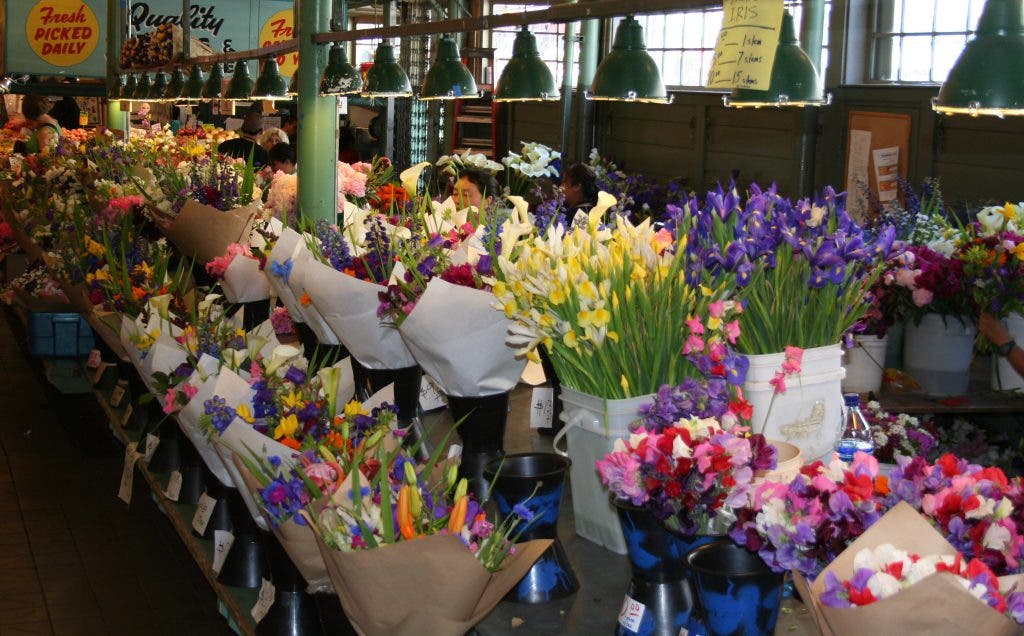
As flowers speak volumes, you can highlight some of your favorite blossoms by collecting art and antiques with flowers in focus. Happy spring!
Celebrity Ph.D. antiques appraiser, author, and award-winning TV personality Dr. Lori presents antique appraisal events nationwide. As seen on NBC’s The Tonight Show, Lifetime TV network, and Comedy Central’s The Daily Show, watch Dr. Lori weekdays on the national TV morning show Daytime. Visit DrLoriV.com, Facebook.com/DoctorLori, or call 888-431-1010.