Schools
College Countdown -- Part III: Money Boot Camp
With markets going haywire, teach your child to use hard-earned money wisely at college so he does not crash financially.
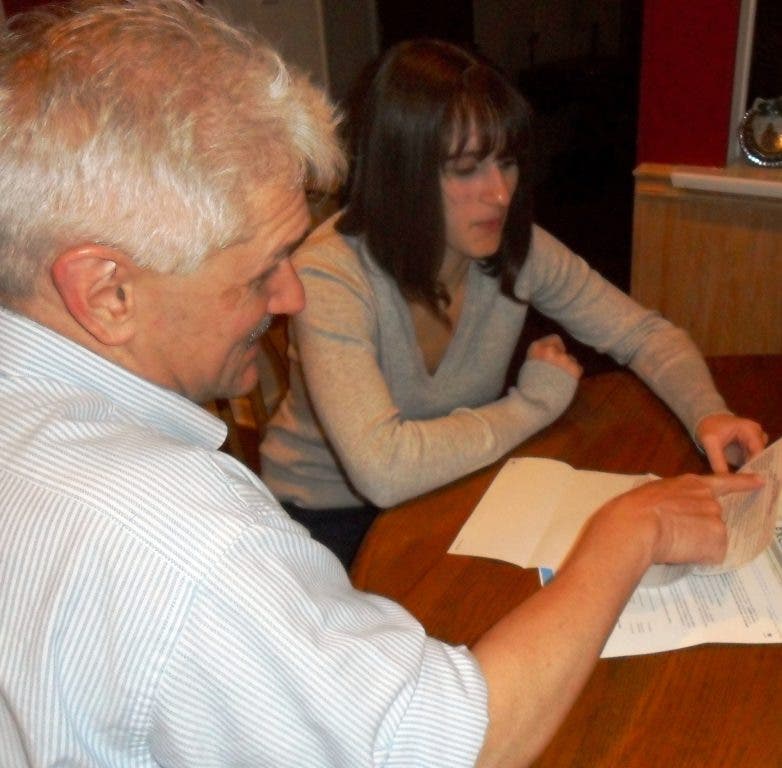


Money can be easy come, easy go, if your child does not understand banking, how to budget and spend wisely, or avoid credit cards debt. Invest time now in money boot camp to save a bundle in frivolous spending, overdraft fees and credit card debt.
Choosing a Suitable Bank and Checking Account
Banking is an important skill. Most states do not allow teens to open checking accounts until they are 18. That is not much time to work on budgeting, balancing, and writing checks before your child leaves for college.
Find out what's happening in Lower Gwynedd-Ambler-Whitpainfor free with the latest updates from Patch.
Check to see if your bank has a branch near your child’s college. It is easy to deposit money into your child’s account if it is needed quickly. You can talk face-to-face with a bank representative if there is a problem.
If there is not a local branch of your bank in your child's college town, open an account close to his campus. This will allow for ATM access with lower transaction fees.
Find out what's happening in Lower Gwynedd-Ambler-Whitpainfor free with the latest updates from Patch.
During my daughter's orientation at University of Pittsburgh, one local bank solicited students waiting in line for photo ID cards. I asked if our competing bank was close by and was told a branch “was far away.” Walking out of that building, we found “far away” meant half a block.
Naively, my daughter signed up with the competing bank. We found we did not dislike the dishonesty, nor this bank's ATM surcharge fees.
So, a little investigative work before arriving on campus can help keep more money in your child’s pocket, rather than letting it incrementally disappear.
Many banks offer student checking accounts: student, basic, free and interest-bearing. Bank of America’s “Ultimate Money Skills” web site offers a wide variety money-related topics, and interactive games to teach about money. This site explains benefits of different types of checking accounts.
The web site states, “Student checking accounts will vary from bank to bank, but some of the benefits could include no minimum balance requirement, free checks, free debit card, wider ATM availability and the ability to have your parents transfer money directly into your account.”
An online bank with low fees is another option. ING Direct has no minimum balances, ATM surcharges, overdraft or monthly fees, and has 35,000 ATMs in its network. Ally, another online bank, may be a financial fit for your child.
Check for overdraft protection. Better your child be humiliated a moment when a purchase is declined, rather than receiving a mailed overdraft slip for a latte that ends up costing $35.
Although cash or plastic will be used for most purchases, it is important to teach your child how to write a check, record it in a register, and check online to see if it cleared.
Encourage your child to check his bank balance online to keep tabs on his money, just like he checks facebook.
Budgeting
You or your child may say you do not have time to figure out a budget. Financial expert Dave Ramsey said, “You don’t have time to not make a budget!” He suggests creating spending categories and setting a monthly limit on each.
Take cash out of the bank weekly, and divide it into envelopes marked based on spending categories. When the money is gone for the week, it is gone.
My daughter reflected on how she frittered away her hard-earned money. “It’s better if you pay with cash. It seems so much more realistic,” she said.
She learned the hard way $15 is a lot to pay for milk, cereal and Cheez-Its at the “gotcha” grocery store on campus. She mused, “That was a lot of money for those things.” From mistakes, she is learning the value of money, using cash, and budgeting.
Ramsey offers more insight on budgeting on his web site.
Spending
“How to Waste Money” highlights 10 ways your child could mindlessly waste money. One way is texting till the cows come home. My older daughter texted more than 900 times one month and increased our bill 40 percent. We got unlimited texting.
Another way to waste money is paying full price for things. Kids often do not want to bother with coupons or looking for savings. If you give your child spending money, be clear on the amount you will give. Hold firm. Let him or her figure out how to stretch dollars. This is part of their education, too.
Let your child see how he could easily waste money.
Conversely, plant some money-saving ideas in your child’s head. Help him know ahead of time how to make wise choices, rather than act on impulse.
Ask your child to peruse this list of money-saving ideas, and ask which ideas might he use to save money. These ideas work for parents, too.
Moneywatch.com’s “Bank of Dad,” Dan Kadlec wrote, "Good credit and savings practices decline with each year of school.” He said seniors manage their affairs and money more than underclassmen, and run into credit card trouble.
Ilana Greene, a former equities trader with Goldman Sachs, reports on BusinessInsiders.com that college affinity credit cards pushed by alumni associations had 300,000 fewer takers last year.
The Federal Reserve reported there were 1.7 million takers at kiosks during college games in 2010, down from 2 million new card holders in 2009. Alumni associations give away “T-shirts, pizza coupons and other trinkets” to entice students to sign on the dotted line, Greene wrote.
Last year I received an unsolicited affinity card from that was promoted as a new college ID card.
Talk with your child about whether you think now is the time or not to get a credit card. Steve Rosen of the Kansas City Star offered credit card talking points in an article on college affinity credit cards:
•Spending habits: Will the card be used only for gasoline and emergencies? Or for everything?
•Interest rates: Pay the balance in full every month.
•Fees: Many companies have raised fees for overdrafts and penalties.
•Credit limit: Start with $500 to $1,000 so there’s enough for car repairs but not so much that the card will be overused.
My older daughter has received credit card offers mailed to our home. I promptly shreded them.
She starts her senior year and we talked about establishing credit. She has a healthy fear of a bad credit rating, and does not want to create more debt beside her student loans.
Awareness is a start. We need to investigate card offers to find one that makes sense for her.
Education is the first step toward helping your college student become financially wise.
Working with your child now can save lots of money, and help establish good saving and spending habits that last a life time.
College Countdown Part IV: You Say Good Bye, I Say Hello -- Managing Separation Across the Miles.