Schools
Students Compete in Ramp Riot 2011
Thirty-six schools participate in the all-season invitational
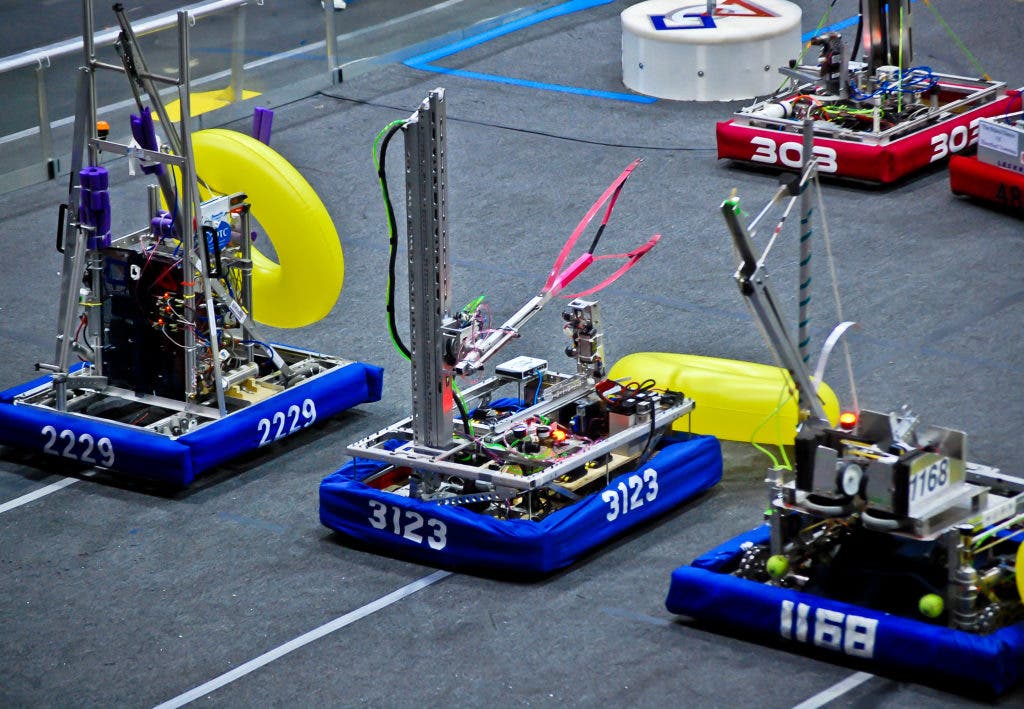


Robotics teams from high schools across the east coast gathered at the circle gym of Wissahickon High School on Saturday for the 12th annual Ramp Riot competition.
The main event featured a total of 36 teams--separated into three alliances--putting their programming and robotics skills to the test. The rules and competition vary from year to year, with this year's goal being to make the machines successfully pick up inflatable inner-tubes and place them on their team's racks.
"It's like an invitational," said Alan Ostrow, founder of the event. "They come out and get to play for the day, and it also gives the rookies some time and allows them to experience what an event is like prior to the start of the regular season."
Find out what's happening in Lower Gwynedd-Ambler-Whitpainfor free with the latest updates from Patch.
The regular season begins every January, when teams are given their kits as they begin the build period. Once the construction of the robot is completed, the teams then compete nationally with 2,000 high schools across the country.
"We play through March, and the championship is in April," said Ostrow. "When that's over, you still have this machine that you spent so much time building."
Find out what's happening in Lower Gwynedd-Ambler-Whitpainfor free with the latest updates from Patch.
In order to continue to make use of the students projects, additional competitions are held throughout the offseason.
"A lot of teams have designed their own offseason events, and this is one of them," said Ostrow. "It's what we call an all season event, and we've been doing it for 12 years now."
As a musical backdrop for the metal-on-metal mayhem, the speakers throughout the gymnasium blasted various electronic and pop songs, including "Party Rock" by LMFAO and "Sandstorm" by Darude.
While the high school competitors were hanging inner-tubes and body rocking, the middle school teams had a secondary competition in the cafeteria. Ostrow said the secondary competition was nearly identical to the main event, except the scale was smaller than its five-foot-tall, 20-pound counterparts.
By the end of the eight-hour event, one thing was certain: robots weren't the only ones needing a battery charge.