Arts & Entertainment
An Amateur Historian Examines Ardmore's Past
George Harding recently published "Main Line by Rail: Its History and Transformation."
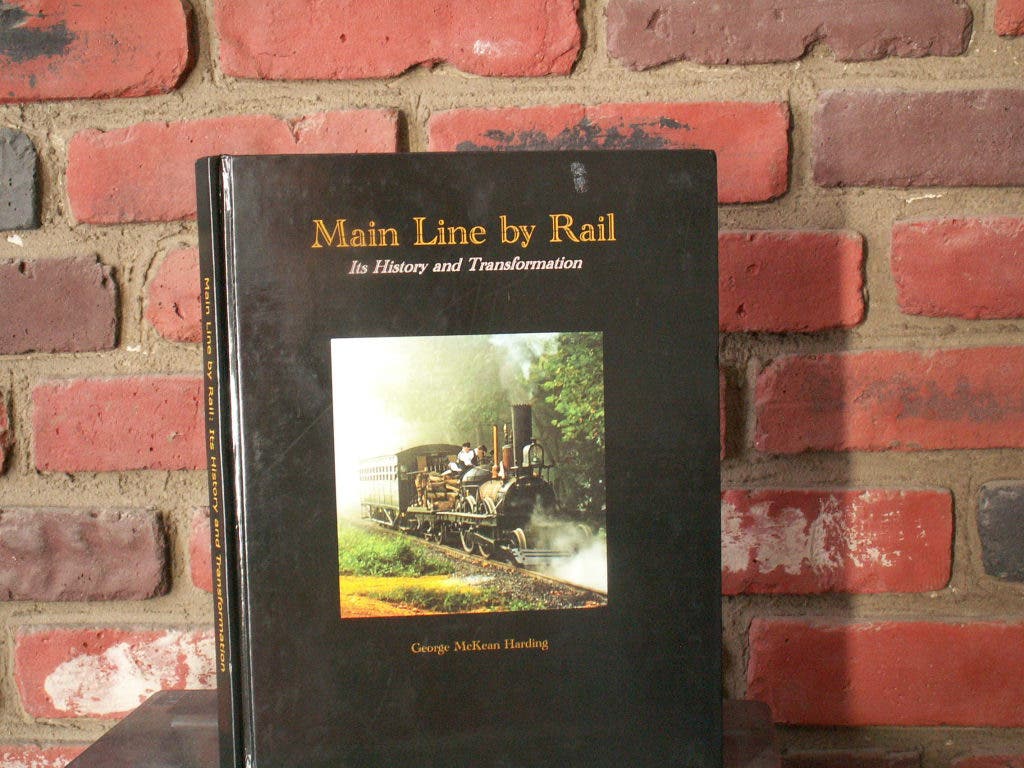
George Harding, the Haverford resident whose new book "Main Line by Rail: Its History and Transformation" was released this summer, has roughly the relationship to facts that a squirrel does to nuts: he knows just where to find them and is fanatical about collecting them.
(A key difference between the two is that Harding's willingness to share his haul, which he does enthusiastically.)
In his research for the book, the novice author unearthed a few tasty tidbits about Ardmore that he shared with Patch.
Find out what's happening in Ardmore-Merion-Wynnewoodfor free with the latest updates from Patch.
Ardmore was known as Athensville for about 20 years after its founding until, in 1873, the Pennsyvania Railroad renamed it Ardmore. And speaking of rails—which Harding does more or less constantly—Ardmore, or Athensville, then sat at the intersection of the West Philadelphia Railroad and the Philadelphia and Columbia Railroad.
The West Philadelphia Railroad was chartered by the state to create a flat rail line into Philadelphia (trains could only climb inclines of no more than two percent in those days, so the plan was to create a route that avoided them) but they made it only from Ardmore to 52nd Street before running out of money and handing the job back over to the state, which finished to Market Street. (The Philadelphia and Columbia Railroad, which was eventually bought by the Pennsylvania Railroad, ran from Philadelphia to Columbia, Pennsylvania before being extended to Pittsburgh.)
Find out what's happening in Ardmore-Merion-Wynnewoodfor free with the latest updates from Patch.
And though independent of the local rail industry, Haverford College didn't escape Harding's notice. Originally called Haverford School and founded as a preparatory school for young Quaker men, the institution got accredited in 1856.
"And how much do you think it cost to go there in 1833?" Harding asked, before correcting an off-base guess.
"$200 a year."
Like the area itself, the tuition has grown.
"Main Line by Rail: Its History and Transformation" is available at www.mainlinebyrail.com for $29.95.