Politics & Government
Poor Air Quality Days Often Go Undetected, TMA Bucks Leader Says
TMA Bucks' executive director said the region had two "Code Orange" days before the Canadian wildfires in May and 10 last year.


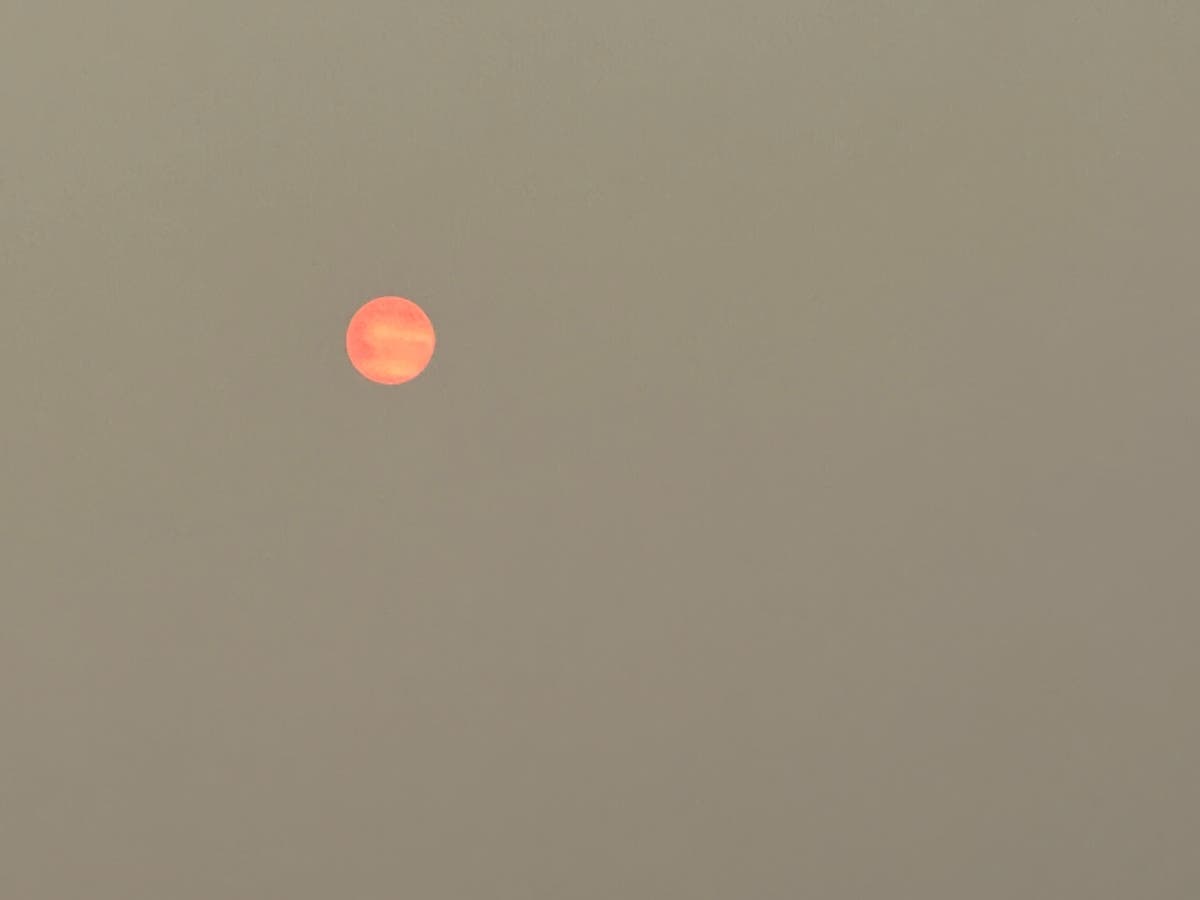
LOWER BUCKS COUNTY, PA —While "Code Orange" warnings were posted in the area for several days earlier this month due to poor air quality from the Canadian wildfires, TMA Bucks' executive director said that residents have dealt with this before without even knowing it.
The Delaware Valley Regional Planning Commission issued a “Code Orange” air quality alert for June 6 as smoke from the Canadian wildfires blanketed Lower Bucks County and the region, causing unhealthy levels of particulate pollution.
The "Code Orange" alert means that air quality that is unhealthy for sensitive populations, including children, the elderly, and those with respiratory diseases.
Find out what's happening in Bensalemfor free with the latest updates from Patch.
School districts responded swiftly by limiting or canceling outdoor activities and taking other measures to limit student exposure to the unhealthy air, a response that became all the more appropriate as the air quality forecasts were subsequently upgraded to the rarely-seen “Code Red” level, at which air quality is considered unhealthy for the general population.
"Schools and others who took action in response to the air quality alerts were correct to do so. The smoky haze covering our area was clearly unhealthy to breathe and the air quality alerts were obviously justified," said Stephen Noll, executive director of the Bucks County transportation agency TMA Bucks.
Find out what's happening in Bensalemfor free with the latest updates from Patch.
Noll said, though, that the region experienced "Code Orange" days on May 12 and 31 and also had 10 of them last year.
"To the best of my knowledge, there were no cancellations, closures, or delays for any of these," he said. "Children played outside, schools held outdoor activities, and life went on, likely without a care in the world, because the unhealthy air on these days could not be seen with the naked eye when, in reality, the hazard was just as significant as smoke-filled air. When we can’t see the pollution, we forget (or don’t care) that it’s there"
Noll said that nine of the 10 "Code Orange" days last year were the result of unhealthy levels of ground-level ozone.
The U.S. Environmental Protection Agency describes ground-level ozone as an air pollutant that is the main ingredient in smog. It is created by a chemical reaction that occurs when pollutants from motor vehicles, power plants, and other sources react with sunlight.
Ozone can inflame airways, aggravate respiratory ailments, and cause coughing or scratchy throat, among other possible effects, and the American Lung Association has described the effects of ozone as “like a sunburn on your lungs.”
"These 'Code Orange' days likely passed by largely unnoticed," Noll said.
Noll said that another five Code Orange days in 2022 and 2023 were triggered by unhealthy levels of particulate matter in the air. Particulate matter is microscopic particles that can pass by our natural defenses and enter the bloodstream through the lungs.
The four in 2023 are a direct result of the Canadian wildfires, but a fifth alert on Jan 13. had no connection at all to wildfires.
"How did we respond on that date, assuming anyone remembers that it even happened?" Noll said.
"Just as the COVID-19 pandemic clearly demonstrated the benefits of working remotely instead of commuting to work, the wildfire smoke should demonstrate the importance of recognizing forecasts for hazardous air quality – whether for certain vulnerable groups or the population at large – and taking real action to prevent exposure to unhealthy air and prevent it from occurring in the first place," Noll said.
He said that websites such as www.airqualitypartnership.org contain a daily air quality forecast and a wealth of information to help the public become more educated on the hazards of poor air quality.
"The concern over poor air quality is very real," Noll said. "The question, however, remains: How will we react to the next 'Code Orange' if the smoke can’t be seen by the naked eye?"
Get more local news delivered straight to your inbox. Sign up for free Patch newsletters and alerts.