Neighbor News
Harcum College Appoints a Chemical Hygiene Officer
Harcum College has hired a new employee to ensure that all labs and facilities are in accordance with OSHA standards.

Potentially hazardous chemicals are used in laboratories at every college and university. But they can also be found in janitor’s closets and campus garages. A hazardous chemical is defined by the U.S. Occupational Safety and Health Administration (OSHA) as any chemical that is a health hazard or a physical hazard.
Employers that have hazardous chemicals in their workplaces are required by OSHA to have a hazard communication program that adheres to the Hazard Communication Standard (HCS). The HCS classifies chemicals and provides information on the labels and safety data sheets (SDS) associated with each chemical as well as training for employees on handling chemicals and a written program on compliance with HCS.
Now institutions that adhere to the HCS rules must also follow a revised standard set by the United Nations’ Globally Harmonized System of Classification of and Labeling of Compounds (GHS).
Find out what's happening in Bryn Mawr-Gladwynefor free with the latest updates from Patch.
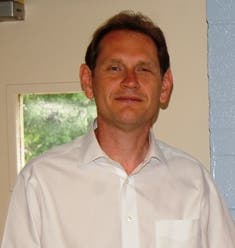
In 2015 Harcum will implement a hazard communication program, led by Associate Professor of General Studies Joseph Karpinski in his role as Harcum’s new Chemical Hygiene Officer (CHO). A CHO is a specialist who focuses on compliance with the specific OSHA Laboratory Standard. Many two and four year colleges have a CHO on staff.
Karpinski brings a unique combination of talents to his role. With a B.S. in biology from Ursinus College and M.S. in pharmaceutical chemistry from Lehigh University he spent 23 years working as a synthetic organic chemist in the pharmaceutical industry where he managed chemical inventories and workplace safety. He also has experience teaching chemistry at Harcum, Eastern University and Montgomery County Community College. With his awareness of the importance of the CHO for the safety of all employees he proposed to Vice President of Academic and Legal Affairs Julia Ingersoll that he take on CHO responsibilities, which he has handled at Eastern for the past two years.
Find out what's happening in Bryn Mawr-Gladwynefor free with the latest updates from Patch.
“Harcum is committed to providing the highest standard of Hazard Communication for its employees, and the College is fortunate that Joe can bring his expertise and training to this important task,” Ingersoll said.
OSHA defines a health hazard as a chemical for which there is evidence that acute or chronic health effects may occur in exposed employees. Chemicals covered by this definition include carcinogens, toxic or highly toxic agents, reproductive toxins, irritants, corrosives, sensitizers, hepatotoxins, nephrotoxins, neurotoxins, agents that act on the blood and agents that damage the lungs, skin, eyes, or mucous membranes.
OSHA defines a physical hazard as a chemical for which there is evidence that it is a combustible liquid, a compressed gas, explosive, flammable, an organic peroxide, an oxidizer, pyrophoric, unstable (reactive), or water-reactive.
But hazardous chemicals includes not only generic chemicals but also paints, cleaning compounds, inks, dyes, and many other common substances that can also be found in homes and offices.
While many requirements of the HCS are already informally practiced at Harcum, and there have been no serious accidents in recent memory, Harcum has chosen to formally align its workplace practices with the HCS to maintain a safe work environment for all employees and to coordinate emergency planning across the College.
“Our goal is to have a plan drafted by the end of this year and complete a hazard communication program for employees by next summer,” Karpinski said. In addition to labelling, SDS information and employee training, he will develop a spreadsheet available online that will inventory every chemical used in Harcum labs and other facilities.